


Comparative risk assessment of the burden of disease from climate change
- PMID: 17185288
- PMCID: PMC1764135
- DOI: 10.1289/ehp.8432
Comparative risk assessment of the burden of disease from climate change
Abstract
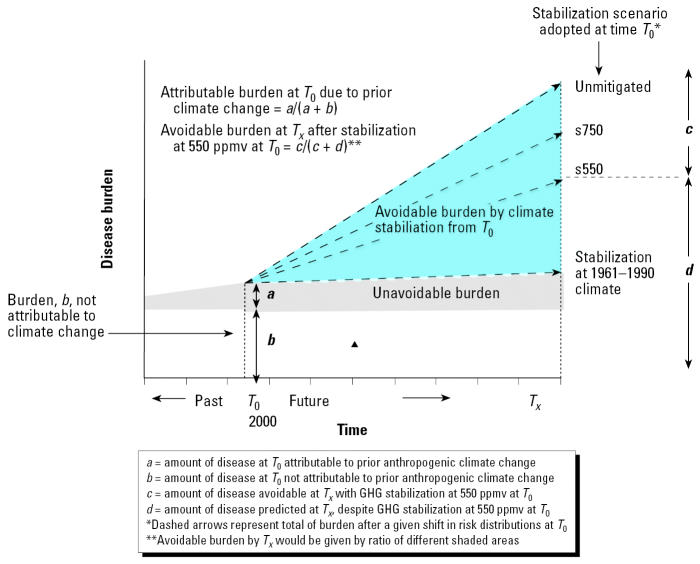
The World Health Organization has developed standardized comparative risk assessment methods for estimating aggregate disease burdens attributable to different risk factors. These have been applied to existing and new models for a range of climate-sensitive diseases in order to estimate the effect of global climate change on current disease burdens and likely proportional changes in the future. The comparative risk assessment approach has been used to assess the health consequences of climate change worldwide, to inform decisions on mitigating greenhouse gas emissions, and in a regional assessment of the Oceania region in the Pacific Ocean to provide more location-specific information relevant to local mitigation and adaptation decisions. The approach places climate change within the same criteria for epidemiologic assessment as other health risks and accounts for the size of the burden of climate-sensitive diseases rather than just proportional change, which highlights the importance of small proportional changes in diseases such as diarrhea and malnutrition that cause a large burden. These exercises help clarify important knowledge gaps such as a relatively poor understanding of the role of nonclimatic factors (socioeconomic and other) that may modify future climatic influences and a lack of empiric evidence and methods for quantifying more complex climate-health relationships, which consequently are often excluded from consideration. These exercises highlight the need for risk assessment frameworks that make the best use of traditional epidemiologic methods and that also fully consider the specific characteristics of climate change. These include the longterm and uncertain nature of the exposure and the effects on multiple physical and biotic systems that have the potential for diverse and widespread effects, including high-impact events.
Figures
References
-
- Arnell NW. Climate change and global water resources. Glob Environ Change. 1999;9:S31–S51.
-
- Arnell NW, Cannell MGR, Hulme M, Mitchell JFB, Kovats RS, Nicholls RJ, et al. The consequences of CO2 stabilization for the impacts of climate change. Clim Change. 2002;53:413–446.
-
- Beggs PJ. Impacts of climate change on aeroallergens: past and future. Clin Exp Allergy. 2004;34:1507–1513. - PubMed
-
- Bryan JH, Foley DH, Sutherst RW. Malaria transmission and climate change in Australia. Med J Aust. 1996;164:345–347. - PubMed
-
- Carbon Dioxide Information Analysis Center 2003. Trends Online: A Compendium of Data on Global Change. Available: http://cdiac.ornl.gov/ [accessed 14 February 2006].
Publication types
MeSH terms
LinkOut - more resources
Full Text Sources