


Characteristics of sexual abuse in childhood and adolescence influence sexual risk behavior in adulthood
- PMID: 17192833
- PMCID: PMC2042031
- DOI: 10.1007/s10508-006-9109-4
Characteristics of sexual abuse in childhood and adolescence influence sexual risk behavior in adulthood
Abstract
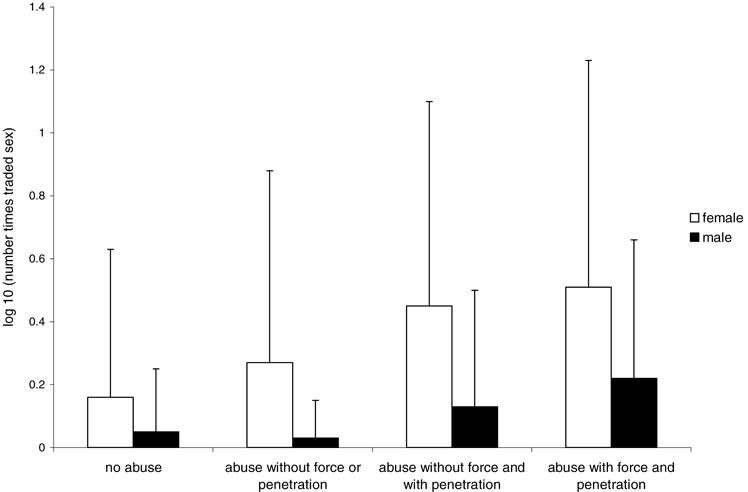
Childhood and adolescent sexual abuse has been associated with subsequent (adult) sexual risk behavior, but the effects of force and type of sexual abuse on sexual behavior outcomes have been less well-studied. The present study investigated the associations between sexual abuse characteristics and later sexual risk behavior, and explored whether gender of the child/adolescent moderated these relations. Patients attending an STD clinic completed a computerized survey that assessed history of sexual abuse as well as lifetime and current sexual behavior. Participants were considered sexually abused if they reported a sexual experience (1) before age 13 with someone 5 or more years older, (2) between the ages of 13 and 16 with someone 10 or more years older, or (3) before the age of 17 involving force or coercion. Participants who were sexually abused were further categorized based on two abuse characteristics, namely, use of penetration and force. Analyses included 1177 participants (n=534 women; n=643 men). Those who reported sexual abuse involving penetration and/or force reported more adult sexual risk behavior, including the number of lifetime partners and number of previous STD diagnoses, than those who were not sexually abused and those who were abused without force or penetration. There were no significant differences in sexual risk behavior between nonabused participants and those who reported sexual abuse without force and without penetration. Gender of the child/adolescent moderated the association between sexual abuse characteristics and adult sexual risk behavior; for men, sexual abuse with force and penetration was associated with the greatest number of episodes of sex trading, whereas for women, those who were abused with penetration, regardless of whether the abuse involved force, reported the most episodes of sex trading. These findings indicate that more severe sexual abuse is associated with riskier adult sexual behavior.
Figures
References
-
- Banyard, V. L., & Williams, L. M. (1996). Characteristics of child sexual abuse as correlates of women’s adjustment: A prospective study. Journal of Marriage and the Family, 58, 853–865. - DOI
Publication types
MeSH terms
Grants and funding
LinkOut - more resources
Full Text Sources
Medical
Research Materials
