


CAR2 displays unique ligand binding and RXRalpha heterodimerization characteristics
- PMID: 17194715
- PMCID: PMC4105022
- DOI: 10.1124/dmd.106.012641
CAR2 displays unique ligand binding and RXRalpha heterodimerization characteristics
Abstract
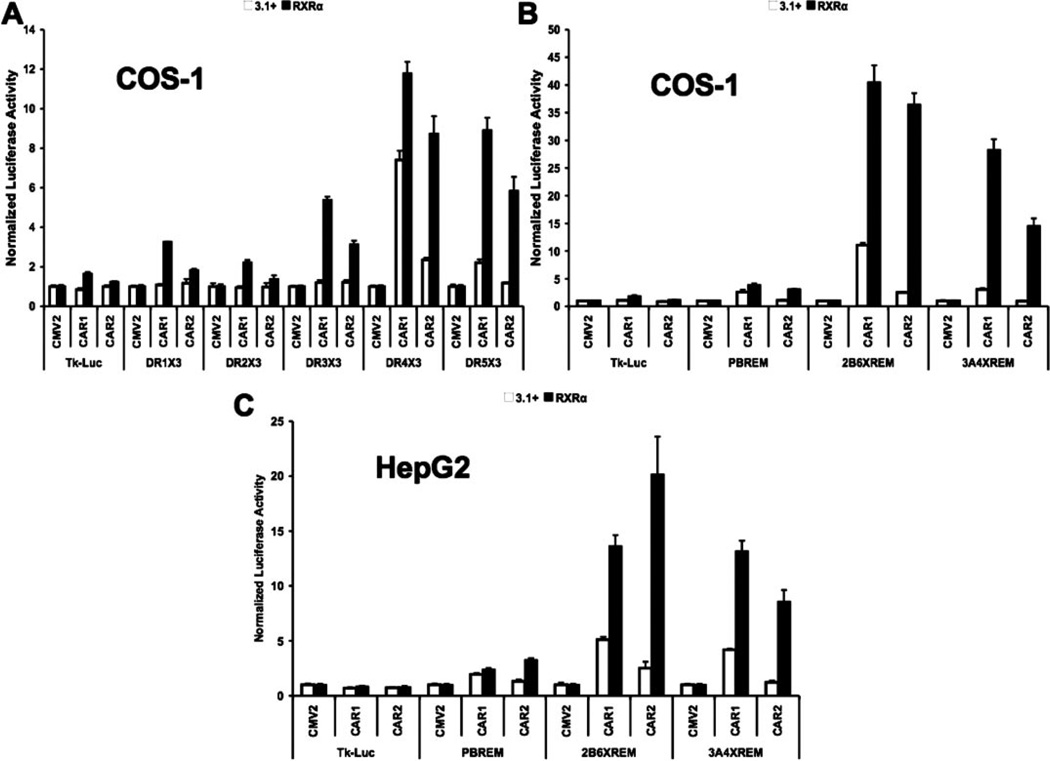
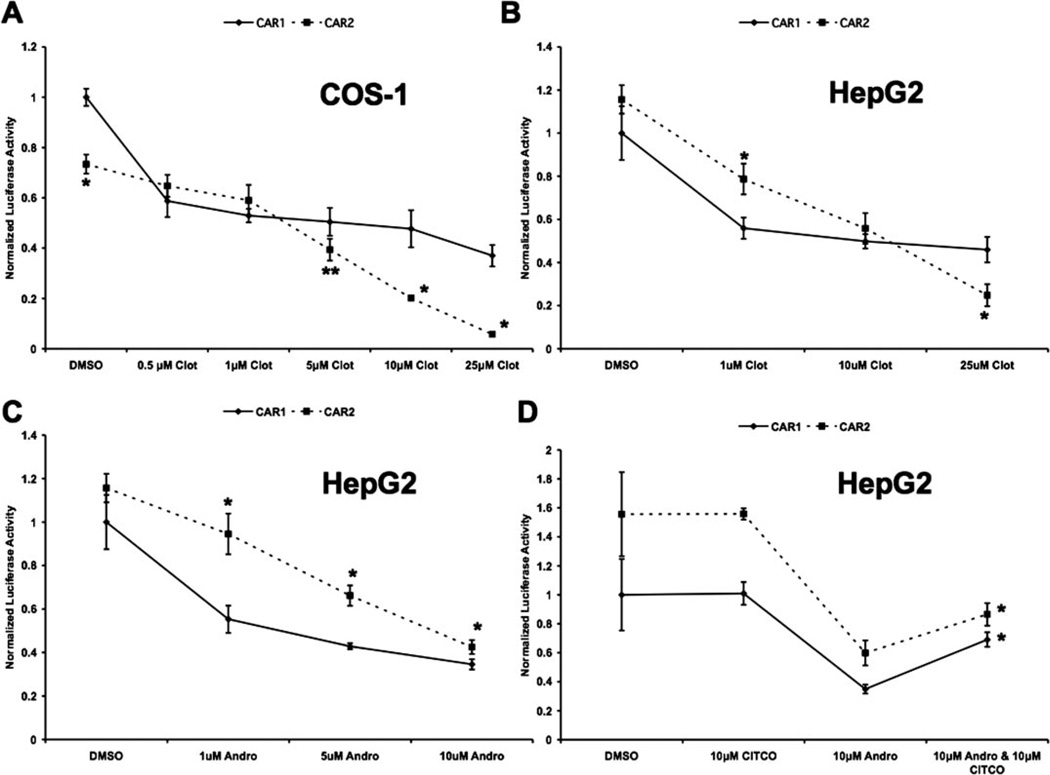
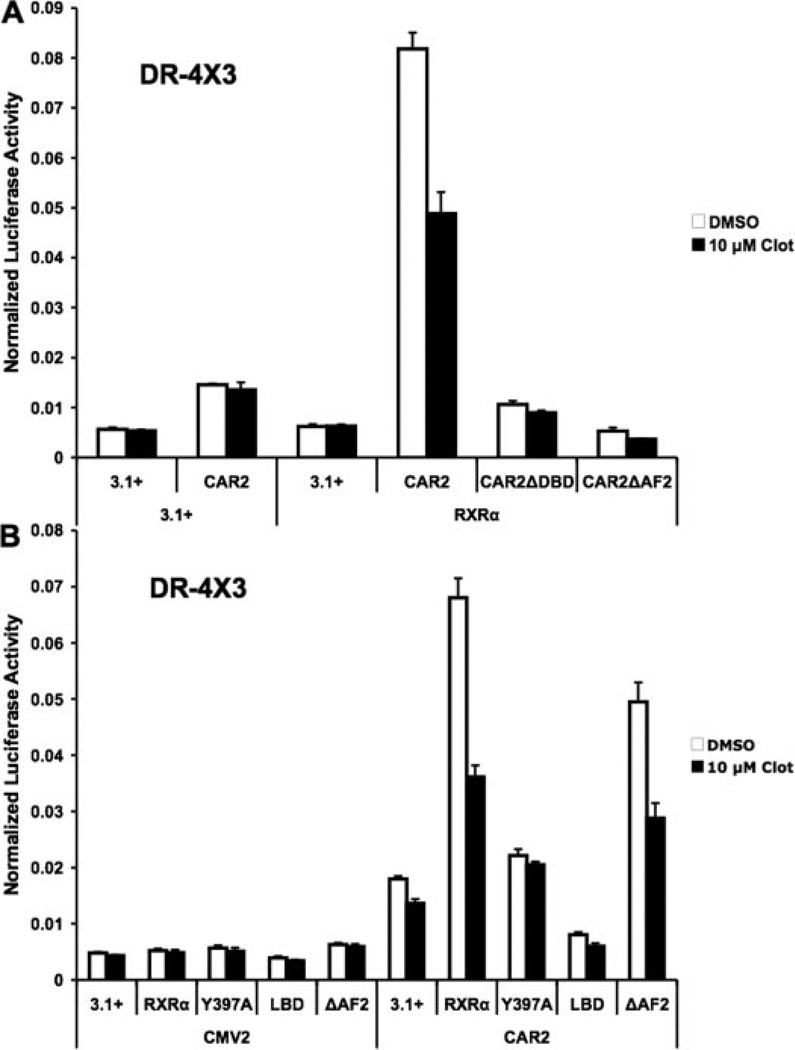
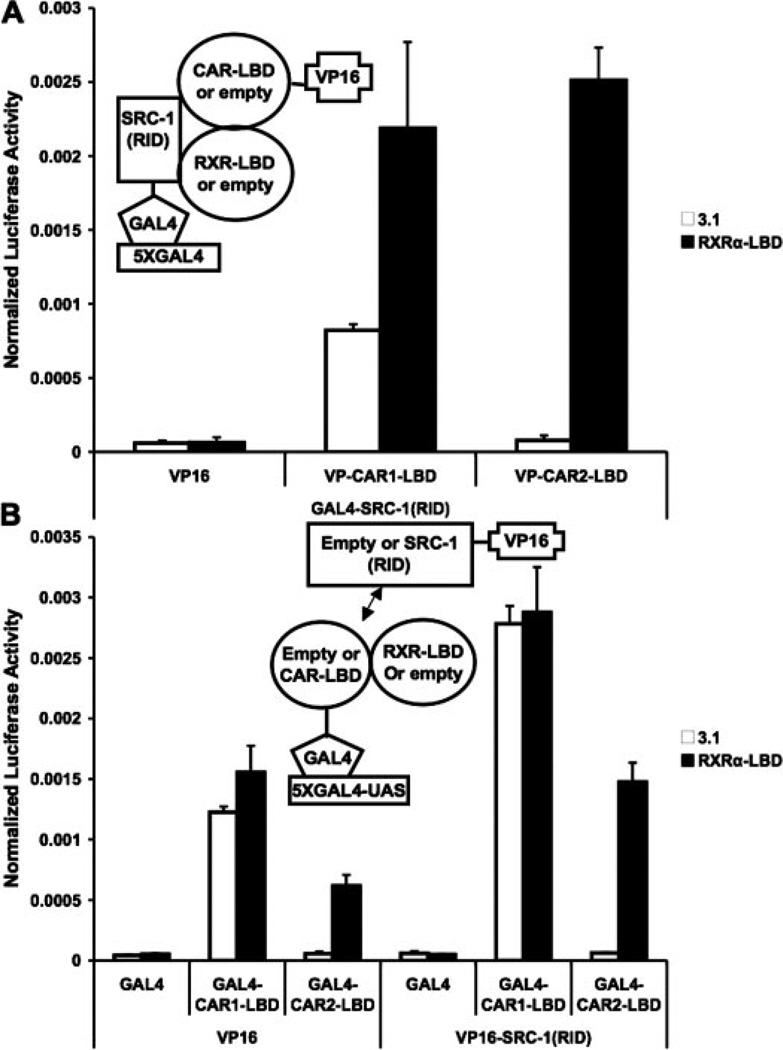
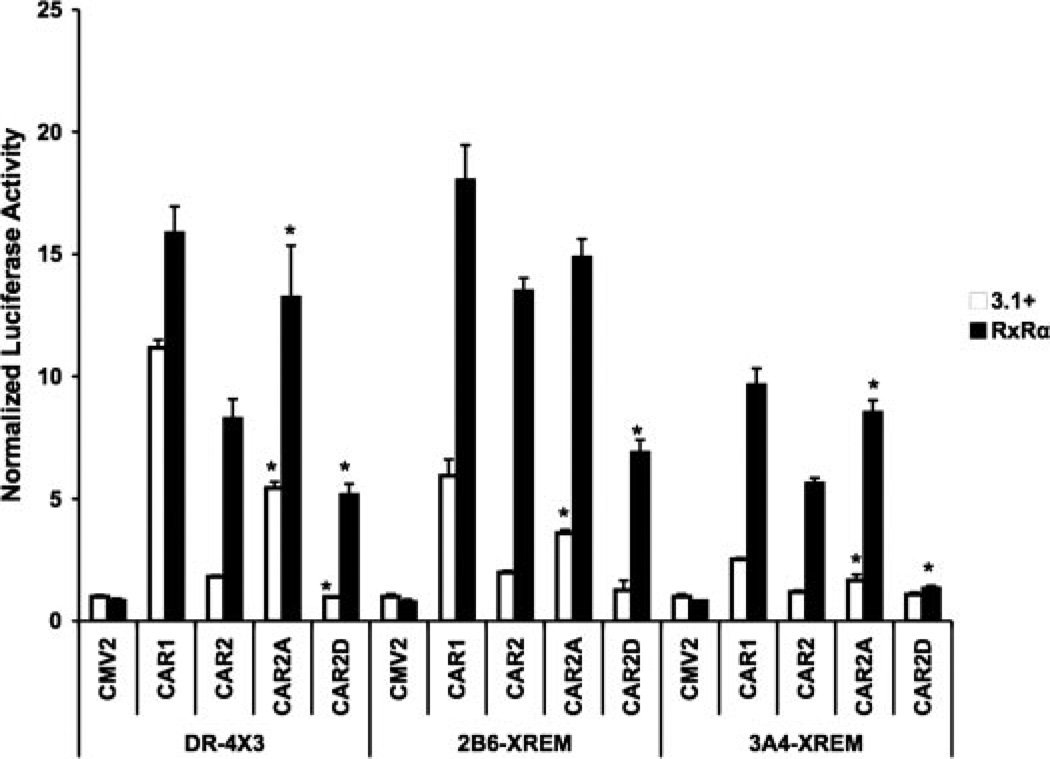
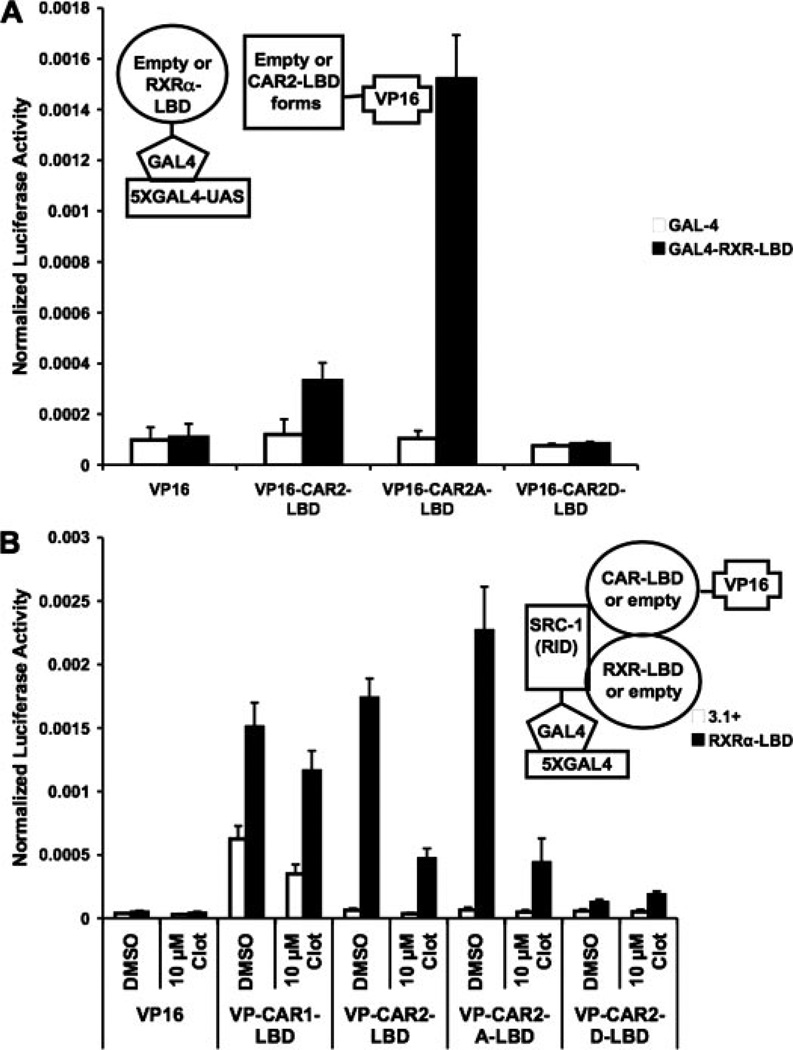
The constitutive androstane receptor (CAR; NR1I3) regulates the expression of genes involved in xenobiotic metabolism. Alternative splicing of the human CAR gene yields an array of mRNAs that encode structurally diverse proteins. One form of CAR, termed CAR2, contains an additional four amino acids (SPTV) that are predicted to reshape the ligand-binding pocket. The current studies show a marked, ligand-independent, CAR2-mediated transactivation of reporters containing optimal DR-3, DR-4, and DR-5 response elements, and reporters derived from the natural CYP2B6 and CYP3A4 gene promoters. Overexpression of the RXRalpha ligand binding domain was critical for achieving these effects. CAR2 interaction with SRC-1 was similarly dependent on the coexpression of RXRalpha. Mutagenesis of Ser233 (SPTV) to an alanine residue yielded a receptor possessing higher constitutive activity. Alternatively, mutating Ser233 to an aspartate residue drastically reduced the transactivation capacity of CAR2. The respective abilities of these mutagenized forms of CAR2 to transactivate a DR-4 x 3 reporter element correlated with their ability to interact with RxRalpha and to recruit SRC-1 in a ligand-regulated manner. Together, these results demonstrate a robust RXRalpha-dependent recruitment of coactivators and transactivation by CAR2. In addition, CAR2 displays novel dose responses to clotrimazole and androstanol compared with the reference form of the receptor while at the same time retaining the ability to bind CITCO. This result supports a hypothesis whereby the four-amino-acid insertion in CAR2 structurally modifies its ligand binding pocket, suggesting that CAR2 is regulated by a set of ligands distinct from those governing the activity of reference CAR.
Figures
References
-
- Barwick JL, Quattrochi LC, Mills AS, Potenza C, Tukey RH, Guzelian PS. Transspecies gene transfer for analysis of glucocorticoid-inducible transcriptional activation of transiently expressed human CYP3A4 and rabbit CYP3A6 in primary cultures of adult rat and rabbit hepatocytes. Mol Pharmacol. 1996;50:10–16. - PubMed
-
- Blencowe BJ. Alternative splicing: new insights from global analyses. Cell. 2006;126:37–47. - PubMed
Publication types
MeSH terms
Substances
Grants and funding
LinkOut - more resources
Full Text Sources
Miscellaneous
