Effects of labor contractions on catecholamine release and breathing frequency in newborn rats
- PMID: 17201476
- PMCID: PMC2749474
- DOI: 10.1037/0735-7044.120.6.1308
Effects of labor contractions on catecholamine release and breathing frequency in newborn rats
Abstract
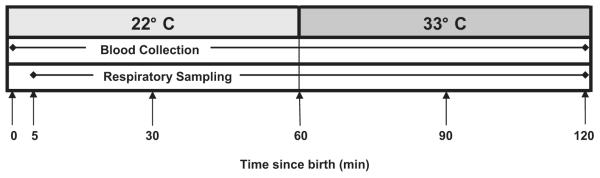
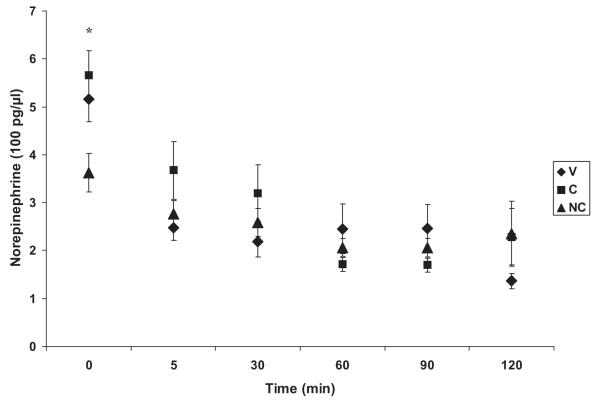
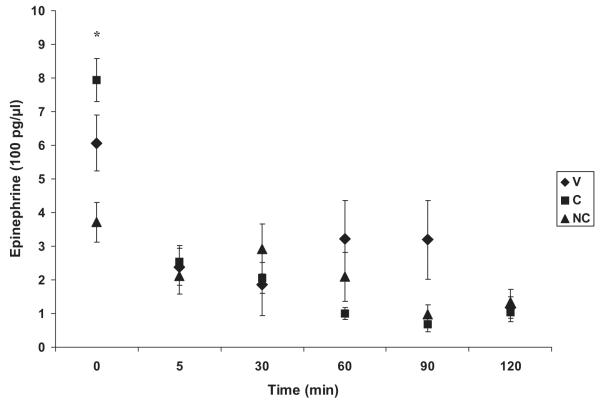
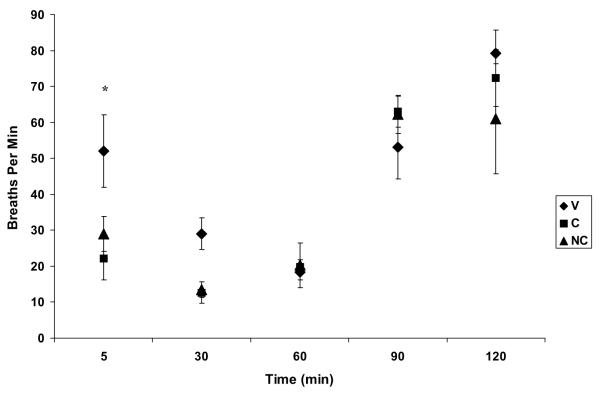
Plasma catecholamines in newborn rats (0-2 hr old) were analyzed following vaginal birth, cesarean section with simulated labor contractions, or cesarean section without labor contractions. Upon delivery, pups were exposed to key elements of the rat's natural birth process, that is, umbilical cord occlusion, tactile stimulation, and cooling. Only pups exposed to actual or simulated labor showed an immediate rise in norepinephrine and epinephrine. Initial postpartum respiratory frequencies were higher in vaginal than in cesarean delivered pups and, in all groups, inversely correlated with catecholamine titers, suggesting respiratory distress or transient tachypnea at lower catecholamine levels. These findings establish a rat model for analyzing effects of labor on neonatal adaptive response during the transition from prenatal to postnatal life.
2006 APA, all rights reserved
Figures
References
-
- Abel RA, Ronca AE, Alberts JR. Perinatal stimulation facilitates suckling onset in newborn rats. Developmental Psychobiology. 1998;32:91–99. - PubMed
-
- Alberts JR, Blumberg MS, Ronca AE. Thermal imaging of postpartum rat pups upon delivery into the nest. Poster session presented at the International Society for Developmental Psychobiology meeting; Newport Beach, CA. Nov, 1991.
-
- Barker PM, Olver RE. Invited review: Clearance of lung liquid during the perinatal period. Journal of Applied Physiology. 2002;93:1542–1548. - PubMed
-
- Brice JE, Walker CH. Changing pattern of respiratory distress in newborn. Lancet. 1977;8:752–754. - PubMed
-
- Buhimschi IA, Buhimschi CS, Pupkin M, Weiner CP. Beneficial impact of term labor: Nonenzymatic antioxidant reserve in the human fetus. American Journal of Obstetrics & Gynecology. 2003;189:181–188. - PubMed