


Estimation of the stress related to conservative scoliosis therapy: an analysis based on BSSQ questionnaires
- PMID: 17201928
- PMCID: PMC1769473
- DOI: 10.1186/1748-7161-2-1
Estimation of the stress related to conservative scoliosis therapy: an analysis based on BSSQ questionnaires
Abstract
Background: Adolescent girls treated with a brace for scoliosis are submitted to prolonged stress related to both the disease and the therapy. Currently proposed quality of life questionnaires are focused on the outcome of therapy. Bad Sobernheim Stress Questionnaire (BSSQ) enables monitoring of patients being under treatment with a brace or exercises. The aim of the study was to assess the stress level in conservatively managed scoliotic girls using BSSQ.
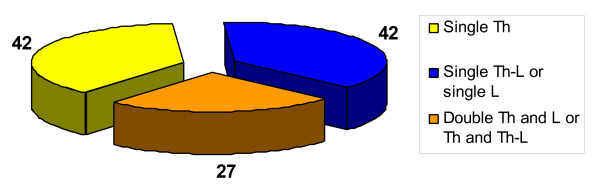
Materials and methods: 111 girls, aged 14.2 +/- 2.2 years, mean Cobb angle of the primary curve 42.8 degrees +/- 17.0 degrees and mean Bunnell angle of 11.4 degrees +/- 4.5 degrees were examined with two versions of BSSQ (Deformity and Brace). The analysis considered the type of treatment, curve location, correlation of the total score with age, Cobb angle and Bunnell rotation angle.
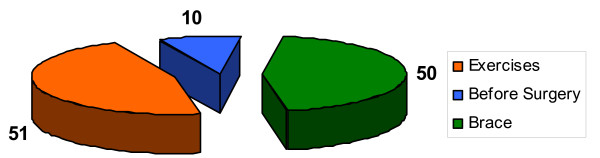
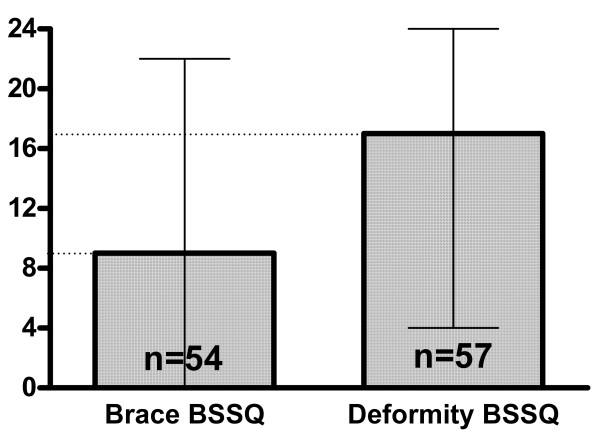
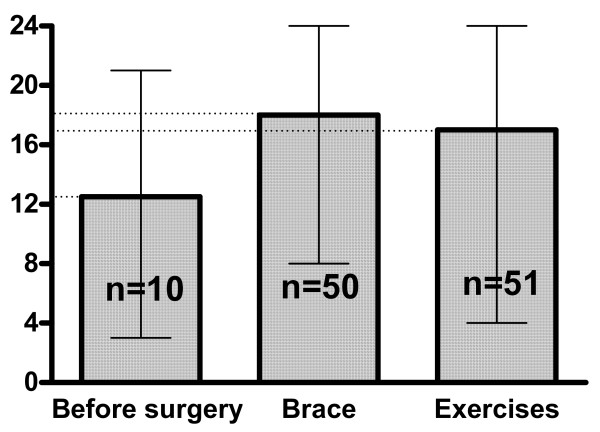
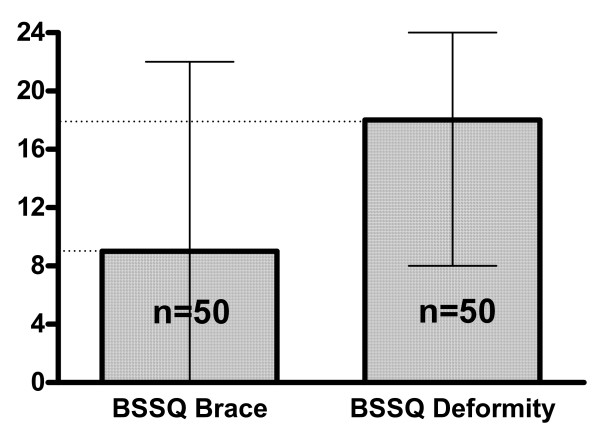
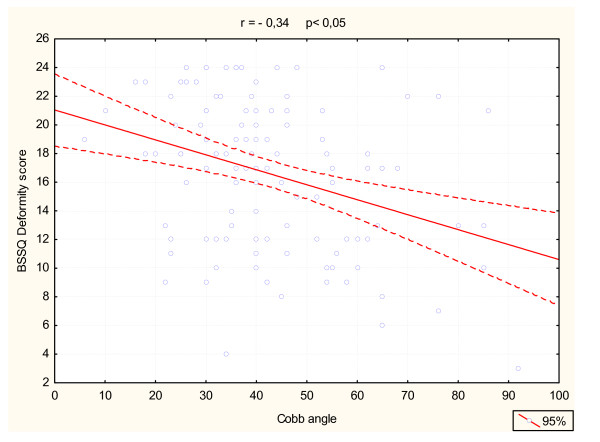
Results: The BSSQ Deformity revealed the median of 17 points in patients managed with exercises (from 4 to 24 points), 18 in patients managed with a brace (from 8 to 24 points) and 12 in patients before surgery (from 3 to 21 points). Braced patients who completed both questionnaires (n = 50) revealed significantly higher score with BSSQ Deformity (median = 18) comparing to BSSQ Brace (median = 9). There was a correlation between the total score of BSSQ Deformity and the Cobb angle (r = -0.34), Bunnell primary curve rotation (r = -0.34) and Bunnell sum of rotation (r = -0.33) but not with the age of patients.
Conclusion: Scoliotic adolescents managed with exercises and brace suffered little stress from the deformity. The brace increased the level of stress over the stress induced by the deformity. The stress level correlated with clinical deformity (Bunnell angle), radiological deformity (Cobb angle) and the type of treatment (exercises, bracing, surgery). Bad Sobernheim Stress Questionnaires are simple and helpful in the management of girls treated conservatively for idiopathic scoliosis.
Figures
References
-
- Weiss HR. How much stress do adolescents with scoliosis have because of their brace? Proceedings of the 3rd International Conference on Conservative Management of Spinal Deformites Poznan. 7–8.04.2006.
-
- Weiss HR. Reproducibility and criterion validity of the BSSQ-stress questionnaire for patients with scoliosis. Proceedings of the 3rd International Conference on Conservative Management of Spinal Deformities Poznan. 7–8.04.2006.
LinkOut - more resources
Full Text Sources
Research Materials
