


The role of TGF-beta signaling in regulating chondrogenesis and osteogenesis during mandibular development
- PMID: 17204263
- PMCID: PMC2074881
- DOI: 10.1016/j.ydbio.2006.11.025
The role of TGF-beta signaling in regulating chondrogenesis and osteogenesis during mandibular development
Abstract
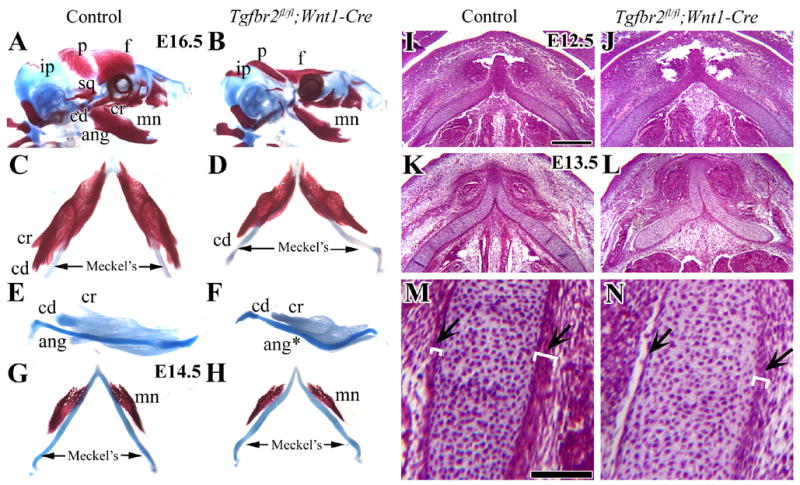
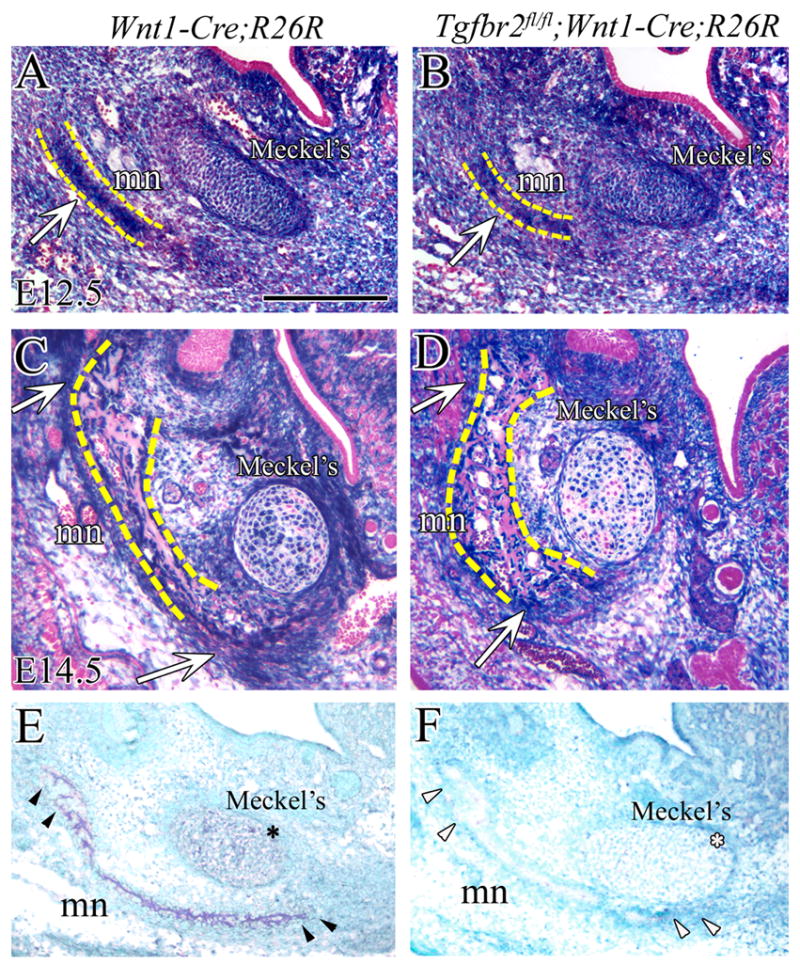
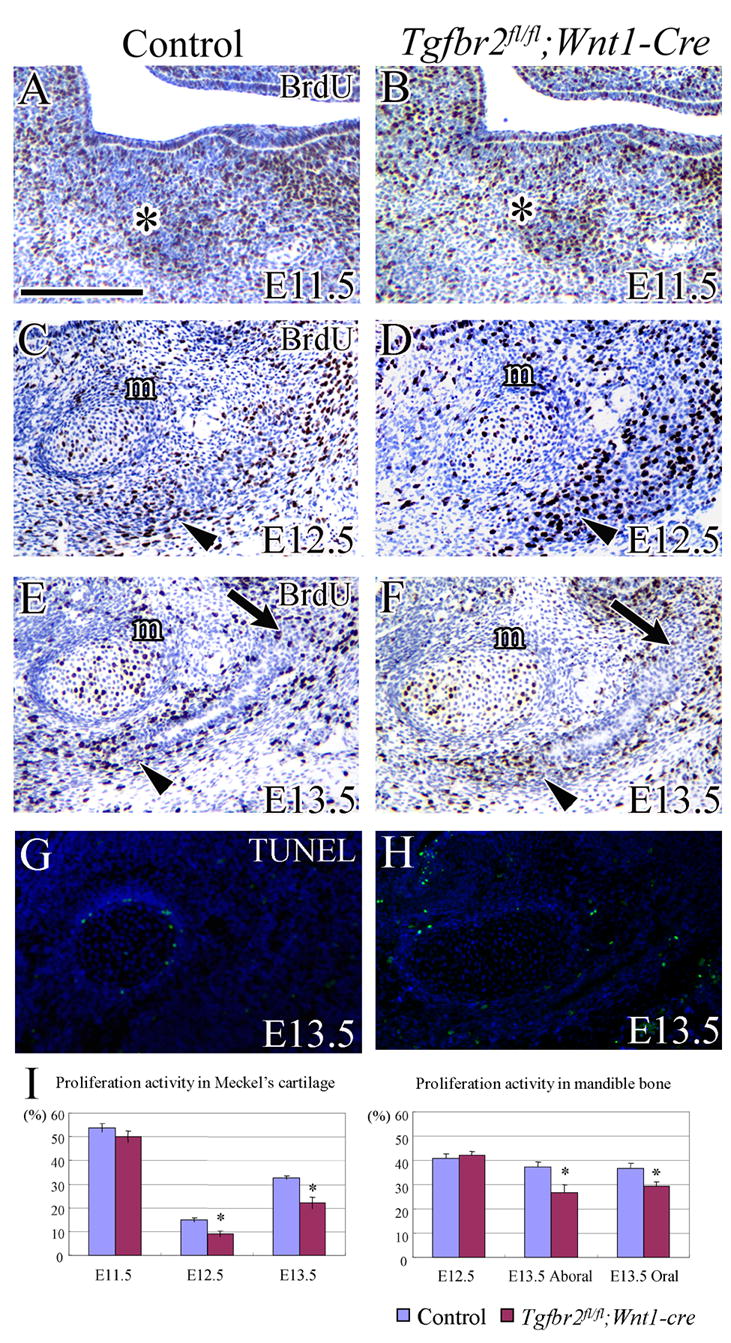
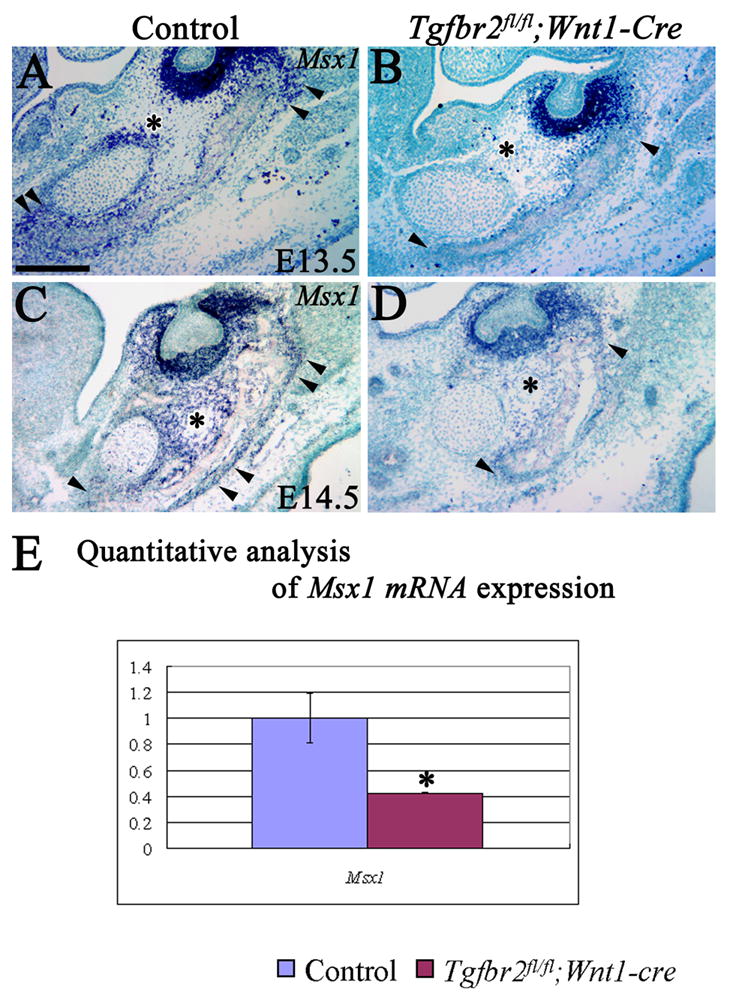
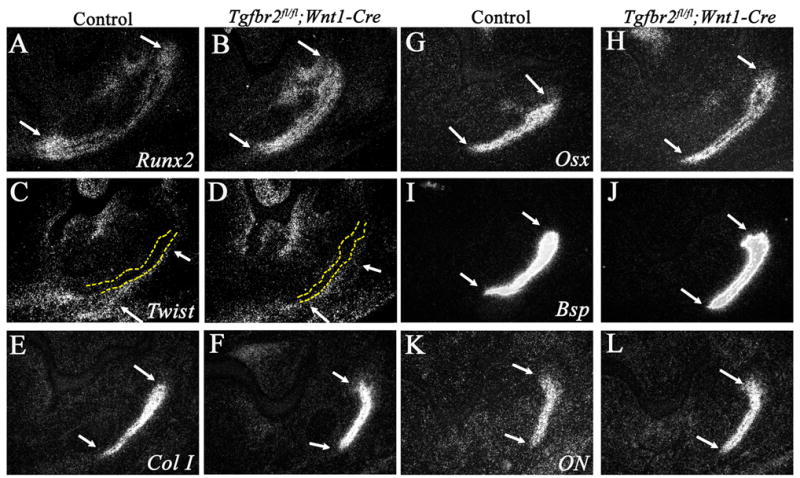
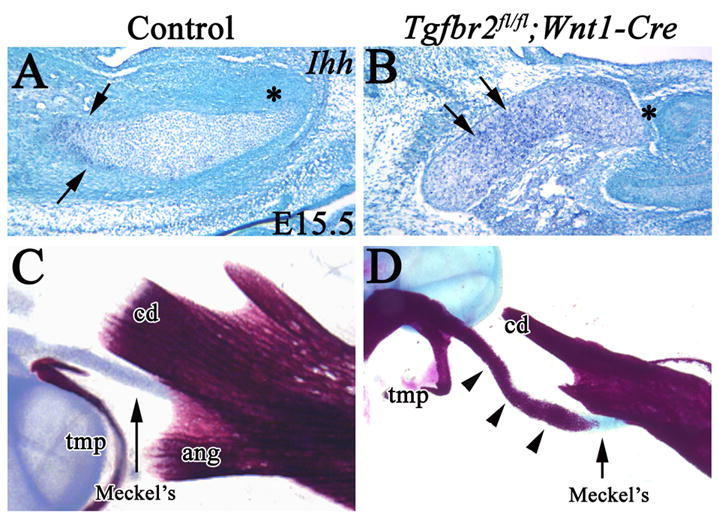
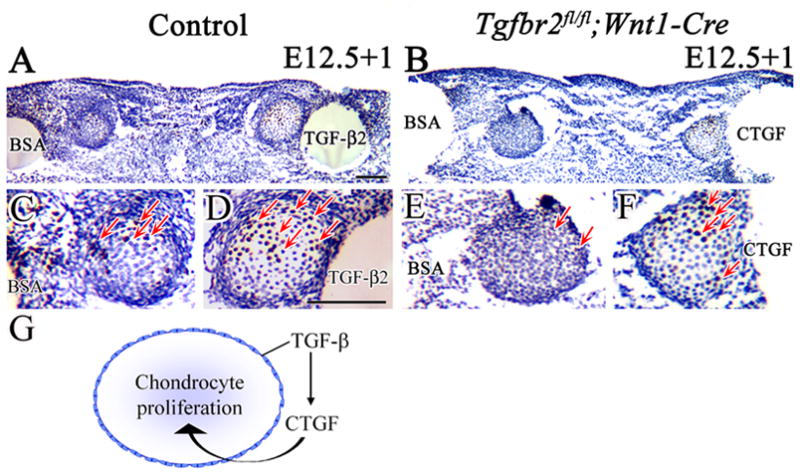
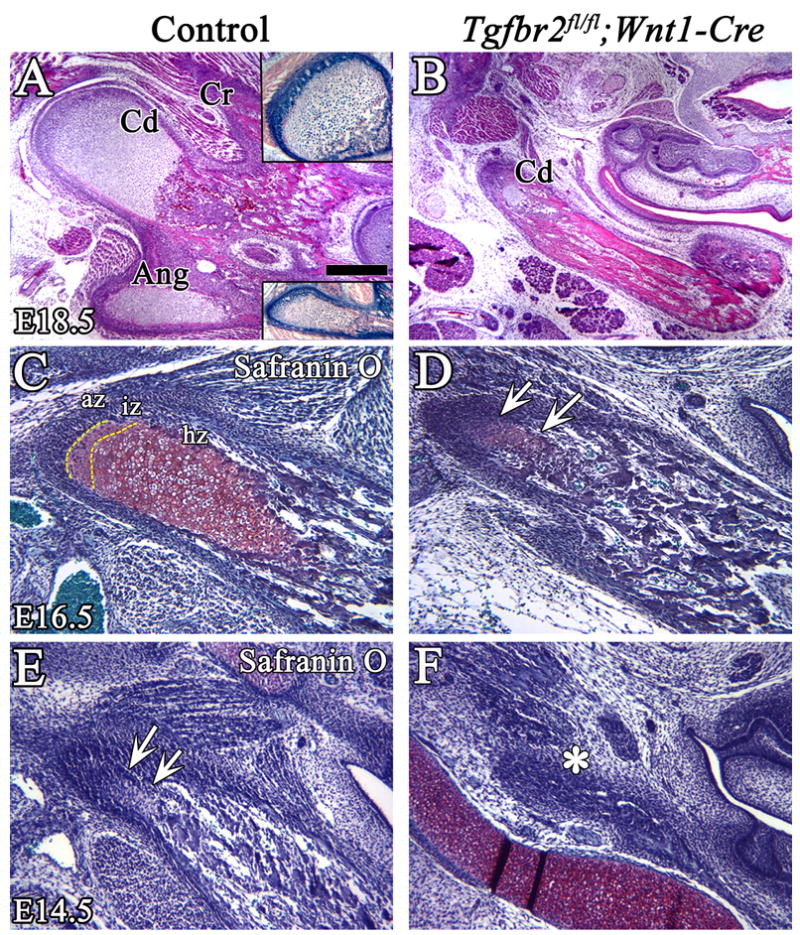
During craniofacial development, Meckel's cartilage and the mandible bone derive from the first branchial arch, and their development depends upon the contribution of cranial neural crest (CNC) cells. We previously demonstrated that conditional inactivation of Tgfbr2 in the neural crest of mice (Tgfbr2(fl/fl);Wnt1-Cre) results in severe defects in mandibular development, although the specific cellular and molecular mechanisms by which TGF-beta signaling regulates the fate of CNC cells during mandibular development remain unknown. We show here that loss of Tgfbr2 does not affect the migration of CNC cells during mandibular development. TGF-beta signaling is specifically required for cell proliferation in Meckel's cartilage and the mandibular anlagen and for the formation of the coronoid, condyle and angular processes. TGF-beta-mediated connective tissue growth factor (CTGF) signaling is critical for CNC cell proliferation. Exogenous CTGF rescues the cell proliferation defect in Meckel's cartilage of Tgfbr2(fl/fl);Wnt1-Cre mutants, demonstrating the biological significance of this signaling cascade in chondrogenesis during mandibular development. Furthermore, TGF-beta signaling controls Msx1 expression to regulate mandibular osteogenesis as Msx1 expression is significantly reduced in Tgfbr2(fl/fl);Wnt1-Cre mutants. Collectively, our data suggest that there are differential signal cascades in response to TGF-beta to control chondrogenesis and osteogenesis during mandibular development.
Figures

References
-
- Alvarez J, Horton J, Sohn P, Serra R. The perichondrium plays an important role in mediating the effects of TGF-beta1 on endochondral bone formation. Dev Dyn. 2001;221:311–21. - PubMed
-
- Baffi MO, Slattery E, Sohn P, Moses HL, Chytil A, Serra R. Conditional deletion of the TGF-beta type II receptor in Col2a expressing cells results in defects in the axial skeleton without alterations in chondrocyte differentiation or embryonic development of long bones. Dev Biol. 2004;276:124–42. - PubMed
-
- Beresford WA. Schemes of zonation in the mandibular condyle. Am J Orthod. 1975;68:189–95. - PubMed
-
- Bialek P, Kern B, Yang X, Schrock M, Sosic D, Hong N, Wu H, Yu K, Ornitz DM, Olson EN, Justice MJ, Karsenty G. A twist code determines the onset of osteoblast differentiation. Dev Cell. 2004;6:423–35. - PubMed
-
- Carda C, Silvestrini G, Gomez de Ferraris ME, Peydro A, Bonucci E. Osteoprotegerin (OPG) and RANKL expression and distribution in developing human craniomandibular joint. Tissue Cell. 2005;37:247–55. - PubMed
Publication types
MeSH terms
Substances
Grants and funding
LinkOut - more resources
Full Text Sources
Molecular Biology Databases
Miscellaneous
