


Catechol-o-methyltransferase gene polymorphism modifies the effect of coffee intake on incidence of acute coronary events
- PMID: 17205121
- PMCID: PMC1762420
- DOI: 10.1371/journal.pone.0000117
Catechol-o-methyltransferase gene polymorphism modifies the effect of coffee intake on incidence of acute coronary events
Abstract
Background: The role of coffee intake as a risk factor for coronary heart disease (CHD) has been debated for decades. We examined whether the relationship between coffee intake and incidence of CHD events is dependent on the metabolism of circulating catecholamines, as determined by functional polymorphism of the catechol-O-methyltransferase (COMT) gene.
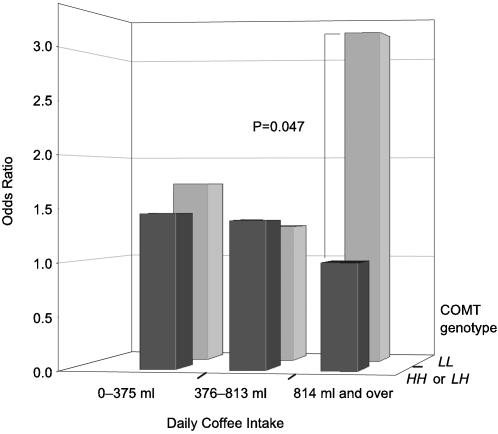
Methodology/principal findings: In a cohort of 773 men who were 42 to 60 years old and free of symptomatic CHD at baseline in 1984-89, 78 participants experienced an acute coronary event during an average follow-up of 13 years. In logistic regression adjusting for age, smoking, family history of CHD, vitamin C deficiency, blood pressure, plasma cholesterol concentration, and diabetes, the odds ratio (90% confidence interval) comparing heavy coffee drinkers with the low activity COMT genotype with those with the high activity or heterozygotic genotypes was 3.2 (1.2-8.4). Urinary adrenaline excretion increased with increasing coffee intake, being over two-fold in heavy drinkers compared with nondrinkers (p = 0.008 for trend).
Conclusions/significance: Heavy coffee consumption increases the incidence of acute coronary events in men with low but not high COMT activity. Further studies are required to determine to which extent circulating catecholamines mediate the relationship between coffee intake and CHD.
Conflict of interest statement
Figures
References
-
- Greenland S. A meta-analysis of coffee, myocardial infarction, and coronary death. Epidemiology. 1993;4:366–374. - PubMed
-
- Gyntelberg F, Hein HO, Suadicani P, Sørensen H. Coffee consumption and risk of ischaemic heart disease–a settled issue? J Intern Med. 1995;237:55–61. - PubMed
-
- Nawrot P, Jordan S, Eastwood J, Rotstein J, Hugenholtz A, et al. Effects of caffeine on human health. Food Addit Contam. 2003;20:1–30. - PubMed
-
- Svilaas A, Sakhi AK, Andersen LF, Svilaas T, Ström EC, et al. Intakes of antioxidants in coffee, wine, and vegetables are correlated with plasma carotenoids in humans. J Nutr. 2004;134:562–567. - PubMed
Publication types
MeSH terms
Substances
LinkOut - more resources
Full Text Sources
Other Literature Sources
Miscellaneous
