


Hypoxia-inducible factors: central regulators of the tumor phenotype
- PMID: 17208433
- PMCID: PMC3215290
- DOI: 10.1016/j.gde.2006.12.006
Hypoxia-inducible factors: central regulators of the tumor phenotype
Abstract
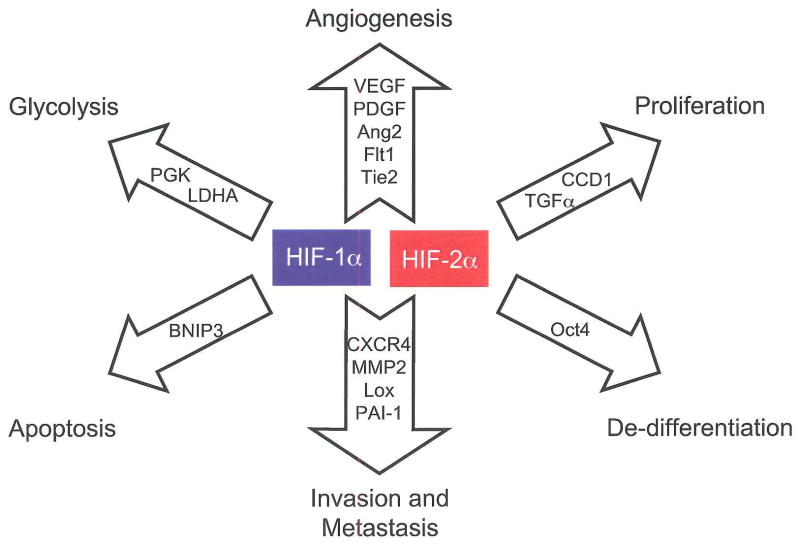
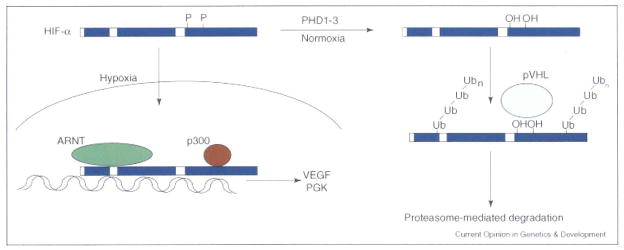
Low oxygen levels are a defining characteristic of solid tumors, and responses to hypoxia contribute substantially to the malignant phenotype. Hypoxia-induced gene transcription promotes characteristic tumor behaviors, including angiogenesis, invasion, metastasis, de-differentiation and enhanced glycolytic metabolism. These effects are mediated, at least in part, by targets of the hypoxia-inducible factors (HIFs). The HIFs function as heterodimers comprising an oxygen-labile alpha-subunit and a stable beta-subunit also referred to as ARNT. HIF-1alpha and HIF-2alpha stimulate the expression of overlapping as well as unique transcriptional targets, and their induction can have distinct biological effects. New targets and novel mechanisms of dysregulation place the HIFs in an ever more central role in tumor biology and have led to development of pharmacological inhibitors of their activity.
Figures
References
-
- Wang GL, Semenza GL. Purification and characterization of hypoxia-inducible factor 1. J Biol Chem. 1995;270:1230–1237. - PubMed
-
- Makino Y, Cao R, Svensson K, Bertilsson G, Asman M, Tanaka H, Cao Y, Berkenstam A, Poellinger L. Inhibitory PAS domain protein is a negative regulator of hypoxia-inducible gene expression. Nature. 2001;414:550–554. - PubMed
-
- Tian H, McKnight SL, Russell DW. Endothelial PAS domain protein 1 (EPAS1), a transcription factor selectively expressed in endothelial cells. Genes Dev. 1997;11:72–82. - PubMed
-
- Pugh CW, Ratcliffe PJ. Regulation of angiogenesis by hypoxia: role of the HIF system. Nat Med. 2003;9:677–684. - PubMed
-
- Semenza GL. Targeting HIF-1 for cancer therapy. Nat Rev Cancer. 2003;3:721–732. - PubMed
Publication types
MeSH terms
Substances
Grants and funding
LinkOut - more resources
Full Text Sources
Other Literature Sources
Molecular Biology Databases
