


Protein kinase C-delta regulates migration and proliferation of vascular smooth muscle cells through the extracellular signal-regulated kinase 1/2
- PMID: 17210402
- PMCID: PMC1829412
- DOI: 10.1016/j.jvs.2006.09.053
Protein kinase C-delta regulates migration and proliferation of vascular smooth muscle cells through the extracellular signal-regulated kinase 1/2
Abstract
Background: Smooth muscle cell (SMC) migration and proliferation are early and crucial events in the pathogenesis of intimal hyperplasia, the primary cause of restenosis after vascular intervention. We tested the hypothesis that protein kinase C-delta (PKCdelta), a ubiquitously expressed intracellular protein kinase, regulates vascular SMC proliferation and migration.
Methods: Exogenous PKCdelta was expressed in cultured SMCs via stable transfection or adenovirus-mediated gene transfer. Conversely, endogenous PKCdelta was inhibited by means of targeted gene deletion (gene knock-out). Cell proliferation and migration were determined by (3)H-thymidine incorporation and 24-well transwell assay, respectively.
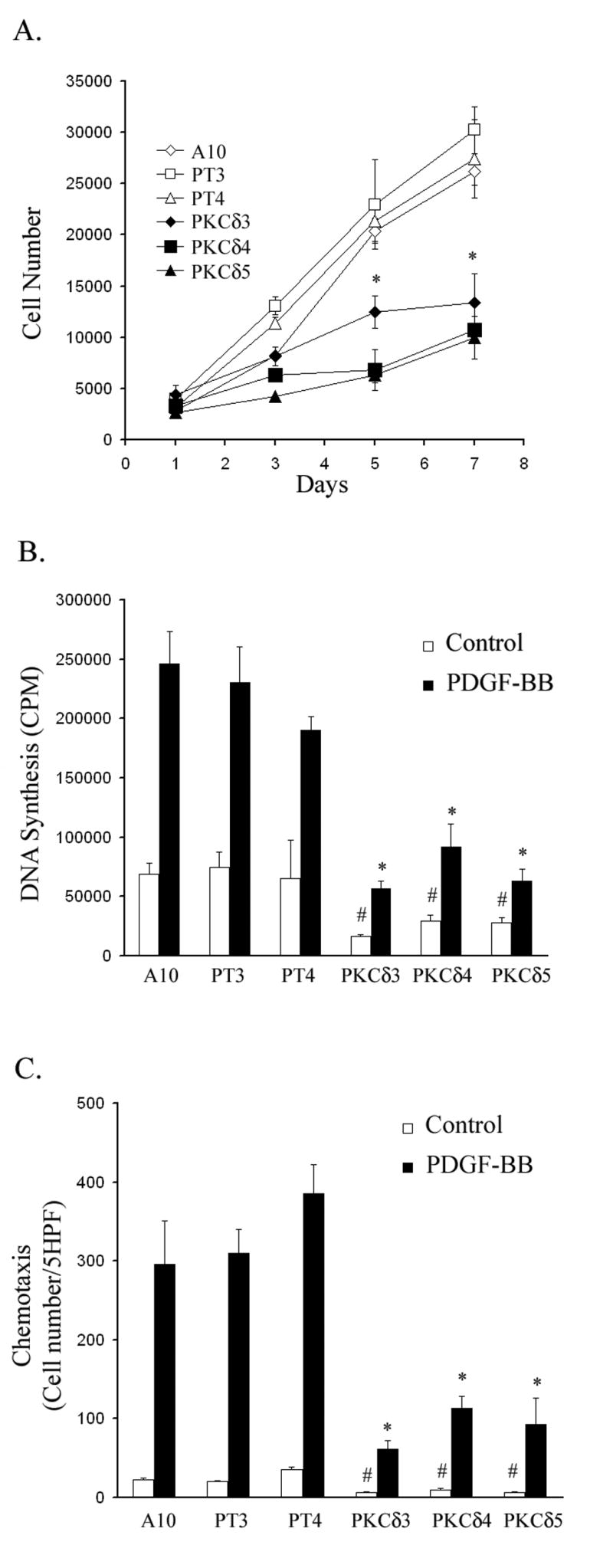
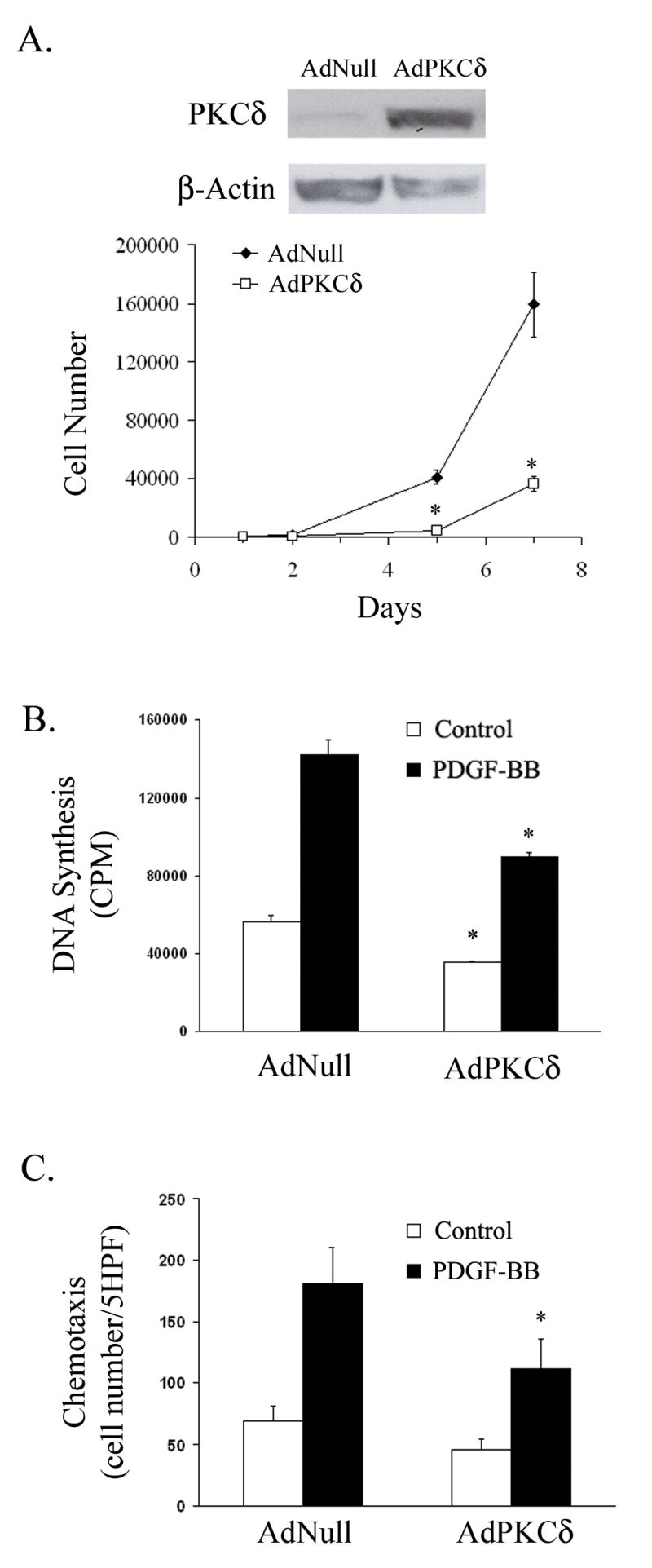
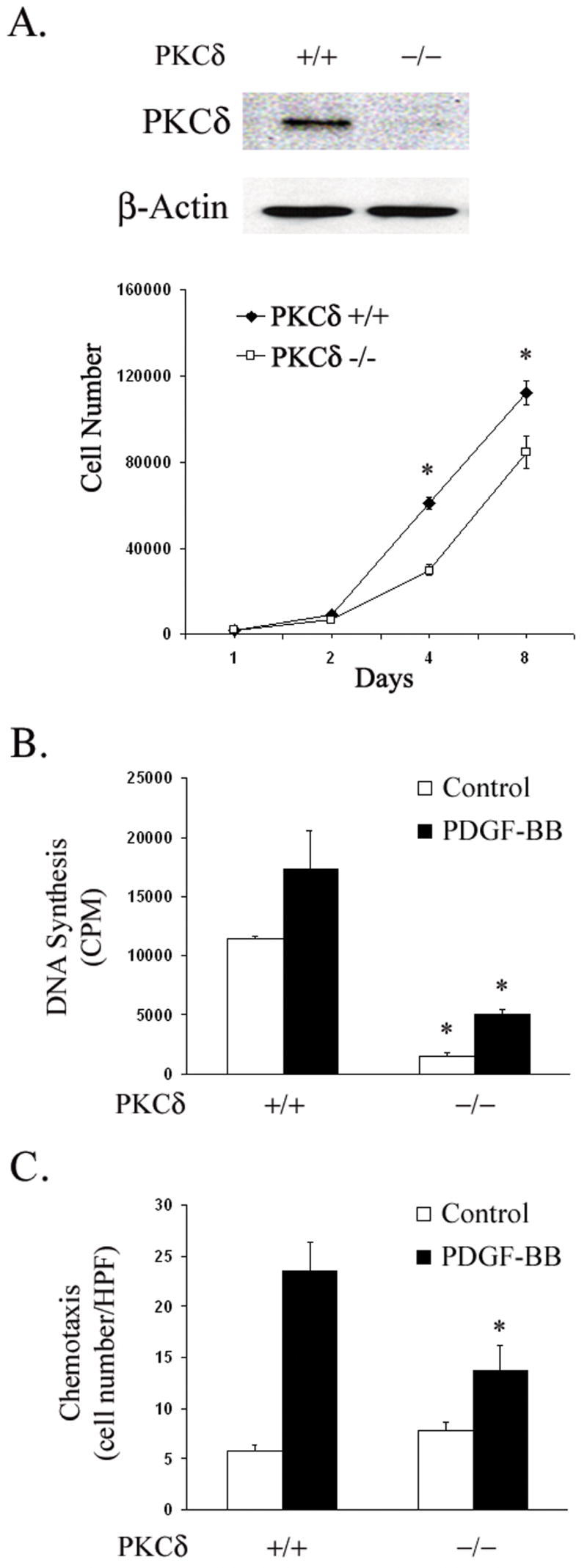
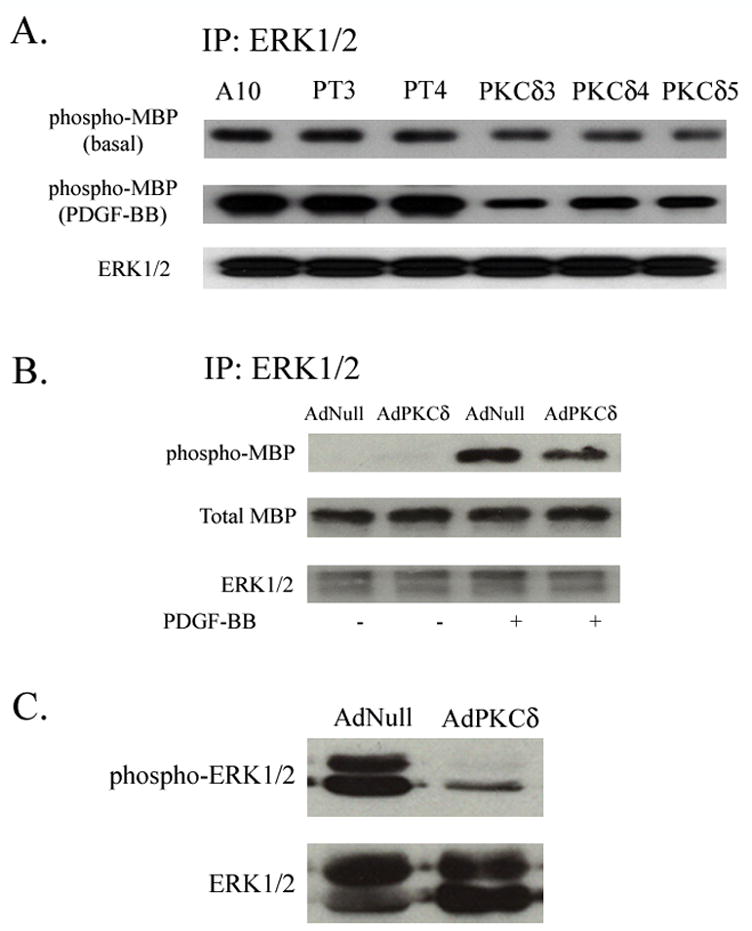
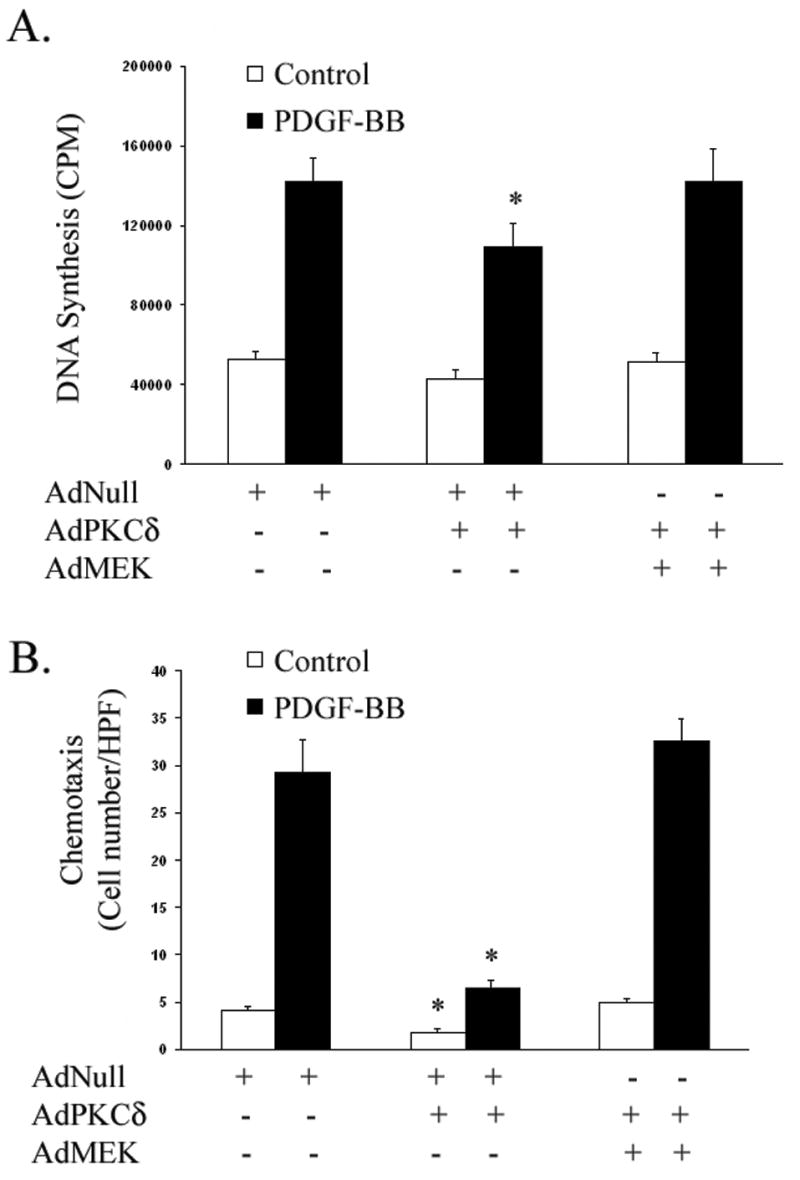
Results: We isolated and examined three A10 SMC lines in which PKCdelta was stably transfected. Compared with cells that were transfected with an empty vector, cells transfected with PKCdelta exhibited reduced ability to proliferate. Moreover, PKCdelta transfection inhibited SMC migration toward platelet-derived growth factor-BB. Similar inhibitory effects on proliferation and migration were also observed when PKCdelta was introduced into primary aortic SMCs via an adenoviral vector. Interestingly, SMCs isolated from PKCdelta knockout mice also displayed decreased chemotaxis and proliferation compared with PKCdelta(+/+) littermates, suggesting a complex yet critical role for PKCdelta. We studied the mitogen-activated protein kinase extracellular signal-regulated kinases (ERK) 1/2 as a possible signaling pathway for PKCdelta's inhibitory effect. PKCdelta overexpression diminished ERK1/2 activity. Molecular restoration of ERK activation reversed the inhibitory effect of PKCdelta on SMC proliferation and migration.
Conclusions: We demonstrate that although normal migration and proliferation is lessened in SMCs deficient in PKCdelta, its prolonged activation also diminishes those behaviors. This suggests a dual, critical role for PKCdelta in SMC proliferation and migration, and thus intimal hyperplasia and restenosis.
Figures
References
-
- Itoh H, Yamamura S, Ware JA, Zhuang S, Mii S, Liu B, et al. Differential effects of protein kinase C on human vascular smooth muscle cell proliferation and migration. Am J Physiol Heart Circ Physiol. 2001;281:H359–370. - PubMed
-
- Haller H, Lindschau C, Quass P, Distler A, Luft FC. Differentiation of Vascular Smooth Muscle Cells and the Regulation of Protein Kinase C-{alpha} Circ Res. 1995;76:21–29. - PubMed
-
- Acs P, Wang QJ, Bogi K, Marquez AM, Lorenzo PS, Biro T, et al. Both the Catalytic and Regulatory Domains of Protein Kinase C Chimeras Modulate the Proliferative Properties of NIH 3T3 Cells. J Biol Chem. 1997;272:28793–28799. - PubMed
-
- Harrington EO, Loffler J, Nelson PR, Kent KC, Simons M, Ware JA. Enhancement of Migration by Protein Kinase Calpha and Inhibition of Proliferation and Cell Cycle Progression by Protein Kinase Cdelta in Capillary Endothelial Cells. J Biol Chem. 1997;272:7390–7397. - PubMed
-
- Page K, Li J, Zhou L, Iasvoyskaia S, Corbit KC, Soh J-W, et al. Regulation of Airway Epithelial Cell NF-{kappa}B-Dependent Gene Expression by Protein Kinase C{delta} J Immunol. 2003;170:5681–5689. - PubMed
Publication types
MeSH terms
Substances
Grants and funding
LinkOut - more resources
Full Text Sources
Miscellaneous
