


Does the quality of the working alliance predict treatment outcome in online psychotherapy for traumatized patients?
- PMID: 17213049
- PMCID: PMC1794007
- DOI: 10.2196/jmir.8.4.e31
Does the quality of the working alliance predict treatment outcome in online psychotherapy for traumatized patients?
Abstract
Background: The provision of online counseling and online therapy is steadily increasing. The results of a number of controlled trials investigating the efficacy of online approaches indicate that some of these new treatment alternatives might indeed be effective. Yet, little is known about how the therapeutic relationship (or working alliance) evolves over the Internet and whether it influences treatment outcome as it does in traditional face-to-face therapy. The working alliance has been defined as the extent to which a patient and a therapist work collaboratively and purposefully and connect emotionally.
Objective: The aim of the study was to investigate the quality and predictive relevance of the therapeutic alliance for patients receiving a short-term, Internet-based, cognitive-behavioral therapy program for posttraumatic stress reactions.
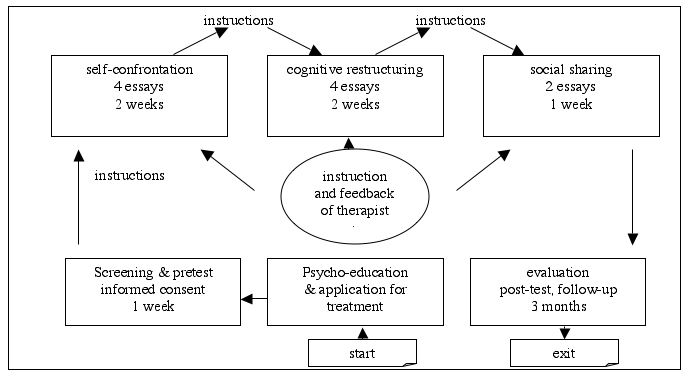
Methods: After rigorous screening for exclusion criteria of high dissociative tendencies, risk of psychosis, and suicidal tendencies, 48 patients, who had experienced a traumatic event in the past, were included in the online treatment study. The short form of the Working Alliance Inventory (WAI-S) was administered at the fourth treatment session. The relevance of the therapeutic relationship for treatment outcome was assessed in terms of residual gain from pretreatment assessment to the end of treatment. The revised Impact of Event Scale (IES-R) and the depression and anxiety subscales of the Brief Symptom Inventory (BSI) were used to assess treatment outcome.
Results: A total of 48 participants were included in the analysis. Overall, high alliance scores were found. In contrast to previous studies of conventional face-to-face therapy, there was only a low to modest association (.13 to .33) between the quality of the therapeutic relationship and treatment outcome.
Conclusion: High alliance scores indicate that it was possible to establish a stable and positive therapeutic relationship online. However, the therapeutic relationship was found to be a less relevant predictor of the therapy outcome than in face-to-face approaches. We discuss whether this finding can be attributed to methodological reasons such as the restricted range of alliance ratings obtained or the time of administration of the WAI-S, or whether the therapeutic relationship might be less relevant to the treatment outcome of online therapy approaches.
Conflict of interest statement
None declared.
References
-
- Mallen MJ, Day SX, Green MA. Online versus face-to-face conversations: an examination of relational and discourse variables. Psychother-Theor Res. 2003;40:155–163.
-
- Norcross JC, Hedges M, Prochaska JO. The face of 2010: a Delphi poll on the future of psychotherapy. Prof Psychol-Res Pr. 2002;33(3):316–322. doi: 10.1037/0735-7028.33.3.316. - DOI
-
- Knaevelsrud C, Jager J, Maercker A. Internet-Psychotherapie: Wirksamkeit und Besonderheiten der therapeutischen Beziehung [Internet psychotherapy: efficacy and particularities of the therapeutic relationship] Verhaltenstherapie. 2004;14(3):174–183. doi: 10.1159/000080913. - DOI
Publication types
MeSH terms
LinkOut - more resources
Full Text Sources
Medical
Miscellaneous
