


Glutathione S-transferase genotypes modify lung function decline in the general population: SAPALDIA cohort study
- PMID: 17217536
- PMCID: PMC1781067
- DOI: 10.1186/1465-9921-8-2
Glutathione S-transferase genotypes modify lung function decline in the general population: SAPALDIA cohort study
Abstract
Background: Understanding the environmental and genetic risk factors of accelerated lung function decline in the general population is a first step in a prevention strategy against the worldwide increasing respiratory pathology of chronic obstructive pulmonary disease (COPD). Deficiency in antioxidative and detoxifying Glutathione S-transferase (GST) gene has been associated with poorer lung function in children, smokers and patients with respiratory diseases. In the present study, we assessed whether low activity variants in GST genes are also associated with accelerated lung function decline in the general adult population.
Methods: We examined with multiple regression analysis the association of polymorphisms in GSTM1, GSTT1 and GSTP1 genes with annual decline in FEV1, FVC, and FEF25-75 during 11 years of follow-up in 4686 subjects of the prospective SAPALDIA cohort representative of the Swiss general population. Effect modification by smoking, gender, bronchial hyperresponisveness and age was studied.
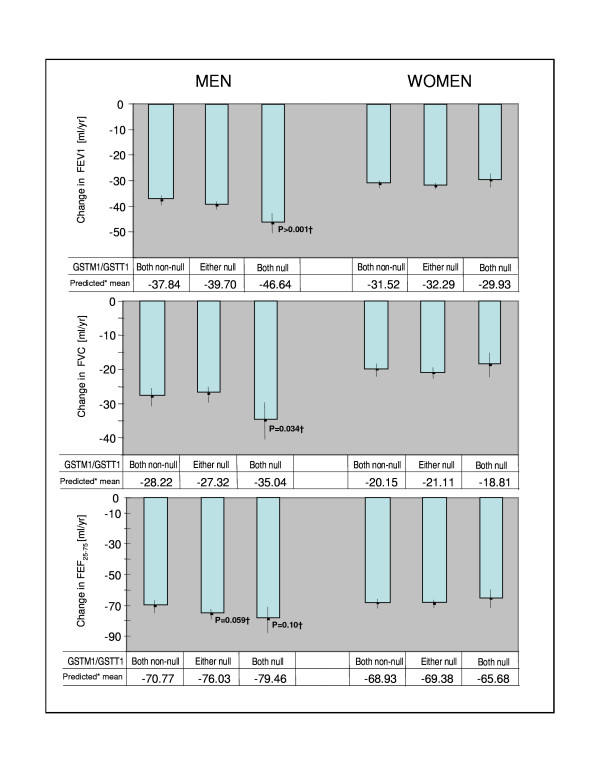
Results: The associations of GST genotypes with FEV1, FVC, and FEF25-75 were comparable in direction, but most consistent for FEV1. GSTT1 homozygous gene deletion alone or in combination with GSTM1 homozygous gene deletion was associated with excess decline in FEV1 in men, but not women, irrespective of smoking status. The additional mean annual decline in FEV1 in men with GSTT1 and concurrent GSTM1 gene deletion was -8.3 ml/yr (95% confidence interval: -12.6 to -3.9) relative to men without these gene deletions. The GSTT1 effect on the FEV1 decline comparable to the observed difference in FEV1 decline between never and persistent smoking men. Effect modification by gender was statistically significant.
Conclusion: Our results suggest that genetic GSTT1 deficiency is a prevalent and strong determinant of accelerated lung function decline in the male general population.
Figures
References
-
- Kunzli N, Ackermann-Liebrich U, Brandli O, Tschopp JM, Schindler C, Leuenberger P. Clinically "small" effects of air pollution on FVC have a large public health impact. Swiss Study on Air Pollution and Lung Disease in Adults (SAPALDIA) - team. Eur Respir J. 2000;15:131–136. doi: 10.1183/09031936.00.15113100. - DOI - PubMed
Publication types
MeSH terms
Substances
LinkOut - more resources
Full Text Sources
Medical
Research Materials
Miscellaneous
