


Somatic sequence alterations in twenty-one genes selected by expression profile analysis of breast carcinomas
- PMID: 17224074
- PMCID: PMC1851401
- DOI: 10.1186/bcr1637
Somatic sequence alterations in twenty-one genes selected by expression profile analysis of breast carcinomas
Abstract
Introduction: Genomic alterations have been observed in breast carcinomas that affect the capacity of cells to regulate proliferation, signaling, and metastasis. Re-sequence studies have investigated candidate genes based on prior genetic observations (changes in copy number or regions of genetic instability) or other laboratory observations and have defined critical somatic mutations in genes such as TP53 and PIK3CA.
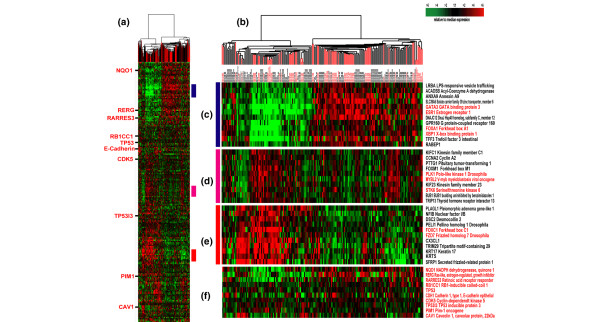
Methods: We have extended the paradigm and analyzed 21 genes primarily identified by expression profiling studies, which are useful for breast cancer subtyping and prognosis. This study conducted a bidirectional re-sequence analysis of all exons and 5', 3', and evolutionarily conserved regions (spanning more than 16 megabases) in 91 breast tumor samples.
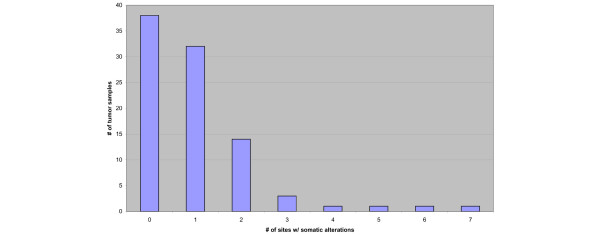
Results: Eighty-seven unique somatic alterations were identified in 16 genes. Seventy-eight were single base pair alterations, of which 23 were missense mutations; 55 were distributed across conserved intronic regions or the 5' and 3' regions. There were nine insertion/deletions. Because there is no a priori way to predict whether any one of the identified synonymous and noncoding somatic alterations disrupt function, analysis unique to each gene will be required to establish whether it is a tumor suppressor gene or whether there is no effect. In five genes, no somatic alterations were observed.
Conclusion: The study confirms the value of re-sequence analysis in cancer gene discovery and underscores the importance of characterizing somatic alterations across genes that are related not only by function, or functional pathways, but also based upon expression patterns.
Figures
Comment in
-
The continuing search for cancer-causing somatic mutations.Breast Cancer Res. 2007;9(1):101. doi: 10.1186/bcr1654. Breast Cancer Res. 2007. PMID: 17319975 Free PMC article.
References
-
- Balmain A, Gray J, Ponder B. The genetics and genomics of cancer. Nat Genet. 2003;33:238–244. - PubMed
-
- Weir B, Zhao X, Meyerson M. Somatic alterations in the human cancer genome. Cancer Cell. 2004;6:433–438. - PubMed
-
- Langerod A, Bukholm IR, Bregard A, Lonning PE, Andersen TI, Rognum TO, Meling GI, Lothe RA, Borresen-Dale AL. The TP53 codon 72 polymorphism may affect the function of TP53 mutations in breast carcinomas but not in colorectal carcinomas. Cancer Epidemiol Biomarkers Prev. 2002;11:1684–1688. - PubMed
-
- Børresen-Dale A-L. TP53 and breast cancer. Hum Mutat. 2003;21:292–300. - PubMed
Publication types
MeSH terms
Grants and funding
LinkOut - more resources
Full Text Sources
Medical
Molecular Biology Databases
Research Materials
Miscellaneous
