. 2007 Nov;195(1):39-47.
doi: 10.1016/j.atherosclerosis.2006.11.030. Epub 2007 Jan 16.

Differential effects of AT1 receptor and Ca2+ channel blockade on atherosclerosis, inflammatory gene expression, and production of reactive oxygen species

Affiliations

Differential effects of AT1 receptor and Ca2+ channel blockade on atherosclerosis, inflammatory gene expression, and production of reactive oxygen species

Derek E Doran et al. Atherosclerosis. 2007 Nov.

Abstract

Angiotensin II receptor blockade has been shown to inhibit atherosclerosis in several different animal models. We sought to determine if this effect was the result of blood pressure reduction per se or a result of the anti-inflammatory effects of receptor blockade. ApoE-deficient mice were fed a high fat diet and treated with either an angiotensin II receptor antagonist, candesartan (0.5 mg/kg/day, s.c.) or a calcium channel blocker, amlodipine (7.5 mg/kg/day, mixed with food). Atherosclerotic lesion area, aortic inflammatory gene expression as well as aortic H2O2 and superoxide production were assayed. We found that candesartan but not amlodipine treatment dramatically attenuated the development of atherosclerosis despite a similar reduction in blood pressure. Similarly, candesartan treatment inhibited aortic expression of inflammatory genes and production of reactive oxygen species, effects not seen with amlodipine. These data demonstrate that angiotensin II receptor blockade inhibits atherosclerosis by reducing vascular oxidative stress and inflammatory gene production independent of blood pressure reduction.


Figures
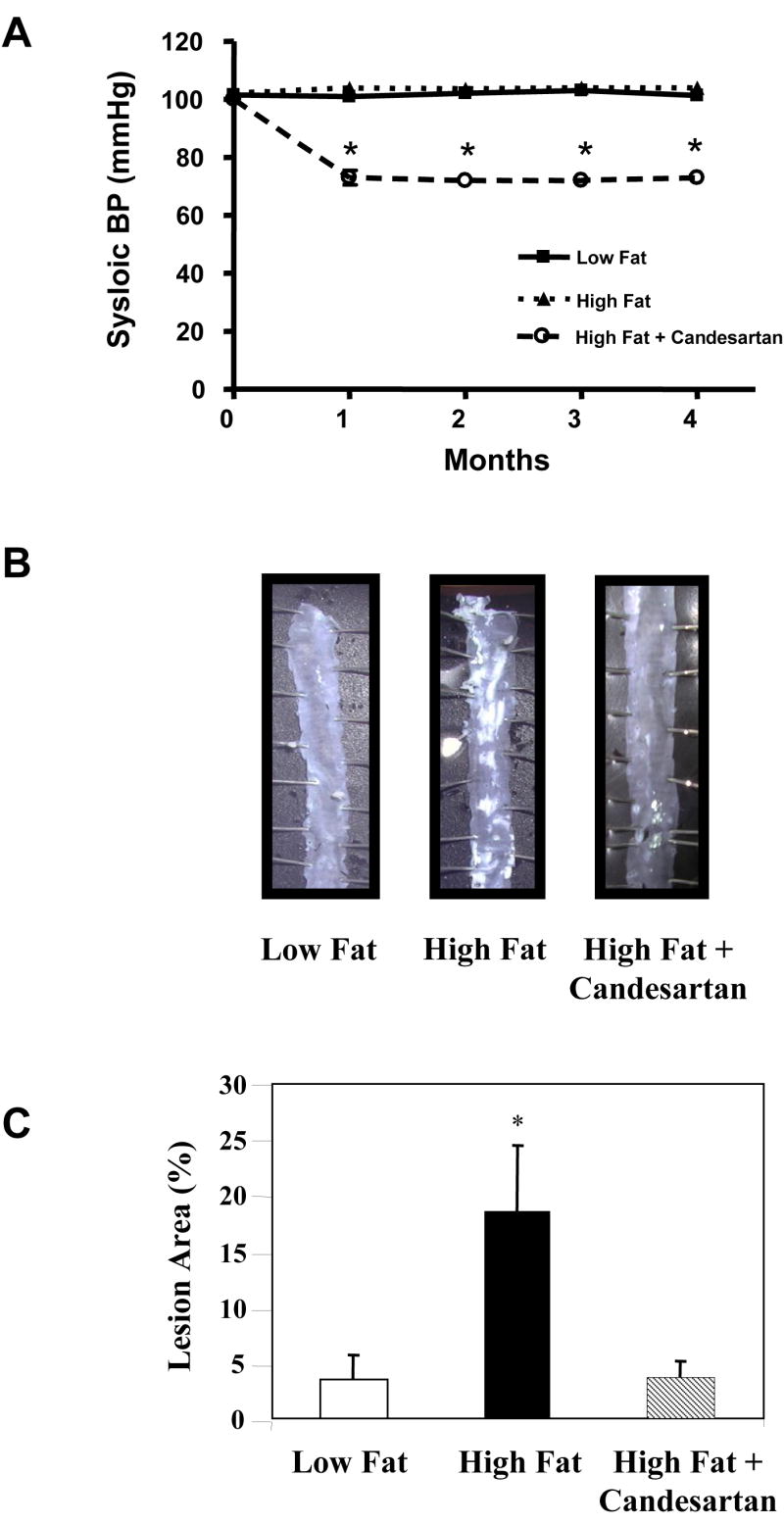
Figure 1
Figure 1
Inhibition of atherosclerosis by treatment with candesartan. Male apoE-deficient mice were fed either a standard chow diet (Low Fat) or a high fat diet for 4 months. Some animals were treated with candesartan for the entire 4 month experimental period. Panel A shows blood pressure measurements obtained using the tail cuff technique. Panel B contains representative en face preparations of the descending aortas from animals from each of the 3 experimental groups. Note the marked inhibition of atherosclerosis in the animals fed the high fat diet and treated with candesartan. Panel C summarizes the mean atherosclerotic lesion area for all 3 experimental groups. Eight -12 animals were included in each experimental group. * = P <0.01
Figure 2
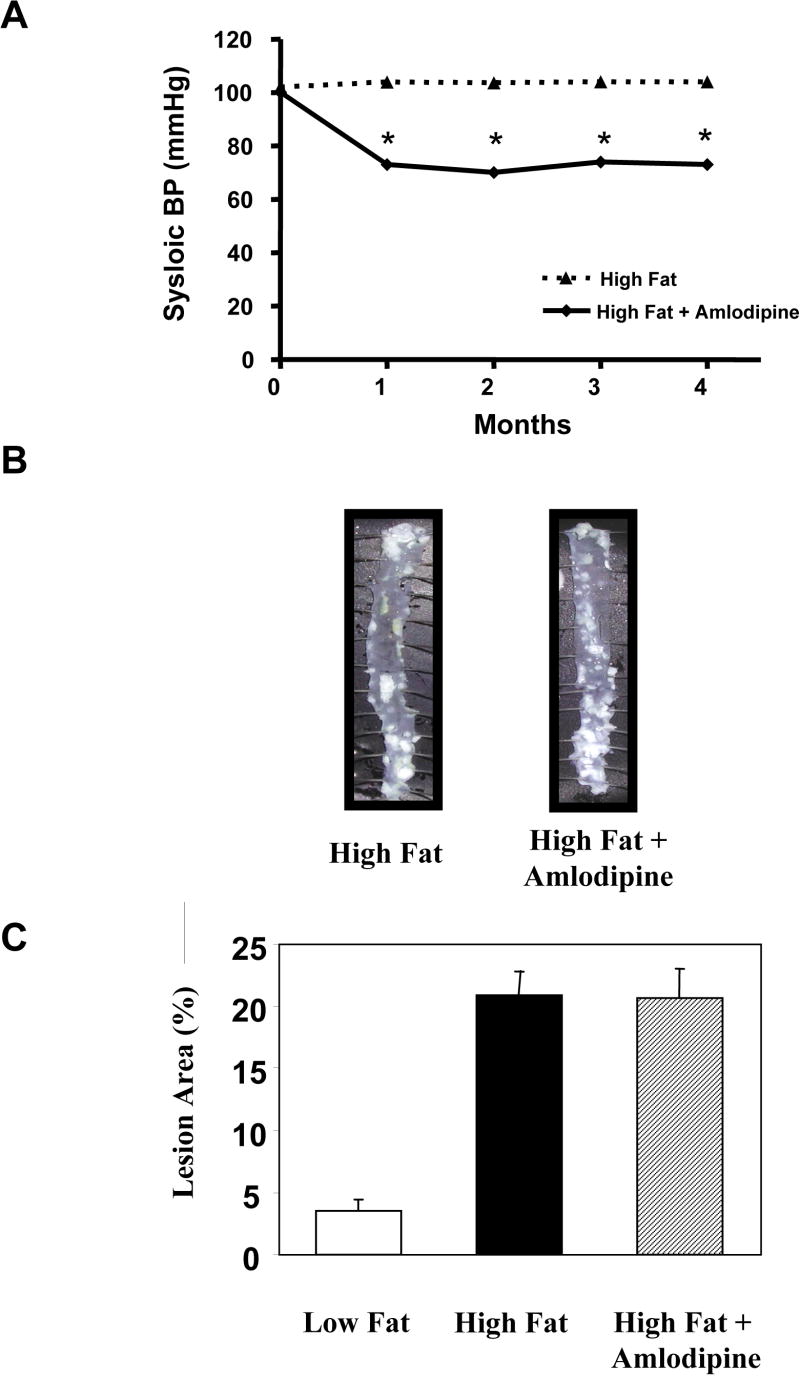
Figure 2
Lack of Inhibition of atherosclerosis by treatment with amlodipine. Male apoE-deficient mice were fed a high fat diet for 4 months. Some animals were treated with amlodipine for the entire 4 month experimental period. Panel A shows blood pressure measurements obtained using the tail cuff technique. Note that the blood pressure reduction was similar to that seen with candesartan treatment. Panel B contains representative en face preparations of the descending aortas from animals from both of the experimental groups. Note the lack of effect of amlodipine on atherosclerotic lesion area. Mean data are resented in panel C. Eight -12 animals were included in each experimental group. * = p <0.01
Figure 3
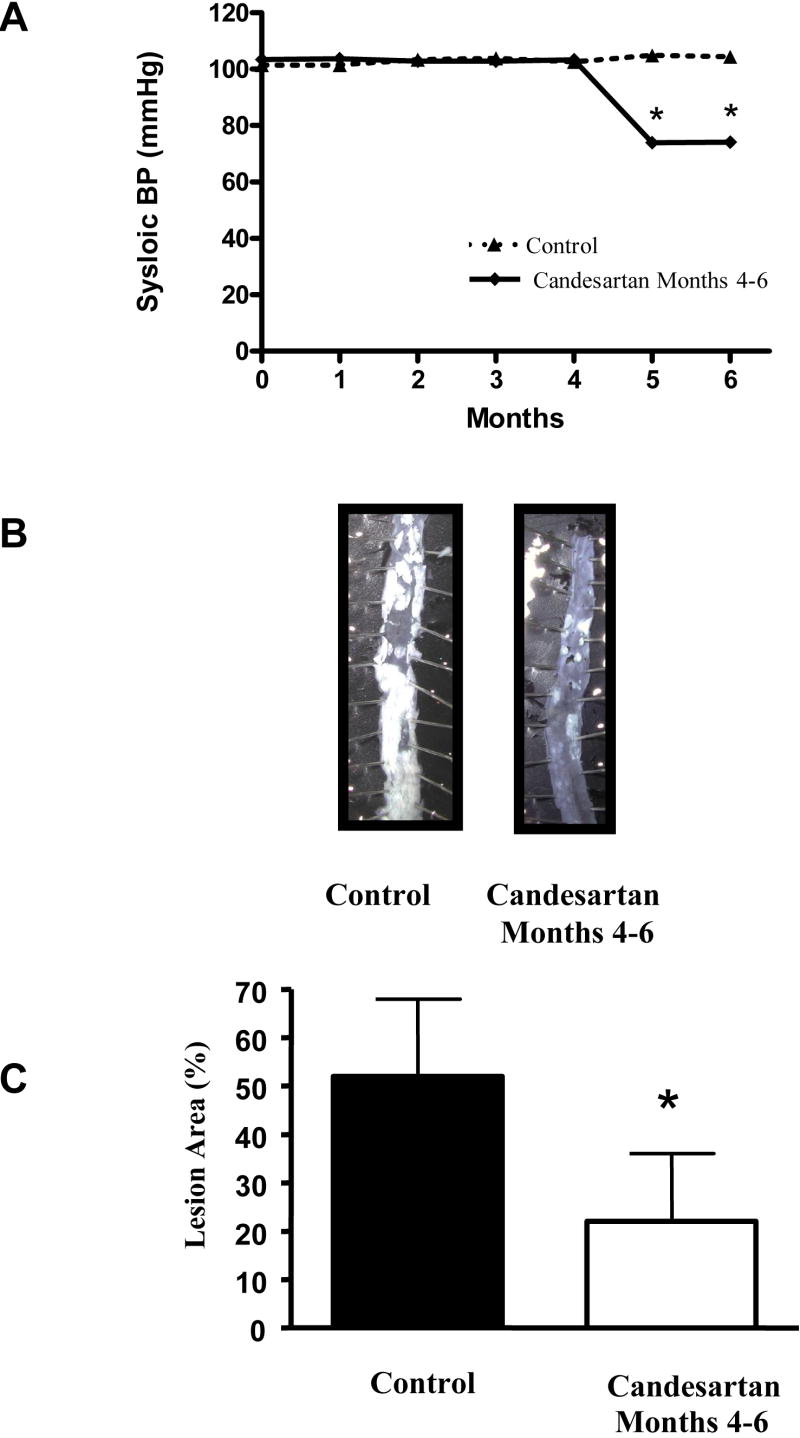
Figure 3
Angiotensin II receptor blockade halts atherosclerotic disease progression in animals with established atherosclerosis. Male apoE-deficient mice were fed a high fat diet for 6 months. Some animals were treated with candesartan for the months 5 and 6. Panel A shows blood pressure measurements obtained using the tail cuff technique. Panel B contains representative en face preparation from both treatment groups. Note that treatment with candesartan resulted in a halt in the progression of atherosclerosis. Mean data are presented in panel C. Eight - 10 animals were included in each experimental group. * = p <0.01
Figure 4
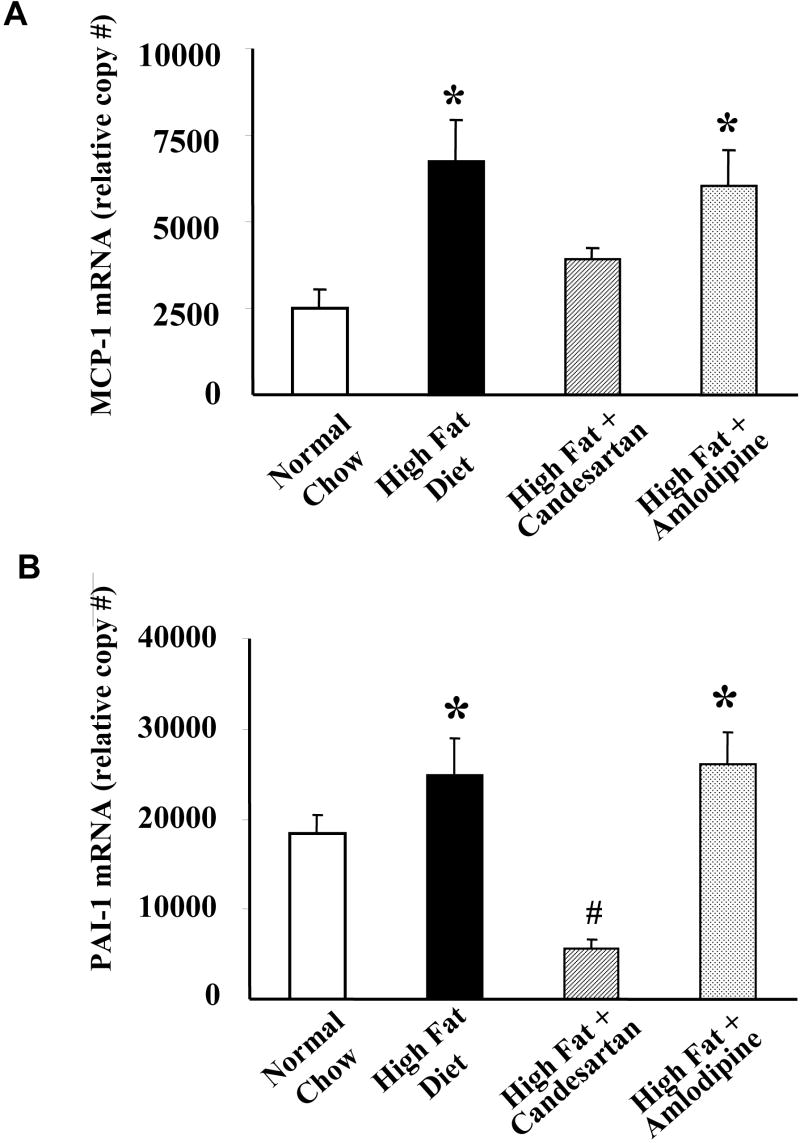
Figure 4
Candesartan but not amlodipine inhibited inflammatory gene expression in apoE-deficient mice fed a high fat diet. Male apoE-deficient mice were fed either a standard chow diet (Low Fat) or a high fat diet. Some animals were treated with amlodipine or candesartan. MCP-1 and PAI-1 mRNA expression were measured using quantitative real time PCR. Shown are mean relative expression levels from 10 animals per treatment group. * = p<0.01 vs. normal chow (low fat) control group. # = p <0.05 vs. normal chow (low fat) control group.
Figure 5
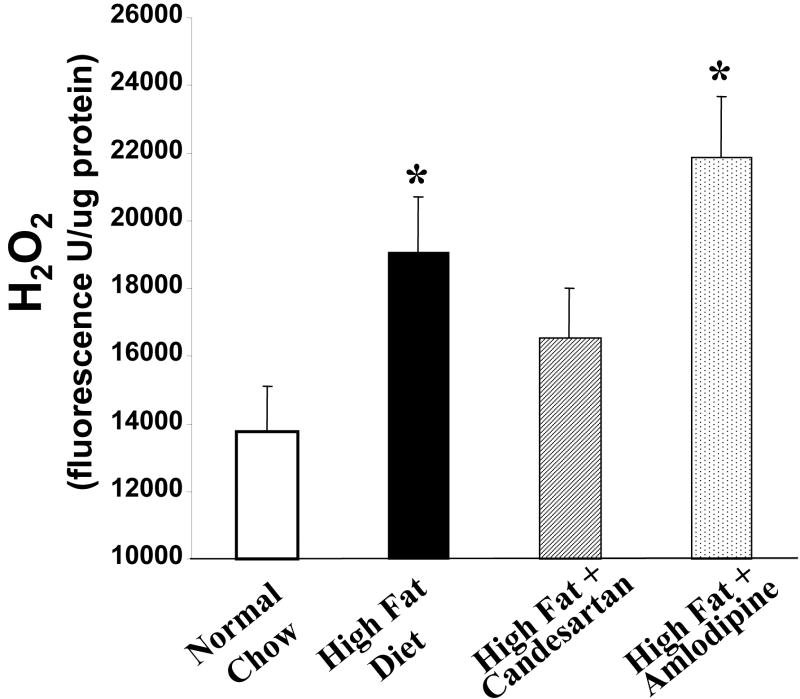
Figure 5
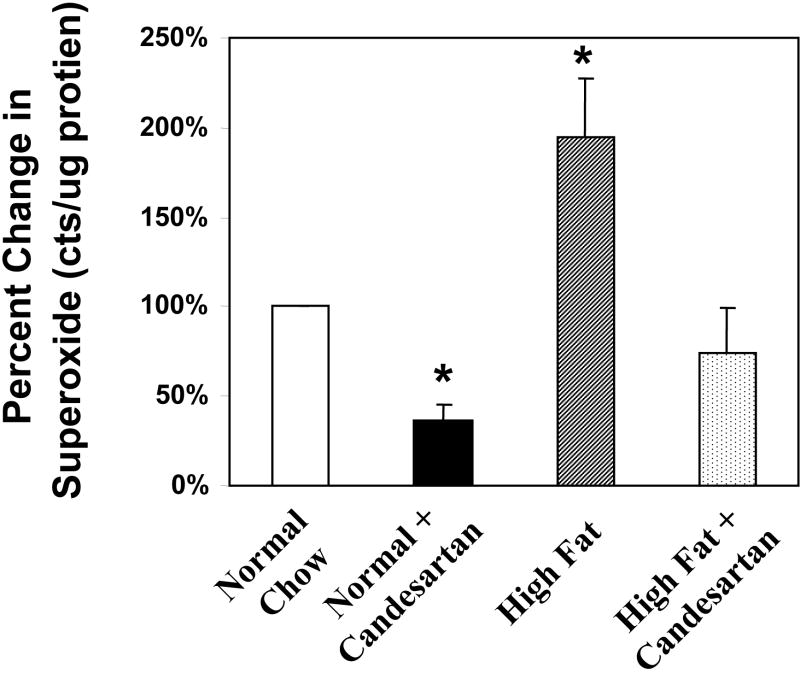
Inhibition of production of ROS by candesartan. Panel A: Candesartan but not amlodipine inhibits diet induced increases in aortic H2O2 production. Treatment groups were the same as used in figure 4. H2O2 was measured using the amplex red assay. * = p<0.01 vs. normal chow (low fat) control group. Panel B: Candesartan also inhibited the diet-induced increase in superoxide production. * = p<0.01 vs. normal chow (low fat) control group.
Figure 5
Figure 5
Inhibition of production of ROS by candesartan. Panel A: Candesartan but not amlodipine inhibits diet induced increases in aortic H2O2 production. Treatment groups were the same as used in figure 4. H2O2 was measured using the amplex red assay. * = p<0.01 vs. normal chow (low fat) control group. Panel B: Candesartan also inhibited the diet-induced increase in superoxide production. * = p<0.01 vs. normal chow (low fat) control group.

References

    1. Weiss D, Sorescu D, Taylor WR. Angiotensin II and atherosclerosis. Am J Cardiol. 2001;87:25C–32C. - PubMed
    1. Weiss D, Kools JJ, Taylor WR. Angiotensin II-induced hypertension accelerates the development of atherosclerosis in apoE-deficient mice. Circulation. 2001;103:448–454. - PubMed
    1. Daugherty A, Cassis L. Chronic angiotensin II infusion promotes atherogenesis in low density lipoprotein receptor -/- mice. Ann N Y Acad Sci. 1999;892:108–118. - PubMed
    1. Daugherty A, Manning MW, Cassis LA. Angiotensin II promotes atherosclerotic lesions and aneurysms in apolipoprotein E-deficient mice. J Clin Invest. 2000;105:1605–1612. - PMC - PubMed
    1. Ihara M, Urata H, Kinoshita A, Suzumiya J, Sasaguri M, Kikuchi M, Ideishi M, Arakawa K. Increased chymase-dependent angiotensin II formation in human atherosclerotic aorta. Hypertension. 1999;33:1399–1405. - PubMed

Publication types