


. 2007 Jun;41(6):346-8; discussion 348.
doi: 10.1136/bjsm.2006.028951.
Epub 2007 Jan 19.
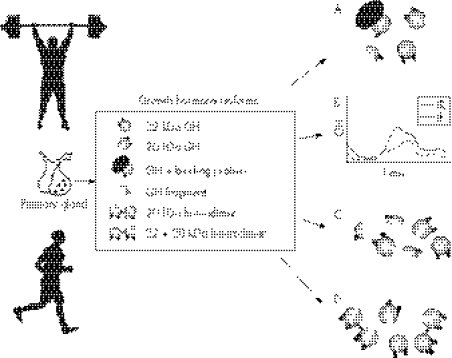
Exercise modulation of growth hormone isoforms: current knowledge and future directions for the exercise endocrinologist
Affiliations
- PMID: 17237119
- PMCID: PMC2465327
- DOI: 10.1136/bjsm.2006.028951
Item in Clipboard
Exercise modulation of growth hormone isoforms: current knowledge and future directions for the exercise endocrinologist
Br J Sports Med.
2007 Jun.
Abstract
Importance of growth hormone molecular heterogeneity as a partial mechanism for somatogenic adaptations to physical activity
Conflict of interest statement
Competing interests: None.
References
-
- Baumann G. Growth hormone heterogeneity: genes, isohormones, variants, and binding proteins. Endocr Rev 199112424–449. - PubMed
-
- Hymer W C, Kraemer W J, Nindl B C.et al Characteristics of circulating growth hormone in women after acute heavy resistance exercise. Am J Endocrinol Metab 2001281E878–E887. - PubMed
-
- Hymer W C, Grindland R E, Nindl B C.et al Growth hormone variants and human exercise. In: Kraemer WJ, Rogol AD, eds. International Olympic Committee Textbook Series: Exercise Endocrinology Oxford: Blackwell Scientific Publications, 2005
-
- Nindl B C, Hymer W C, Deaver D R.et al Growth hormone pulsatility profile characteristics following acute heavy resistance exercise. J Appl Physiol 200191163–172. - PubMed
-
- Nindl B C, Kraemer W J, Hymer W C. Immunofunctional vs. immunoreactive growth hormone responses after resistance exercise in men and women. Growth Horm IGF Res 20001099–103. - PubMed
