


The role of pleiotropy in the maintenance of sex in yeast
- PMID: 17237501
- PMCID: PMC1840064
- DOI: 10.1534/genetics.106.059444
The role of pleiotropy in the maintenance of sex in yeast
Abstract
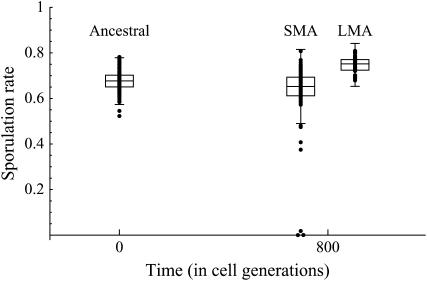
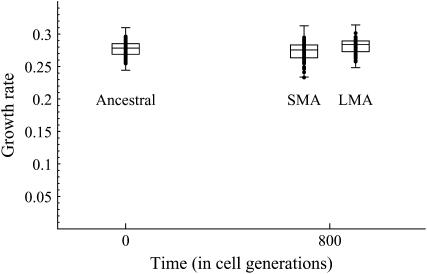
In facultatively sexual species, lineages that reproduce asexually for a period of time can accumulate mutations that reduce their ability to undergo sexual reproduction when sex is favorable. We propagated Saccharomyces cerevisiae asexually for approximately 800 generations, after which we measured the change in sexual fitness, measured as the proportion of asci observed in sporulation medium. The sporulation rate in cultures propagated asexually at small population size declined by 8%, on average, over this time period, indicating that the majority of mutations that affect sporulation rate are deleterious. Interestingly, the sporulation rate in cultures propagated asexually at large population size improved by 11%, on average, indicating that selection on asexual function effectively eliminated most of the mutations deleterious to sporulation ability. These results suggest that pleiotropy between mutations' effects on asexual fitness and sexual fitness was predominantly positive, at least for the mutations accumulated in this experimental evolution study. A positive correlation between growth rate and sporulation rate among lines also provided evidence for positive pleiotropy. These results demonstrate that, at least under certain circumstances, selection acting on asexual fitness can help to maintain sexual function.
Figures

References
-
- Baatz, M., and G. P. Wagner, 1997. Adaptive inertia caused by hidden pleiotropic effects. Theor. Popul. Biol. 51: 49–66.
-
- Barton, N. H., and B. Charlesworth, 1998. Why sex and recombination? Science 281: 1986–1990. - PubMed
-
- Bateman, A. J., 1959. The viability of near-normal irradiated chromosomes. Int. J. Radiat. Biol. 1: 170–180.
-
- Bell, G., 1982. The Masterpiece of Nature: The Evolution and Genetics of Sexuality. University of California Press, Berkeley, CA.
Publication types
MeSH terms
LinkOut - more resources
Full Text Sources
Other Literature Sources
Molecular Biology Databases
