Comparative Study
. 2007 Feb-Mar;42(2-3):88-93.
doi: 10.1016/j.micpath.2006.11.005. Epub 2007 Jan 22.

Genetically regulated filamentation contributes to Candida albicans virulence during corneal infection

Affiliations
Comparative Study

Genetically regulated filamentation contributes to Candida albicans virulence during corneal infection

Beth E Jackson et al. Microb Pathog. 2007 Feb-Mar.

Abstract

Candida albicans is a commensal fungus of the normal flora yet causes opportunistic infection following trauma or surgery and during immunosuppression. C. albicans virulence factors include morphogenesis into invasive filaments, adherence to host cells, and secretion of proteases. This study evaluated the role of fungal hyphal extension in experimental C. albicans keratitis using genetically altered yeast strains. Scarified corneas of adult BALB/c mice were topically inoculated with wild-type (SC5314) or 10 transposon-induced mutant strains of C. albicans and monitored for 4 days post inoculation (PI). In vitro growth kinetics and the yeast strains' ability to bud into pseudohyphae or hyphae were also compared. The wild-type human isolate had a high degree of virulence in the murine cornea, and four fungal strains deficient in genes regulating adherence or encoding membrane proteins did not significantly differ from the parental strain (P>0.3). Five yeast strains deficient in genes involved in filamentation resulted in fully or partially attenuated keratomycosis (P<0.0001). The overall growth kinetics of wild-type and mutant strains were similar in rich media (P>0.9), but mutants with deficient morphogenesis had reduced filamentation in vitro. Phenotypic switching from yeasts to filamentous forms facilitates the establishment and progression of experimental corneal disease by C. albicans.


Figures
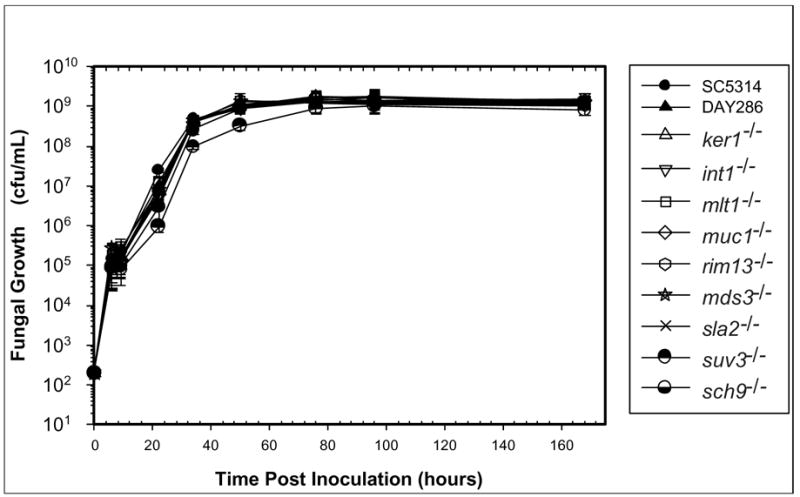
Figure 1
Figure 1
In vitro growth kinetics. Each Candida albicans yeast strain was inoculated into YPD liquid media. Mock-inoculated YPD liquid media served as the negative control. The optical density was measured for the cultures at 6, 9, 22, 34, 50, 76, 96, and 168 hours PI. Two independent experiments with triplicate samples were performed and the means were calculated and reported. SC5314 is the wild-type C. albicans strain and DAY286 is the mutant control.
Figure 2
Figure 2
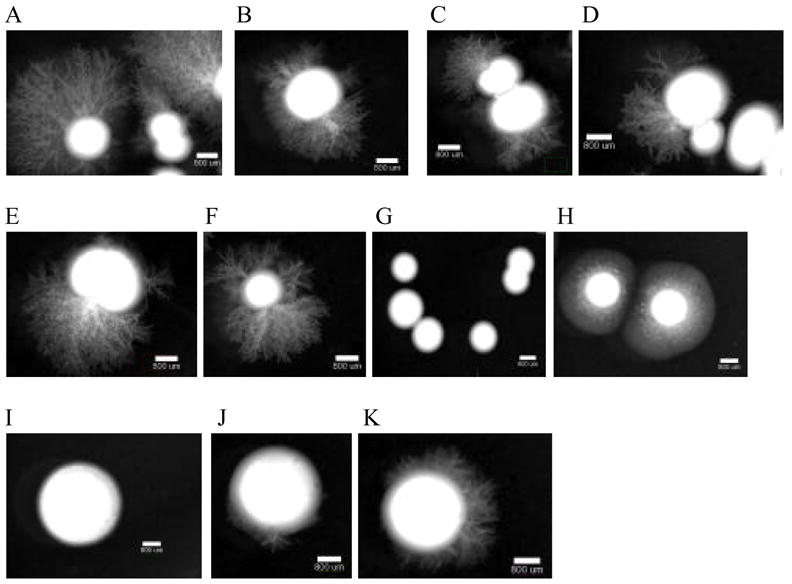
Filamentation assay on M199 pH 8. Each strain was grown overnight at 30°C in YPD liquid media. The cultures were diluted to a concentration of 10 cfu/μL, where 5 μL was added to medium 199 (M199) containing Earle’s salts and glutamine but lacking sodium bicarbonate (Gibco BRL) and buffered with 155 mM Tris-HCl at pH 8 + 1.5% agar. Pictures were taken at 14 day PI (A) SC5314, (B) DAY286, (C) ker1−/− (D) int1−/−, (E) muc1−/−, (F) mlt1−/−, (G) rim13−/−, (H) mds3−/−, (I) sla2−/−, (J) sch9−/−, and (K) suv3−/−. A and B are controls, C to F are mutants involved in adhesion or encode membrane proteins, and G to K are morphogenesis mutants.
Figure 3
Figure 3
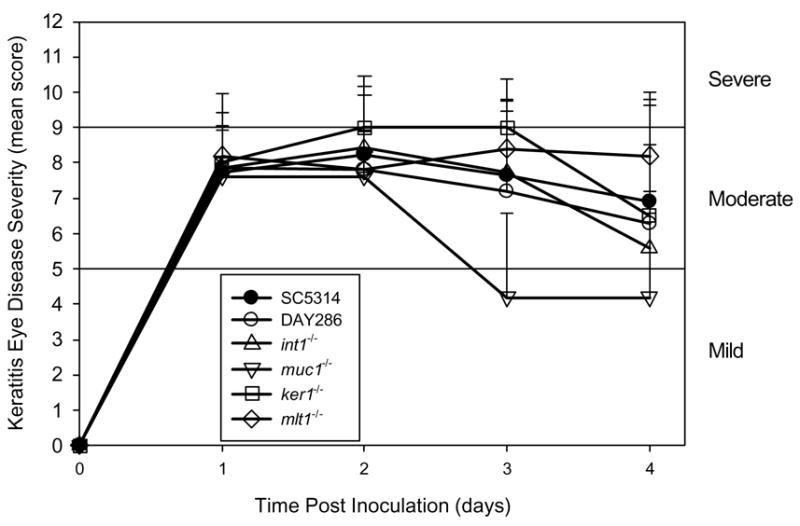
Mean keratitis scores for mutants in genes involved in adhesion or membrane proteins. Error bars represent standard deviation. There is no statistical difference in any mutant strain score at any time point when compared to the wild-type yeast strain, SC5314.
Figure 4
Figure 4
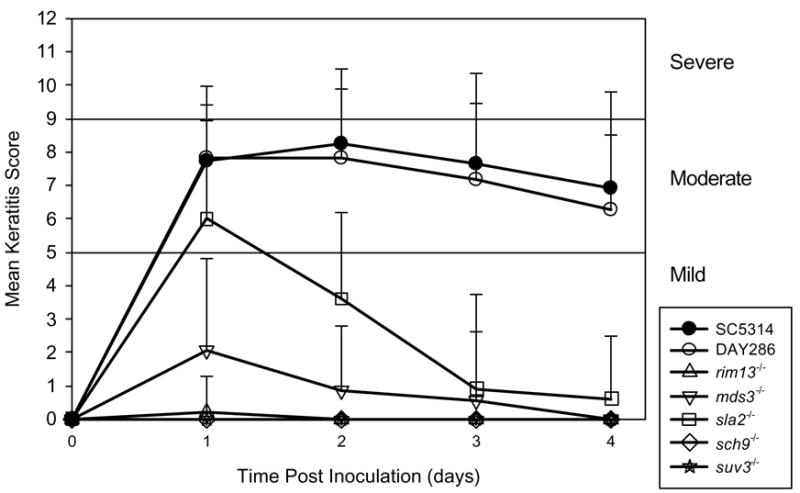
Mean keratitis scores for the morphogenesis mutants. Error bars represent standard deviation. All mutants had partially or fully attenuated virulence in the mouse keratitis model.
Figure 5
Figure 5
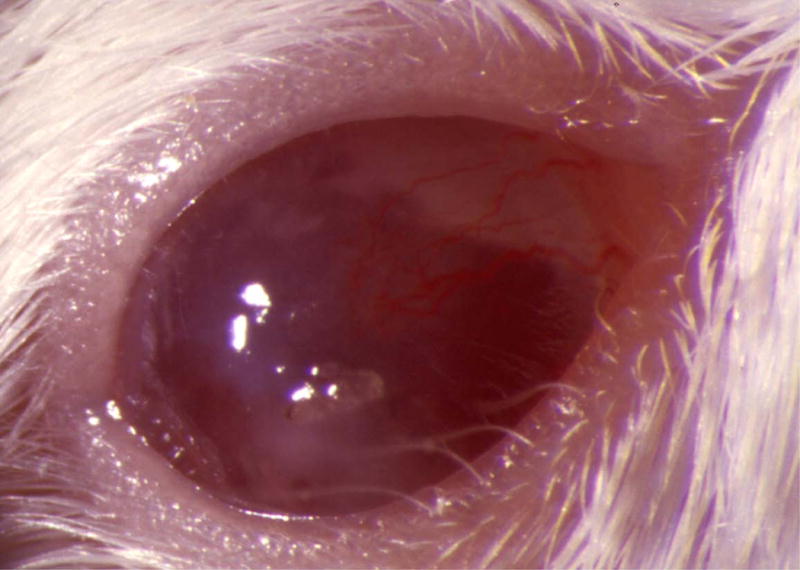
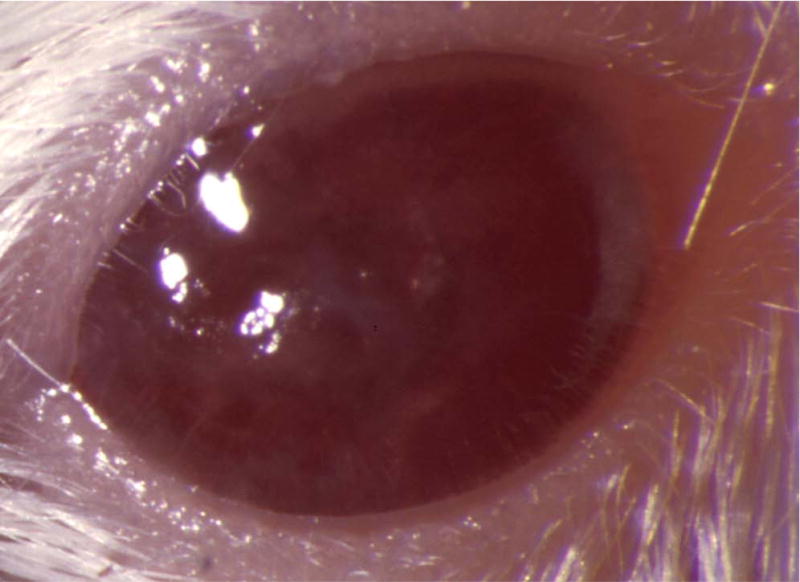
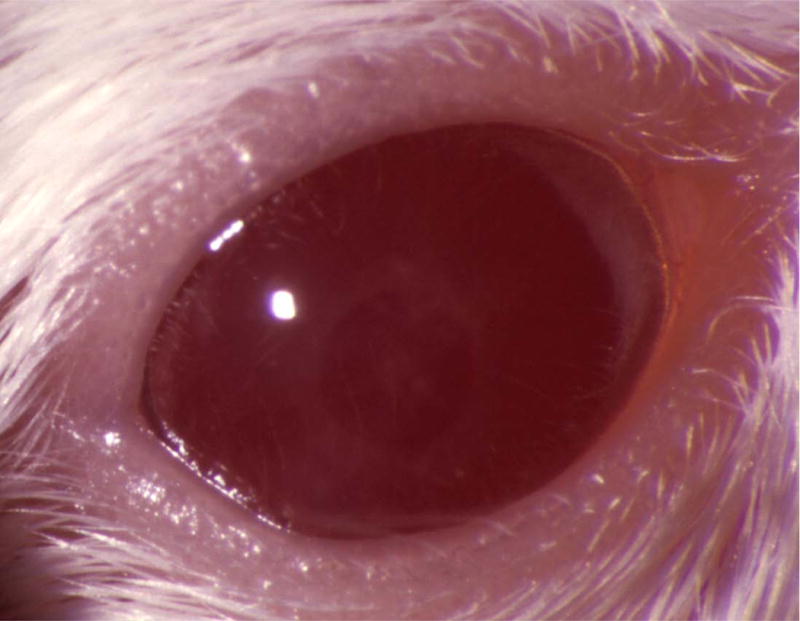
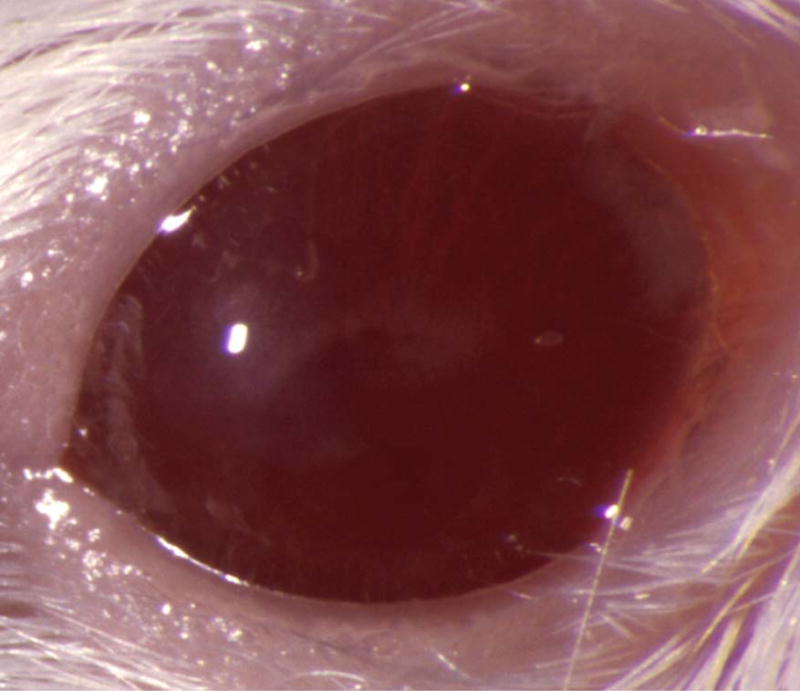
Mouse corneas inoculated with C. albicans. Mouse eyes were scarified and inoculated with 105 cfu. Pictures were taken at 1 day PI using a slit-lamp biomicroscope and camera. (A) SC5314 (wild-type), (B) DAY286, (C) rim13−/−, and (D) sterile PBS.
Figure 5
Figure 5
Mouse corneas inoculated with C. albicans. Mouse eyes were scarified and inoculated with 105 cfu. Pictures were taken at 1 day PI using a slit-lamp biomicroscope and camera. (A) SC5314 (wild-type), (B) DAY286, (C) rim13−/−, and (D) sterile PBS.
Figure 5
Figure 5
Mouse corneas inoculated with C. albicans. Mouse eyes were scarified and inoculated with 105 cfu. Pictures were taken at 1 day PI using a slit-lamp biomicroscope and camera. (A) SC5314 (wild-type), (B) DAY286, (C) rim13−/−, and (D) sterile PBS.
Figure 5
Figure 5
Mouse corneas inoculated with C. albicans. Mouse eyes were scarified and inoculated with 105 cfu. Pictures were taken at 1 day PI using a slit-lamp biomicroscope and camera. (A) SC5314 (wild-type), (B) DAY286, (C) rim13−/−, and (D) sterile PBS.

References

    1. Wu T, Mitchell B, Carothers T, Coats D, Brady-McCreery K, Paysse E, et al. Molecular analysis of the pediatric ocular surface for fungi. Curr Eye Res. 2003;26:33–6. - PubMed
    1. Driebe WT., Jr Present status of contact lens-induced corneal infections. Ophthalmol Clin North Am. 2003;16:485–94. - PubMed
    1. Kercher L, Wardwell SA, Wilhelmus KR, Mitchell BM. Molecular screening of donor corneas for fungi before excision. Invest Ophthalmol Vis Sci. 2001;42:2578–83. - PubMed
    1. Thomas PA. Fungal infections of the cornea. Eye. 2003;17:852–62. - PubMed
    1. Sudbery P, Gow N, Berman J. The distinct morphogenic states of Candida albicans. Trends Microbiol. 2004;12:317–24. - PubMed

Publication types