


On the origin of biochemistry at an alkaline hydrothermal vent
- PMID: 17255002
- PMCID: PMC2442388
- DOI: 10.1098/rstb.2006.1881
On the origin of biochemistry at an alkaline hydrothermal vent
Abstract
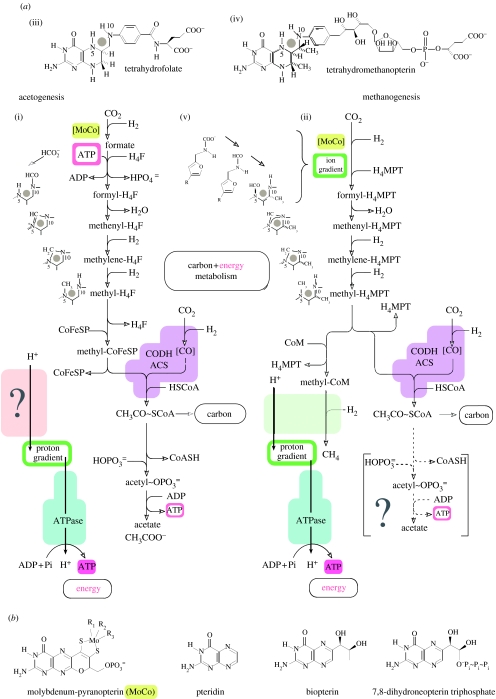
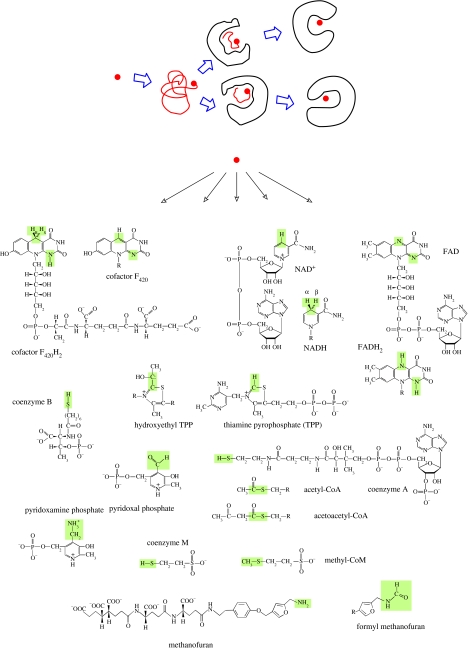
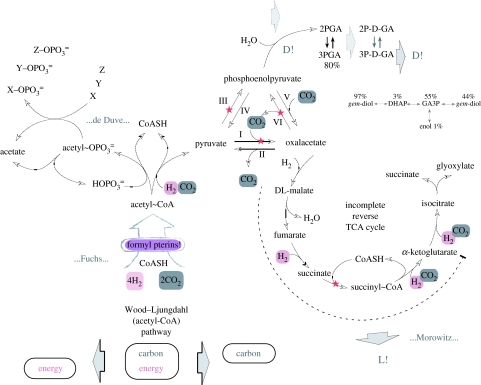
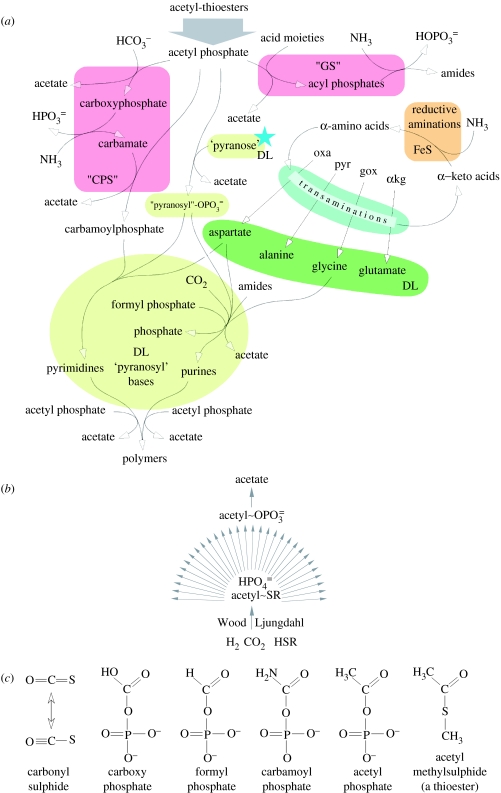
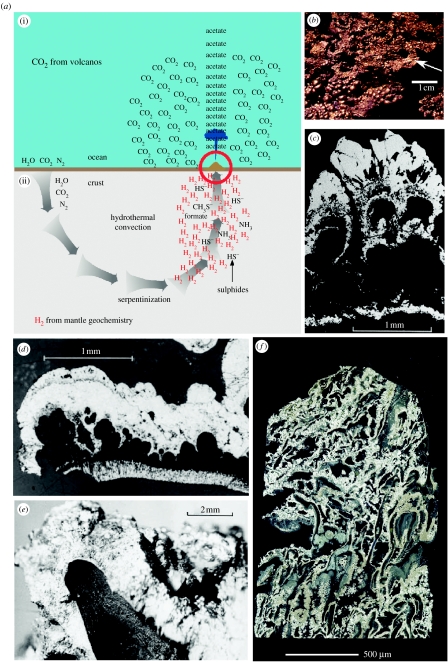
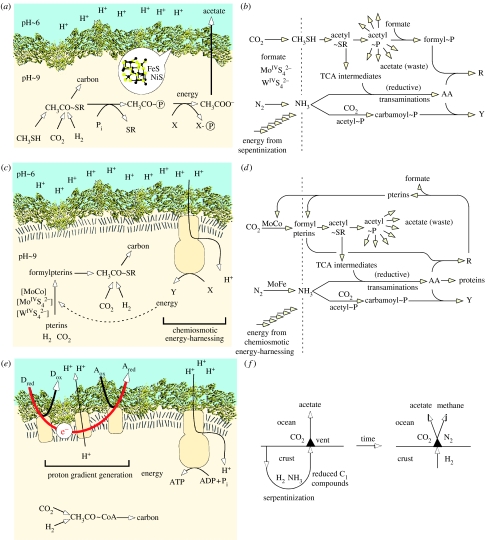
A model for the origin of biochemistry at an alkaline hydrothermal vent has been developed that focuses on the acetyl-CoA (Wood-Ljungdahl) pathway of CO2 fixation and central intermediary metabolism leading to the synthesis of the constituents of purines and pyrimidines. The idea that acetogenesis and methanogenesis were the ancestral forms of energy metabolism among the first free-living eubacteria and archaebacteria, respectively, stands in the foreground. The synthesis of formyl pterins, which are essential intermediates of the Wood-Ljungdahl pathway and purine biosynthesis, is found to confront early metabolic systems with steep bioenergetic demands that would appear to link some, but not all, steps of CO2 reduction to geochemical processes in or on the Earth's crust. Inorganically catalysed prebiotic analogues of the core biochemical reactions involved in pterin-dependent methyl synthesis of the modern acetyl-CoA pathway are considered. The following compounds appear as probable candidates for central involvement in prebiotic chemistry: metal sulphides, formate, carbon monoxide, methyl sulphide, acetate, formyl phosphate, carboxy phosphate, carbamate, carbamoyl phosphate, acetyl thioesters, acetyl phosphate, possibly carbonyl sulphide and eventually pterins. Carbon might have entered early metabolism via reactions hardly different from those in the modern Wood-Ljungdahl pathway, the pyruvate synthase reaction and the incomplete reverse citric acid cycle. The key energy-rich intermediates were perhaps acetyl thioesters, with acetyl phosphate possibly serving as the universal metabolic energy currency prior to the origin of genes. Nitrogen might have entered metabolism as geochemical NH3 via two routes: the synthesis of carbamoyl phosphate and reductive transaminations of alpha-keto acids. Together with intermediates of methyl synthesis, these two routes of nitrogen assimilation would directly supply all intermediates of modern purine and pyrimidine biosynthesis. Thermodynamic considerations related to formyl pterin synthesis suggest that the ability to harness a naturally pre-existing proton gradient at the vent-ocean interface via an ATPase is older than the ability to generate a proton gradient with chemistry that is specified by genes.
Figures



References
-
- Ahmed H, Ettema T.J, Tjaden B, Geerling A.C, van der Oost J, Siebers B. The semi-phosphorylative Entner–Doudoroff pathway in hyperthermophilic archaea: a re-evaluation. Biochem. J. 2005;390:529–540. doi:10.1042/BJ20041711 - DOI - PMC - PubMed
-
- Amend J.P, Shock E.L. Energetics of overall metabolic reactions of thermophilic and hyperthermophilic Archaea and Bacteria. FEMS Microbiol. Rev. 2001;25:175–243. doi:10.1111/j.1574-6976.2001.tb00576.x - DOI - PubMed
-
- Austin S.M, Waddell T.G. Prebiotic synthesis of vitamin B6-type compounds. Orig. Life Evol. Biosph. 1999;29:287–296. doi:10.1023/A:1006532518221 - DOI - PubMed
-
- Bach, W., Paulick, H., Garrido C. J. Ildefonse, B., Meurer, W. P. & Humphris, S. E. 2006 Unraveling the sequence of serpentinization reactions: petrography, mineral chemistry, and petrophysics of serpentinites from MAR 15° N (ODP Leg 209, Site 1274). Geophys. Res. Lett.33, L13306.
-
- Bada J.L, Lazcano A. Some like it hot, but not the first biomolecules. Science. 2002;296:1982–1983. doi:10.1126/science.1069487 - DOI - PubMed
Publication types
MeSH terms
LinkOut - more resources
Full Text Sources
Medical
