


Faster onset and dopamine transporter selectivity predict stimulant and reinforcing effects of cocaine analogs in squirrel monkeys
- PMID: 17258302
- PMCID: PMC1850383
- DOI: 10.1016/j.pbb.2006.12.006
Faster onset and dopamine transporter selectivity predict stimulant and reinforcing effects of cocaine analogs in squirrel monkeys
Abstract
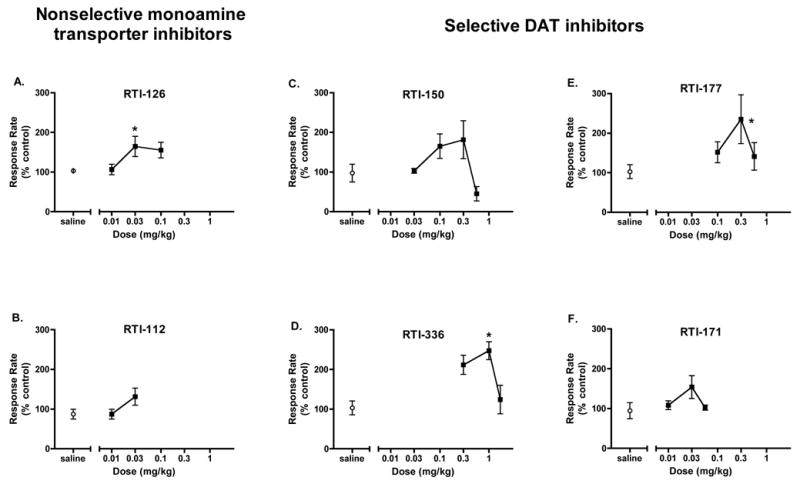
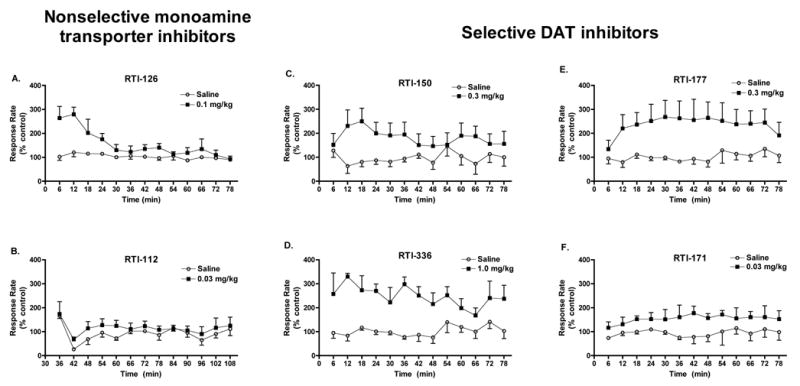
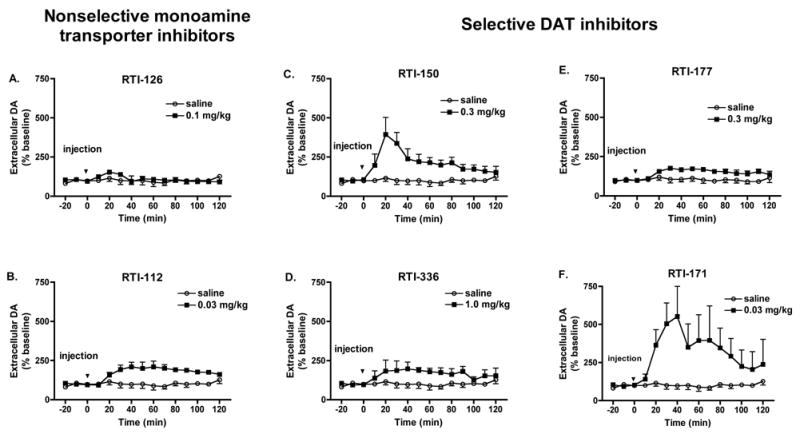
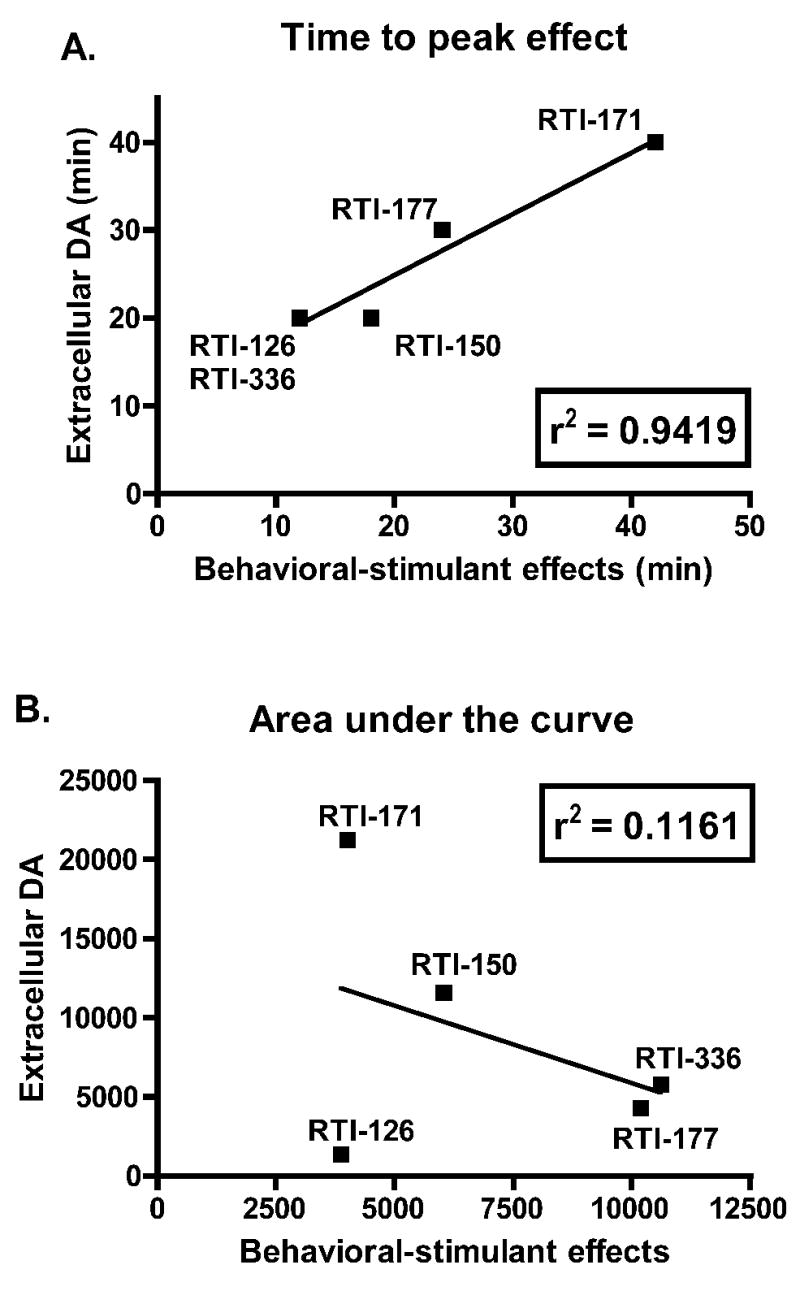
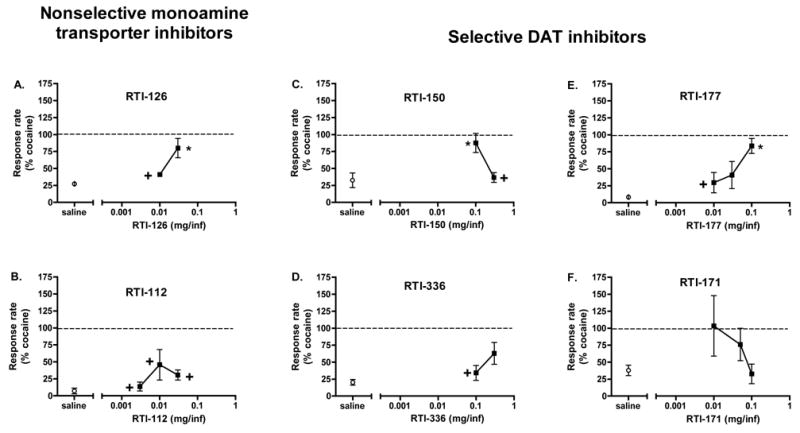
Although the behavioral-stimulant and reinforcing effects of cocaine and related psychomotor stimulants have been attributed to their actions at the dopamine transporter (DAT), the reinforcing effectiveness of these compounds varies. The properties that confer these differences are important considerations when developing agonist pharmacotherapies for the treatment of stimulant abuse. The present studies focused on the time course of action and pharmacological specificity of six 3-phenyltropane analogs of cocaine (RTI-112, RTI-126, RTI-150, RTI-171, RTI-177, and RTI-336) by observing their behavioral-stimulant, neurochemical, and reinforcing effects in squirrel monkeys. The faster-onset analogs (RTI-126, RTI-150, and RTI-336), and one of the slower-onset DAT selective analogs (RTI-177 and RTI-171) produced behavioral-stimulant effects, while the slower-onset nonselective analog RTI-112 did not. The time to the peak behavioral-stimulant effect and the peak caudate dopamine levels was strongly correlated, but the area under the curve of the time course of behavioral-stimulant effect and dopamine levels was not correlated. These results suggest that the rate of onset plays a more important role than duration of action in the stimulant effect of these analogs. In addition, the slower-onset nonselective analog (RTI-112) clearly did not exhibit any reinforcing effects while the faster-onset nonselective (RTI-126) and all the DAT-selective analogs showed robust reinforcing effects (RTI-150, and RTI-177) or showed trends towards reinforcing effects (RTI-336 and RTI-171). Hence, there was a general trend for compounds that had a faster onset and/or DAT selectivity to produce significant behavioral-stimulant and reinforcing effects.
Figures
References
-
- Bergman J, Madras BK, Johnson SE, Spealman RD. Effects of cocaine and related drugs in nonhuman primates. Iii. Self-administration by squirrel monkeys. J Pharmacol Exp Ther. 1989;251:150–5. - PubMed
-
- Carroll FI, Gray JL, Abraham P, Kuzemko MA, Lewin AH, Boja JW, et al. 3-aryl-2-(3′-substituted-1′,2′,4′-oxadiazol-5′-yl)tropane analogues of cocaine: Affinities at the cocaine binding site at the dopamine, serotonin, and norepinephrine transporters. J Med Chem. 1993;36:2886–90. - PubMed
-
- Carroll FI, Howell LL, Kuhar MJ. Pharmacotherapies for treatment of cocaine abuse: Preclinical aspects. J Med Chem. 1999;42:2721–36. - PubMed
Publication types
MeSH terms
Substances
Grants and funding
LinkOut - more resources
Full Text Sources
