


Aurora B expression correlates with aggressive behaviour in glioblastoma multiforme
- PMID: 17264249
- PMCID: PMC1860618
- DOI: 10.1136/jcp.2006.036806
Aurora B expression correlates with aggressive behaviour in glioblastoma multiforme
Abstract
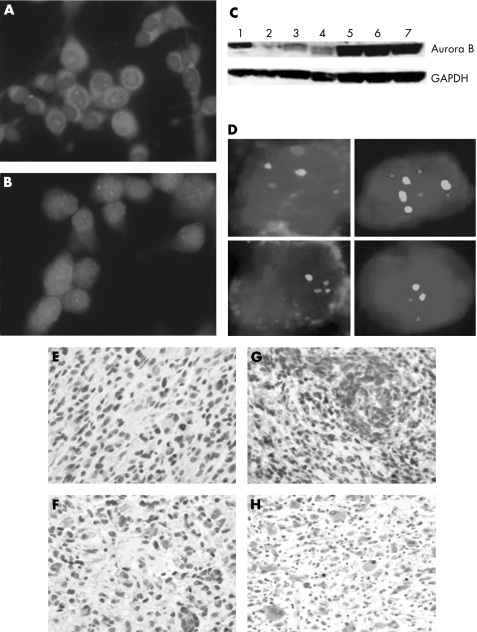
Chromosomal abnormalities and genomic instability are common features of, and possible driving forces in, tumorigenesis. Recently, several mitotic proteins that are critical to proper chromosome segregation have been identified. Members of the Aurora kinase family have been identified as having important roles in mitosis; overexpression induces multicellularity and fosters polyploidy. As aneuploidy is a common feature of malignant gliomas, particularly glioblastomas (GBMs), we examined 25 prospectively collected GBMs to assess the role that overexpression of one member of this family, Aurora B, might have in the clinical behaviour of GBMs. Aurora B expression levels were markedly correlated with a shortened survival. Aurora B expression was not directly related to age, tumour proliferation status or to several common molecular changes found in GBMs. These results suggest that Aurora B may be a prognostic feature of impaired survival and a novel therapeutic target in some patients.
Conflict of interest statement
Competing interests: None.
References
-
- Rajagopalan H, Lenguaer C. Aneuploidy and cancer. Nature 2004432338–341. - PubMed
-
- Kleihues P, Cavenee W K. eds. Pathology and genetics of tumours of the central nervous system (World Health Organization classification of tumours) 2nd edn. Lyon: IARC, 2000
-
- Meralidi P, Honda R, Nigg E A. Aurora kinases link chromosome segregation and cell division to cancer susceptibility. Curr Opin Genet Dev 20041429–36. - PubMed
-
- Giet R, Petretti C, Prigent C. Aurora kinases, aneuploidy and cancer: a coincidence or a real link? Trends Cell Biol 200515241–247. - PubMed
Publication types
MeSH terms
Substances
LinkOut - more resources
Full Text Sources
Other Literature Sources
Research Materials
Miscellaneous
