


New method for delivering a hydrophobic drug for photodynamic therapy using pure nanocrystal form of the drug
- PMID: 17266331
- PMCID: PMC2667689
- DOI: 10.1021/mp060117f
New method for delivering a hydrophobic drug for photodynamic therapy using pure nanocrystal form of the drug
Abstract
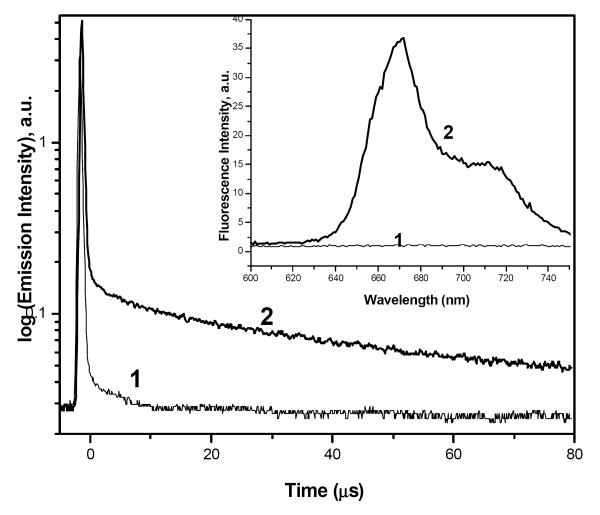
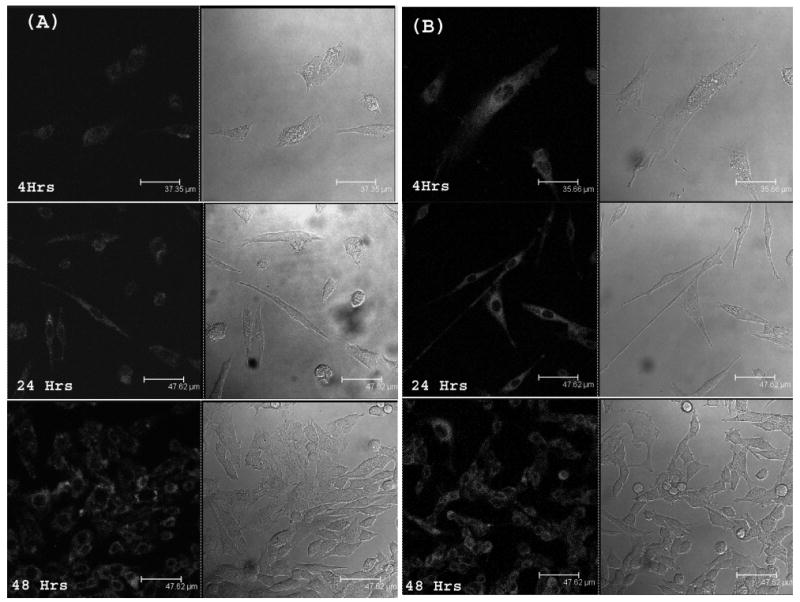
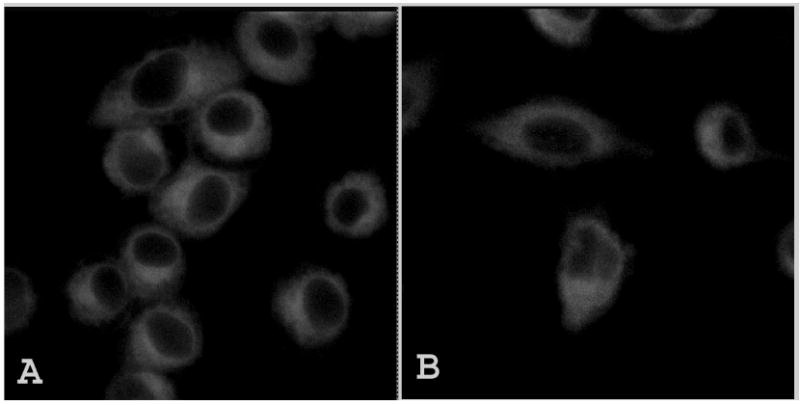
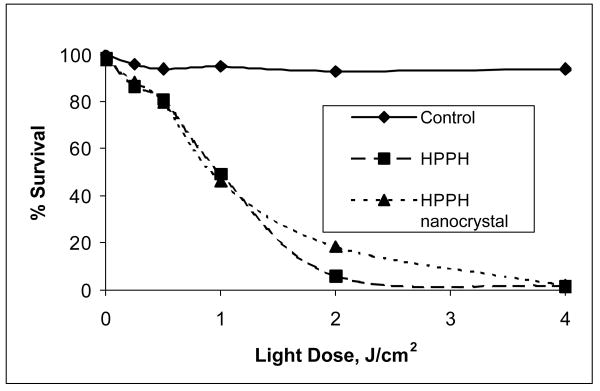
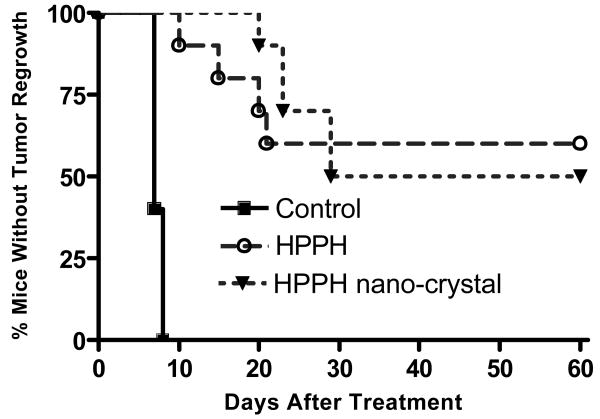
A carrier-free method for delivery of a hydrophobic drug in its pure form, using nanocrystals (nanosized crystals), is proposed. To demonstrate this technique, nanocrystals of a hydrophobic photosensitizing anticancer drug, 2-devinyl-2-(1-hexyloxyethyl)pyropheophorbide (HPPH), have been synthesized using the reprecipitation method. The resulting drug nanocrystals were monodispersed and stable in aqueous dispersion, without the necessity of an additional stabilizer (surfactant). As shown by confocal microscopy, these pure drug nanocrystals were taken up by the cancer cells with high avidity. Though the fluorescence and photodynamic activity of the drug were substantially quenched in the form of nanocrystals in aqueous suspension, both these characteristics were recovered under in vitro and in vivo conditions. This recovery of drug activity and fluorescence is possibly due to the interaction of nanocrystals with serum albumin, resulting in conversion of the drug nanocrystals into the molecular form. This was confirmed by demonstrating similar recovery in presence of fetal bovine serum (FBS) or bovine serum albumin (BSA). Under similar treatment conditions, the HPPH in nanocrystal form or in 1% Tween-80/water formulation showed comparable in vitro and in vivo efficacy.
Figures
References
-
- Konan YN, Gurny R, Allemann E. State of the art in the delivery of photosensitizers for photodynamic therapy. Journal of Photochemistry and Photobiology B-Biology. 2002;66(2):89–106. - PubMed
-
- Torchilin VP. Drug targeting. European Journal of Pharmaceutical Sciences. 2000;11:S81–S91. - PubMed
-
- Honzak L, Sentjurc M, Swartz HM. In vivo EPR of topical delivery of a hydrophilic substance encapsulated in multilamellar liposomes applied to the skin of hairless and normal mice. Journal of Controlled Release. 2000;66(23):221–228. - PubMed
-
- Sobolev AS, Rozenkranz AA, Gilyazova DG. Approaches to targeted intracellular delivery of photosensitizers in order to enhance their efficacy and cell specificity. Biofizika. 2004;49(2):351–379. - PubMed
-
- Lukyanov AN, Torchilin VP. Micelles from lipid derivatives of water-soluble polymers as delivery systems for poorly soluble drugs. Advanced Drug Delivery Reviews. 2004;56(9):1273–1289. - PubMed
Publication types
MeSH terms
Substances
Grants and funding
LinkOut - more resources
Full Text Sources
Other Literature Sources
Research Materials
