. 2007 May;148(5):2016-26.
doi: 10.1210/en.2006-0602. Epub 2007 Feb 1.

Tissue kallikrein reverses insulin resistance and attenuates nephropathy in diabetic rats by activation of phosphatidylinositol 3-kinase/protein kinase B and adenosine 5'-monophosphate-activated protein kinase signaling pathways

Affiliations

Tissue kallikrein reverses insulin resistance and attenuates nephropathy in diabetic rats by activation of phosphatidylinositol 3-kinase/protein kinase B and adenosine 5'-monophosphate-activated protein kinase signaling pathways

Gang Yuan et al. Endocrinology. 2007 May.

Abstract

We previously reported that iv delivery of the human tissue kallikrein (HK) gene reduced blood pressure and plasma insulin levels in fructose-induced hypertensive rats with insulin resistance. In the current study, we evaluated the potential of a recombinant adeno-associated viral vector expressing the HK cDNA (rAAV-HK) as a sole, long-term therapy to correct insulin resistance and prevent renal damage in streptozotocin-induced type-2 diabetic rats. Administration of streptozotocin in conjunction with a high-fat diet induced systemic hypertension, diabetes, and renal damage in rats. Delivery of rAAV-HK resulted in a long-term reduction in blood pressure, and fasting plasma insulin was significantly lower in the rAAV-HK group than in the control group. The expression of phosphatidylinositol 3-kinase p110 catalytic subunit and the levels of phosphorylation at residue Thr-308 of Akt, insulin receptor B, and AMP-activated protein kinases were significantly decreased in organs from diabetic animals. These changes were significantly attenuated after rAAV-mediated HK gene therapy. Moreover, rAAV-HK significantly decreased urinary microalbumin excretion, improved creatinine clearance, and increased urinary osmolarity. HK gene therapy also attenuated diabetic renal damage as assessed by histology. Together, these findings demonstrate that rAAV-HK delivery can efficiently attenuate hypertension, insulin resistance, and diabetic nephropathy in streptozotocin-induced diabetic rats.


Figures
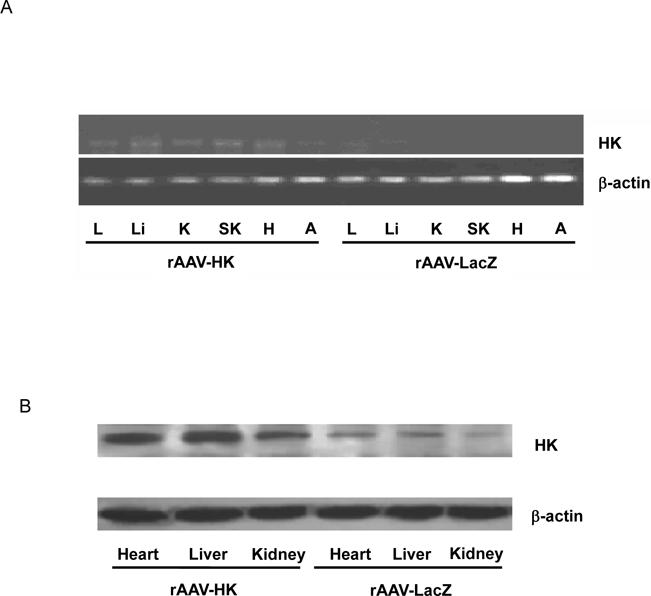
Figure 1
Figure 1
Expression of kallikrein. Panel A: RT-PCR analysis in diabetic rats treated with rAAV·HK (HK) or rAAV·LacZ (LacZ). Total RNA was prepared from lung (L), liver (Li), kidney (K), skeletal muscle (SK), heart (H), and adipose tissue (A). Panel B: Representative immunoblotting results showing increased HK expression in heart, kidney and liver of rAAV·HK treated diabetic rats compared to rAAV·LacZ-treated diabetic rats. Experiments were repeated 3 or 4 times.
Figure 2
Figure 2
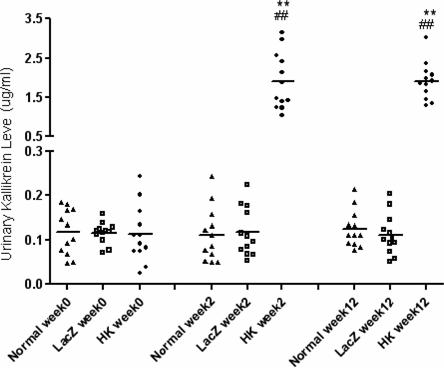
Urinary expression of kallikrein by ELISA in non-diabetic rats (Normal), diabetic rats treated with rAAV·LacZ (LacZ) and diabetic rats treated with rAAV·HK (HK) at various time points after treatment. Values are mean ± SEM (n=6 for each group); **P<0.01 vs. Normal; ## P<0.01 vs. LacZ.
Figure 3
Figure 3
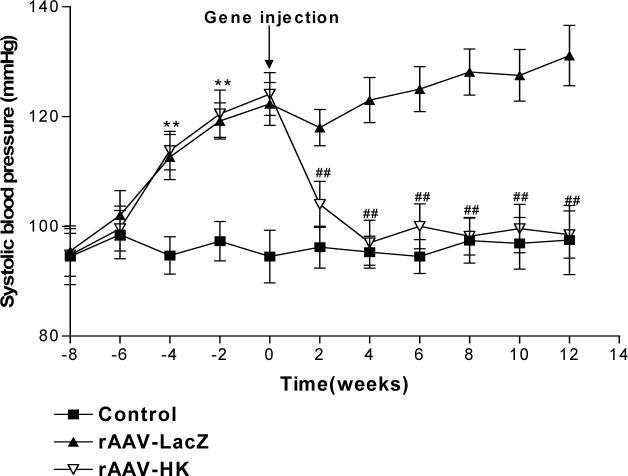
Systolic blood pressure in non-diabetic rats injected with saline (Normal), diabetic rats injected with rAAV·LacZ (LacZ) and diabetic rats injected with rAAV·HK (HK). Values are mean ± SEM (n=16 per group); **P<0.01 vs. Normal, ##P<0.01 vs. LacZ.
Figure 4
Figure 4
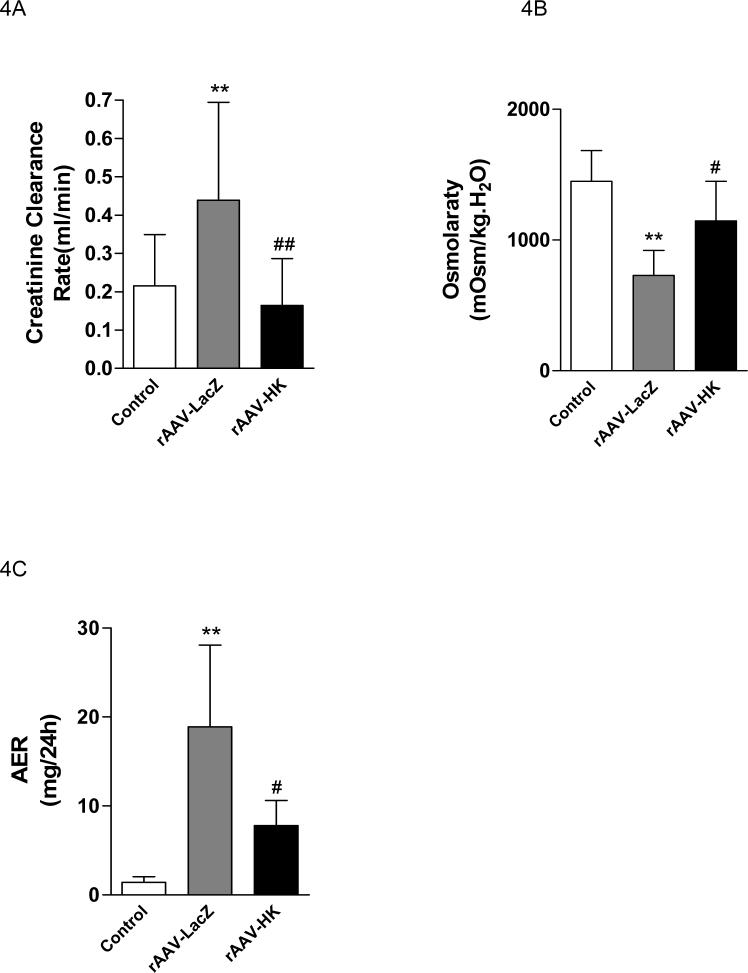
Creatinine clearance (Panel A), urine osmolarity (Panel B) and urinary microalbumin (Panel C) in non-diabetic rats injected with saline (Normal), diabetic rats injected with rAAV·LacZ (LacZ) and diabetic rats injected with rAAV·HK (HK). Values are mean ± SEM (n= 6 for each group); #P<0.05 vs. LacZ; ##P<0.01 vs. LacZ; ** P<0.01 vs. Normal.
Figure 5
Figure 5
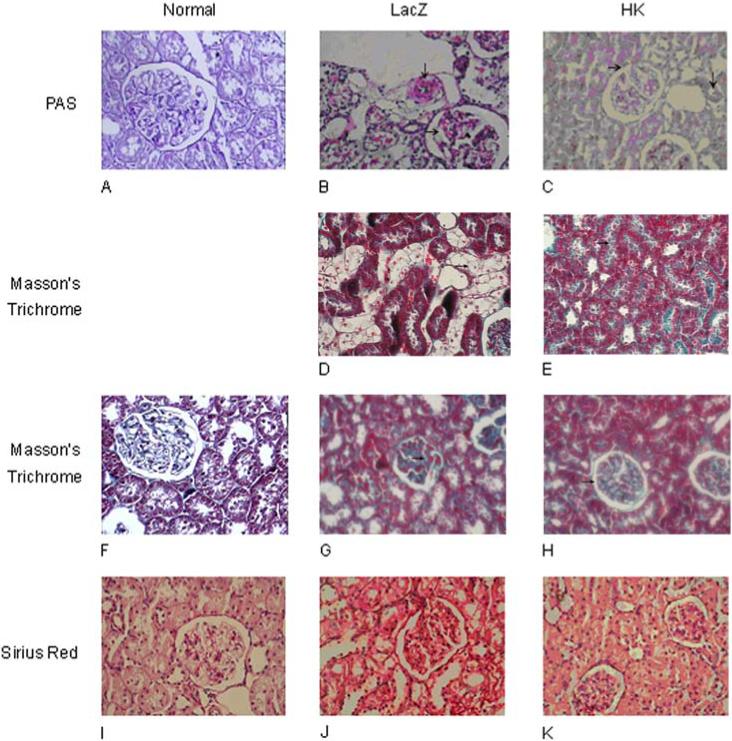
Histological assessment of rat kidneys. Paraffin sections of kidney cortex from non-diabetic rats (Panels A, F, I) or from diabetic rats treated with rAAV·HK (Panels C, E, H, K) or rAAV·LacZ (Panels B, D, G, J) stained with periodic acid Schiff (PAS) (Panels A, B, C), Masson' s trichrome (Panels D, E, F, G, H) or Sirius red reagent (Panels I, J, K). Magnification was 400X (Panels A-C, F-K) or 200X (Panels D, E). PAS staining shows that rAAV·LacZ-treated rats had moderate mesangial cell proliferation (→) with severe blood vessel narrowing (↓) (Panel B), and rAAV·HK-treated rats had minimal glomerulosclerosis (→) (Panel C), much milder than rAAV·LacZ-treated diabetic rats (B) and nearly normal blood vessels (A). Masson's trichrome staining shows renal tubule vacuolation (→) in rAAV·LacZ treated rats (Panel D) but almost normal renal tubules (→) in rAAV·HK treated rats (Panel E). Masson's trichrome staining also showed significant capillary thrombosis (→) in rAAV·LacZ treated diabetic rats (Panel G), but minimal capillary thrombosis (→) in rAAV·HK treated diabetic rats (Panel H). Sirius Red staining shows rAAV·LacZ treated diabetic kidneys with moderate collagen deposition (Panel J), but only mild collagen deposition in kidneys from rAAV·HK treated diabetic rats (Panel K). One section from each experimental animal was prepared and representative slices are shown.
Figure 6
Figure 6
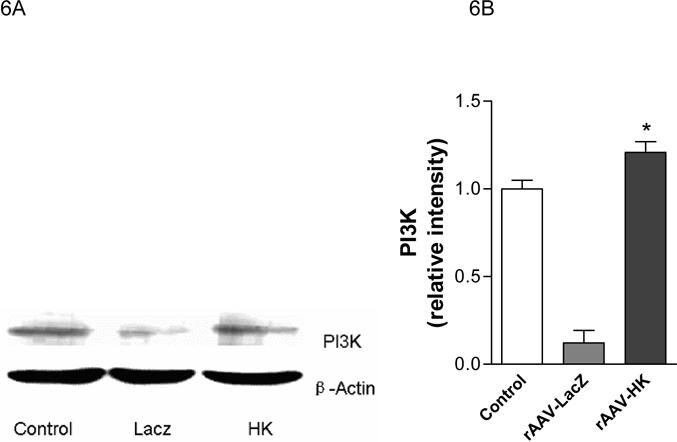
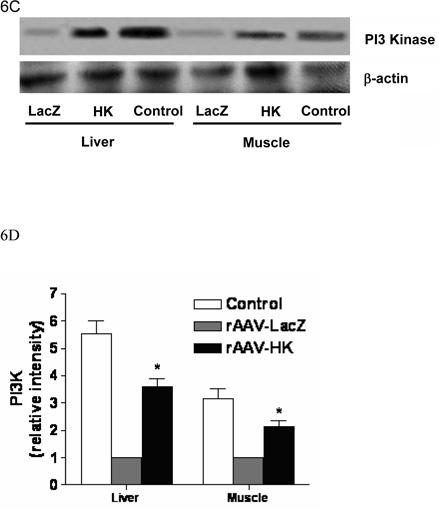
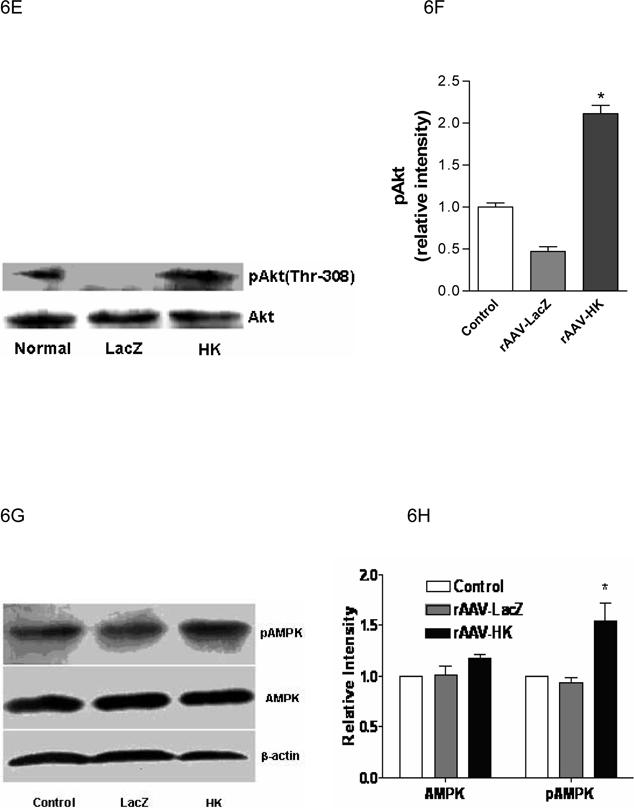
Representative western blots and densitometric quantification of at least three repeats for each experiment showing the effects of rAAV-mediated HK gene therapy on PI3 kinase/Akt and pAMPK signaling pathways. Effects of HK gene therapy on the expression of PI3-kinase p110 catalytic subunit in kidney (Panels A and B), liver and skeletal muscle (Panels C and D). Effects of HK gene therapy on total and p-Akt at Thr-308 in kidney (Panels E and F). Effects of HK gene therapy on total and p-AMPK in kidney (Panels G and H). Blots were scanned, and relative expression levels were normalized to total β-actin. Values shown are the means ± S.E. of three independent experiments. * p < 0.05 versus rAAV-LacZ.
Figure 6
Figure 6
Representative western blots and densitometric quantification of at least three repeats for each experiment showing the effects of rAAV-mediated HK gene therapy on PI3 kinase/Akt and pAMPK signaling pathways. Effects of HK gene therapy on the expression of PI3-kinase p110 catalytic subunit in kidney (Panels A and B), liver and skeletal muscle (Panels C and D). Effects of HK gene therapy on total and p-Akt at Thr-308 in kidney (Panels E and F). Effects of HK gene therapy on total and p-AMPK in kidney (Panels G and H). Blots were scanned, and relative expression levels were normalized to total β-actin. Values shown are the means ± S.E. of three independent experiments. * p < 0.05 versus rAAV-LacZ.
Figure 6
Figure 6
Representative western blots and densitometric quantification of at least three repeats for each experiment showing the effects of rAAV-mediated HK gene therapy on PI3 kinase/Akt and pAMPK signaling pathways. Effects of HK gene therapy on the expression of PI3-kinase p110 catalytic subunit in kidney (Panels A and B), liver and skeletal muscle (Panels C and D). Effects of HK gene therapy on total and p-Akt at Thr-308 in kidney (Panels E and F). Effects of HK gene therapy on total and p-AMPK in kidney (Panels G and H). Blots were scanned, and relative expression levels were normalized to total β-actin. Values shown are the means ± S.E. of three independent experiments. * p < 0.05 versus rAAV-LacZ.
Figure 7
Figure 7
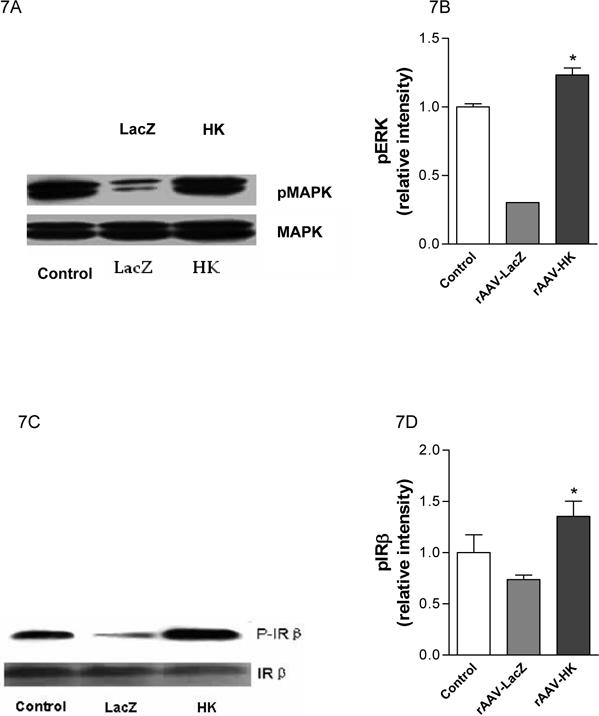
Representative western blots and densitometric quantification of at least three experiments showing effects of rAAV-mediated HK gene therapy on phosphorylation of p42/44 MAPK and IR-β. Results show decreased phosphorylation of MAPK in diabetic kidney is reversed by HK overexpression (Panels A and B) and that decreased phosphorylation of IR-β in diabetic treated rats is also reversed by rAAV·HK treatment (Panels C and D). Results are representative of 3 independent experiments. Blots were scanned and relative p-ERK (B) and p-IR-β levels (D) were normalized to total ERK and total IR-β, respectively. Values shown are the means ± S.E. of three independent experiments. *, p < 0.05 versus rAAV-LacZ.
Figure 8
Figure 8
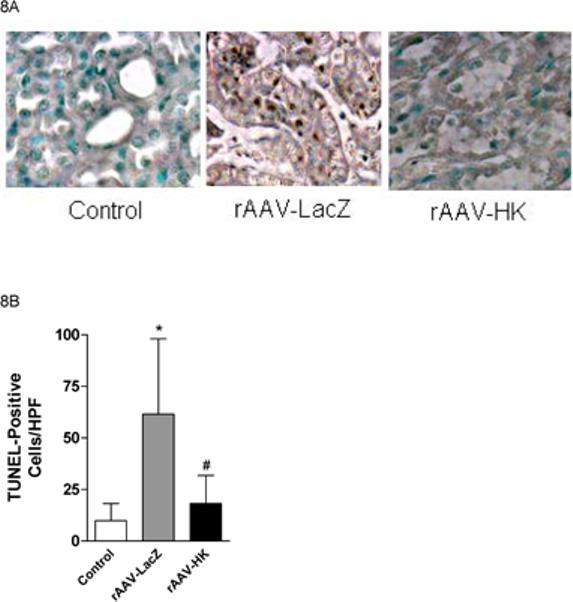
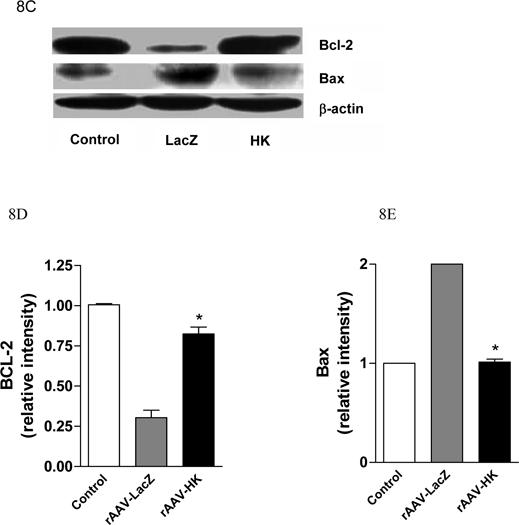
Effects of kallikrein on renal apoptosis. TUNEL staining of kidney showing significantly increased TUNEL-positive cells in diabetic rat renal tubules from rAAV-LacZ rats compared with non-diabetic controls and rAAV-HK-treated rats (Panel A). The number of TUNEL staining apoptotic cells/HPF is quantified, *p<0.01 vs. Normal Control; #p<0.01 vs. rAAV-LacZ (Panel B). Representative western blots showing expression of anti-apoptotic protein Bcl-2 and pro-apoptotic protein Bax in kidney (Panel C). Blots were scanned and Bcl-2 and Bax levels (D and E, respectively) were normalized to β-actin. Values shown are the means ± S.E. of three independent experiments. *, p < 0.05 versus rAAV-LacZ.
Figure 8
Figure 8
Effects of kallikrein on renal apoptosis. TUNEL staining of kidney showing significantly increased TUNEL-positive cells in diabetic rat renal tubules from rAAV-LacZ rats compared with non-diabetic controls and rAAV-HK-treated rats (Panel A). The number of TUNEL staining apoptotic cells/HPF is quantified, *p<0.01 vs. Normal Control; #p<0.01 vs. rAAV-LacZ (Panel B). Representative western blots showing expression of anti-apoptotic protein Bcl-2 and pro-apoptotic protein Bax in kidney (Panel C). Blots were scanned and Bcl-2 and Bax levels (D and E, respectively) were normalized to β-actin. Values shown are the means ± S.E. of three independent experiments. *, p < 0.05 versus rAAV-LacZ.

References

    1. Gu K, Cowie C, Harris M. Mortality in adults with and without diabetes in a national cohort of the U.S. population, 1971−1993. Diabetes Care. 1998;21:1138–1145. - PubMed
    1. Yu YSL, Yu H, Wang C, Tang H. Insulin resistance and endothelial dysfunction in type 2 diabetes patients with or without microalbuminuria. Diabetes Res Clin Pract. 2004;65:95–104. - PubMed
    1. Martin BCWJ, Krolewski AS, Bergman RN, Soeldner JS, Kahn CR. Role of glucose and insulin resistance in development of type 2 diabetes mellitus: results of a 25-year follow-up study. Lancet. 1992;17:925–929. - PubMed
    1. Uehara MKH, Isami S, Kisanuki K, Ohkubo Y, Miyamura N, Miyata T, Yano T, Shichiri M. Effect on insulin sensitivity of angiotensin converting enzyme inhibitors with or without a sulphydryl group: bradykinin may improve insulin resistance in dogs and humans. Diabetologia. 1994;37:300–307. - PubMed
    1. Isami SKH, Araki E, Uehara M, Kaneko K, Shirotani T, Todaka M, Ura S, Motoyoshi S, Matsumoto K, Miyamura N, Shichiri M. Bradykinin enhances GLUT4 translocation through the increase of insulin receptor tyrosine kinase in primary adipocytes: evidence that bradykinin stimulates the insulin signalling pathway. Diabetologia. 1996;39:412–420. - PubMed

Publication types

MeSH terms

Substances