Depression-like behavior and stressor-induced neuroendocrine activation in female prairie voles exposed to chronic social isolation
- PMID: 17289829
- PMCID: PMC3006075
- DOI: 10.1097/PSY.0b013e31802f054b
Depression-like behavior and stressor-induced neuroendocrine activation in female prairie voles exposed to chronic social isolation
Abstract
Objective: To assess whether the responses of prairie voles to social stressors play a mechanistic role in the behavioral and physiological changes associated with affective disorders such as depression, as suggested in previous studies. Prairie voles (Microtus ochrogaster) are socially monogamous rodents that share features of social behavior with humans; therefore, they may serve as useful models for examining social behavioral regulations and physiological responses related to depression. In this study, we hypothesized that social isolation in female prairie voles would induce depression-relevant behaviors and alter their neuroendocrine responses to an acute social stressor.
Methods: Twenty adult female prairie voles were exposed to either 60 days of social isolation or paired (control) housing. They were tested and observed for a depression-like behavior (anhedonia). The levels of corticotropin-releasing factor- and oxytocin-immunoreactive cells in the paraventricular nucleus of the hypothalamus and circulating levels of hormones and peptide were measured in response to an acute social stressor (resident-intruder test).
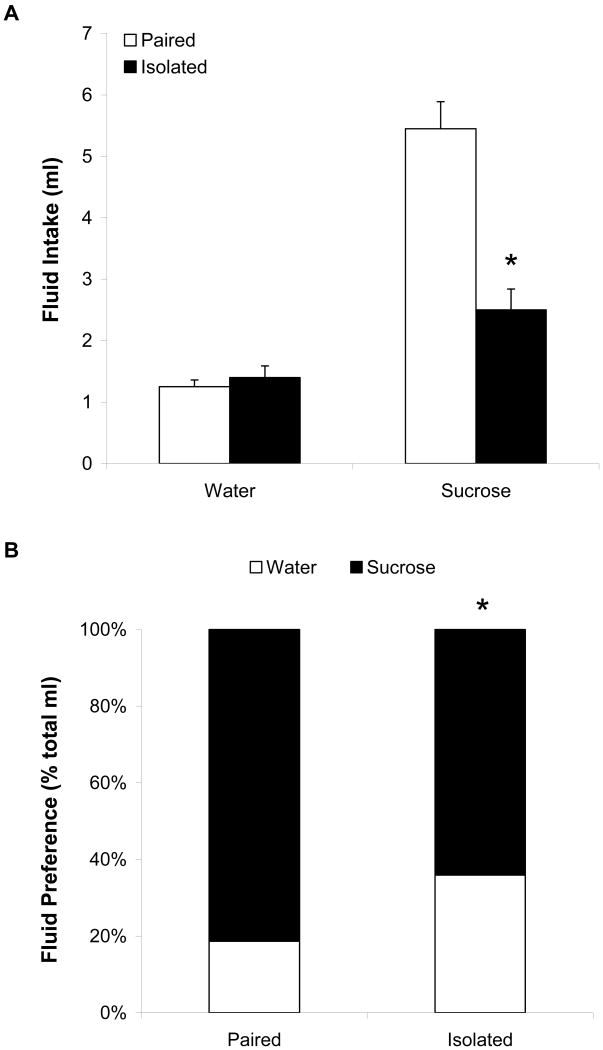
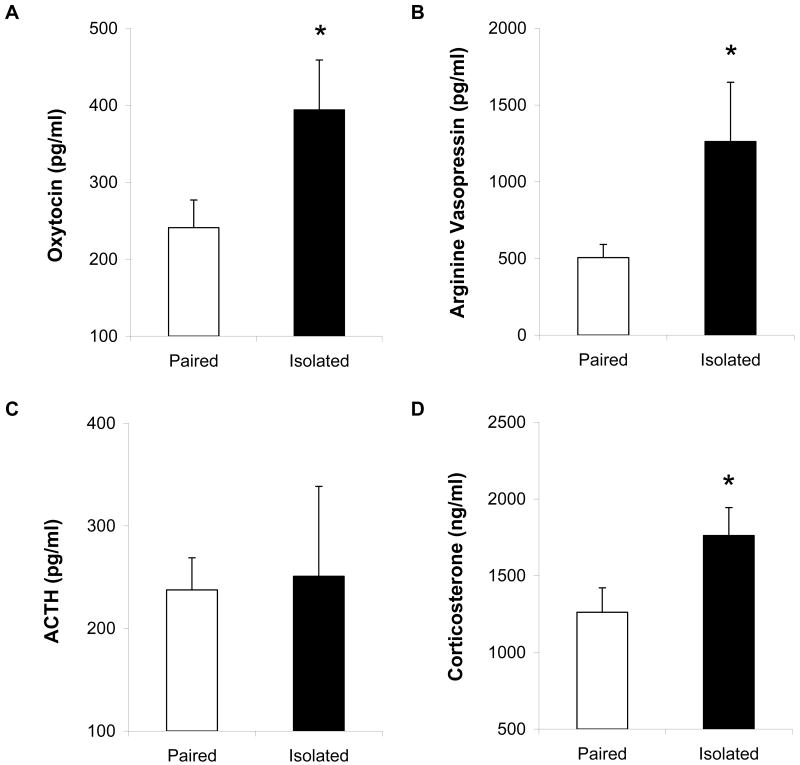
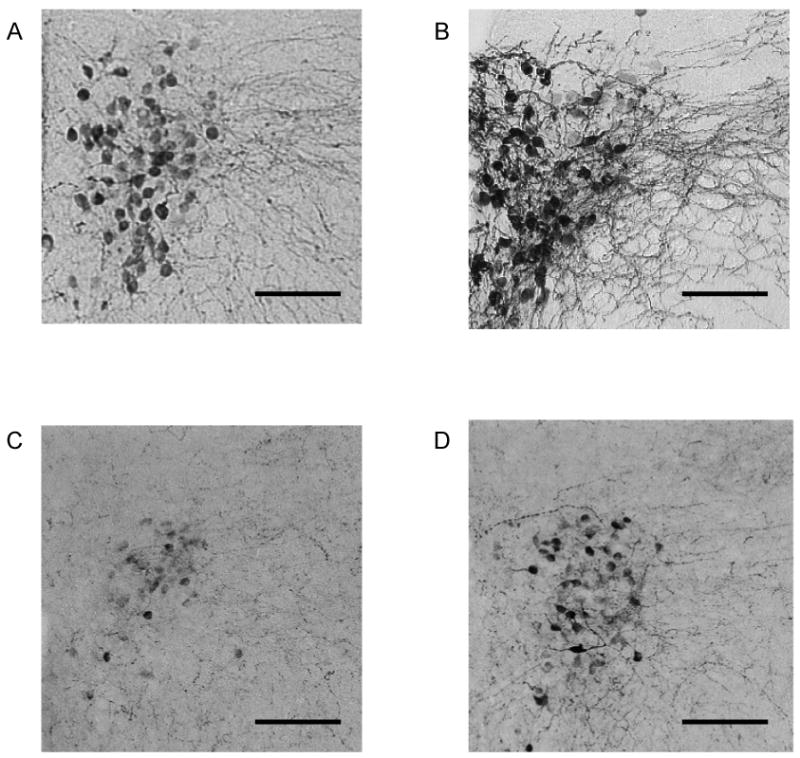
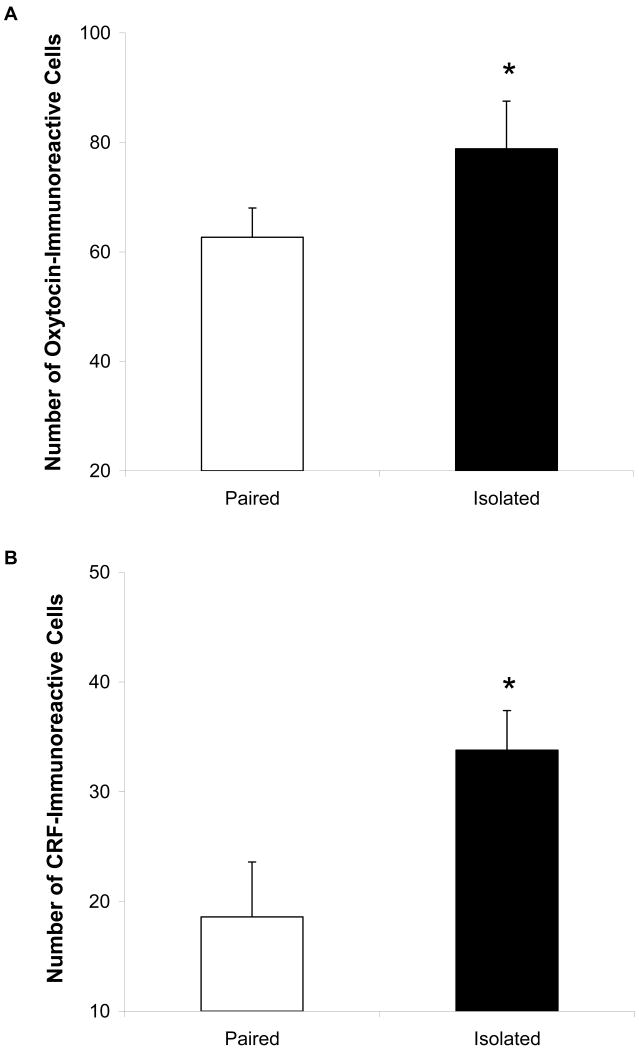
Results: Chronic social isolation produced anhedonia, measured by reduced sucrose intake and sucrose preference relative to the control animals. Compared with the paired animals, the isolated prairie voles displayed increased plasma hormone and peptide levels (oxytocin, arginine vasopressin, and corticosterone) after a 5-minute resident-intruder test, mirrored by an increased number of oxytocin- and corticotropin-releasing factor-immunoreactive cells in the hypothalamic paraventricular nucleus.
Conclusions: These findings suggest that isolation in a socially monogamous rodent model induces both behavioral and neuroendocrine changes that are relevant to depression. These results may provide insight into the mechanisms that underlie the development and/or maintenance of depressive disorders in humans.
Figures
References
-
- Nemeroff CB, Widerlöv E, Bissette G, Walléus H, Karlsson I, Eklund K, Kilts CD, Loosen PT, Vale W. Elevated concentrations of CSF corticotropin-releasing factor-like immunoreactivity in depressed patients. Science. 1984;226:1342–1344. - PubMed
-
- Raadsheer FC, van Heerikhuize JJ, Lucassen PJ, Hoogendijk WJG, Tilders FJH, Swaab DF. Corticotropin-releasing hormone mRNA levels in the paraventricular nucleus of patients with Alzheimer's disease and depression. Am J Psychiatry. 1995;152:1372–1376. - PubMed
-
- Glowa JR, Gold PW. Corticotropin releasing hormone produces profound anorexigenic effects in the rhesus monkey. Neuropeptides. 1991;18:55–61. - PubMed
-
- Garlow SJ, Musselman DL, Nemeroff CB. The neurochemistry of mood disorders: clinical studies. In: Charney DS, Nestler EJ, Bunney BS, editors. Neurobiology of Mental Illness. New York: Oxford University Press; 1999. pp. 348–364.
-
- Grippo AJ, Moffitt JA, Johnson AK. Cardiovascular alterations and autonomic imbalance in an experimental model of depression. Am J Physiol Regul Integr Comp Physiol. 2002;282:R1333–R1341. - PubMed
Publication types
MeSH terms
Grants and funding
LinkOut - more resources
Full Text Sources
Medical