


A population-based estimate of the substantial burden of diarrhoeal disease in the United States; FoodNet, 1996-2003
- PMID: 17291364
- PMCID: PMC2870567
- DOI: 10.1017/S0950268806006765
A population-based estimate of the substantial burden of diarrhoeal disease in the United States; FoodNet, 1996-2003
Abstract
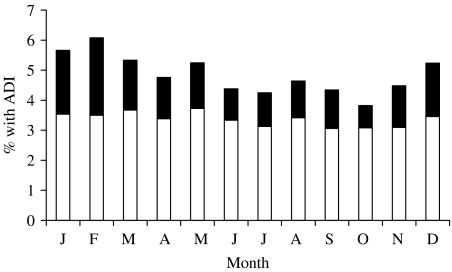
From 1996 to 2003, four 12-month population-based surveys were performed in FoodNet sites to determine the burden of diarrhoeal disease in the population. Acute diarrhoeal illness (ADI) was defined as > or =3 loose stools in 24 hours with impairment of daily activities or duration of diarrhoea >1 day. A total of 52840 interviews were completed. The overall weighted prevalence of ADI in the previous month was 5.1% (95% CI+/-0.3%), corresponding to 0.6 episodes of ADI per person per year. The average monthly prevalence of ADI was similar in each of the four survey cycles (range 4.5-5.2%). Rates of ADI were highest in those age <5 years. Of those with ADI, 33.8% (95% CI+/-2.7%) reported vomiting, 19.5% (95% CI+/-2.1%) visited a medical provider, and 7.8% (95% CI+/-1.4%) took antibiotics. Rates of ADI were remarkably consistent over time, and demonstrate the substantial burden placed on the health-care system.
Figures
References
-
- Thapar N, Sanderson IR. Diarrhoea in children: an interface between developing and developed countries. Lancet. 2004;363:641–653. - PubMed
-
- Zimmerman CM et al. Cost of diarrhea-associated hospitalizations and outpatient visits in an insured population of young children in the United States. Pediatric Infectious Diseases Journal. 2001;20:14–19. - PubMed
-
- Monto AS, Koopman JS. The Tecumseh Study. XI. Occurrence of acute enteric illness in the community. American Journal of Epidemiology. 1980;112:323–333. - PubMed
Publication types
MeSH terms
LinkOut - more resources
Full Text Sources
Medical
