


Group A streptococcal skin infection outbreak in an abattoir: lessons for prevention
- PMID: 17291367
- PMCID: PMC2870572
- DOI: 10.1017/S0950268806006819
Group A streptococcal skin infection outbreak in an abattoir: lessons for prevention
Abstract
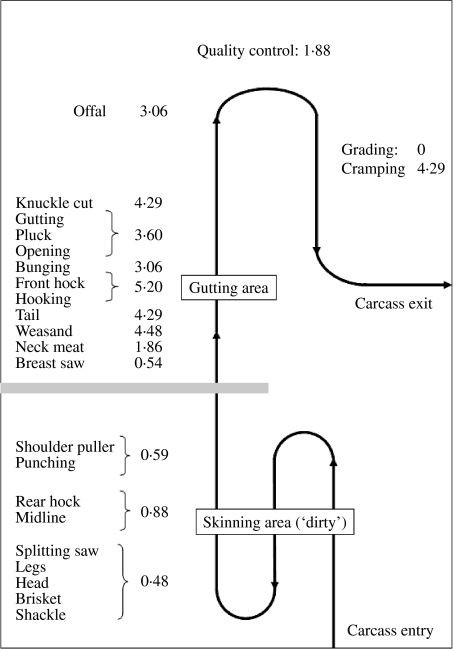
During a group A streptococcus (GAS) outbreak 21 abattoir workers developed skin infections. The unusual outbreak strain (emm 108.1) was cultured from five workers and four persons in the community with links to the abattoir. The attack rate was 26% in the lamb line. Communal nailbrushes were neither routinely disinfected nor changed, and had high bacterial counts. A cohort study found a higher risk from working in the gutting area and getting cuts on hands more than weekly. Despite high bacterial counts daily nailbrush use had a lower risk, as did always wearing disposable gloves. Working in the gutting area (OR 11.44) and nailbrush use at least once a day (OR 0.04) were significant in the multivariate model. Transmission of infection is likely to have occurred on carcasses. GAS infection among abattoir workers was once common. Simple hygiene measures, such as nailbrush use, may reduce the impact of future outbreaks.
Figures
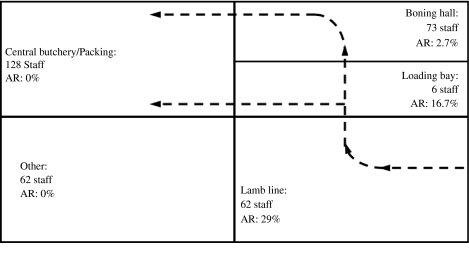
 , Carcass transport.
References
-
- PHLS Working Group on Streptococcal Infection in Meat Handlers. Prevention of streptococcal sepsis in meat handlers. Communicable Disease Report. 1983;83:3–4.
-
- Tsai TF, Parker MT Pathogenic Streptococci. Oxford, UK. Chertsey: Reedbooks; 1979. Mode of spread of Group-A streptococci in an abattoir outbreak of wound sepsis; pp. 118–119. , pp.
-
- Fehrs LJ et al. Group A β-hemolytic streptococcal skin infections in a US meat-packing plant. Journal of the American Medical Association. 1987;258:3131–3134. - PubMed
-
- Public Health Laboratory Service Working Group on Streptococcal Infection in Meat Handlers. The epidemiology and control of streptococcal sepsis in meat handlers. Environmental Health. 1982;10:256–258.
MeSH terms
LinkOut - more resources
Full Text Sources
Medical
