


Utp14b: a unique retrogene within a gene that has acquired multiple promoters and a specific function in spermatogenesis
- PMID: 17291484
- PMCID: PMC1910592
- DOI: 10.1016/j.ydbio.2007.01.005
Utp14b: a unique retrogene within a gene that has acquired multiple promoters and a specific function in spermatogenesis
Abstract
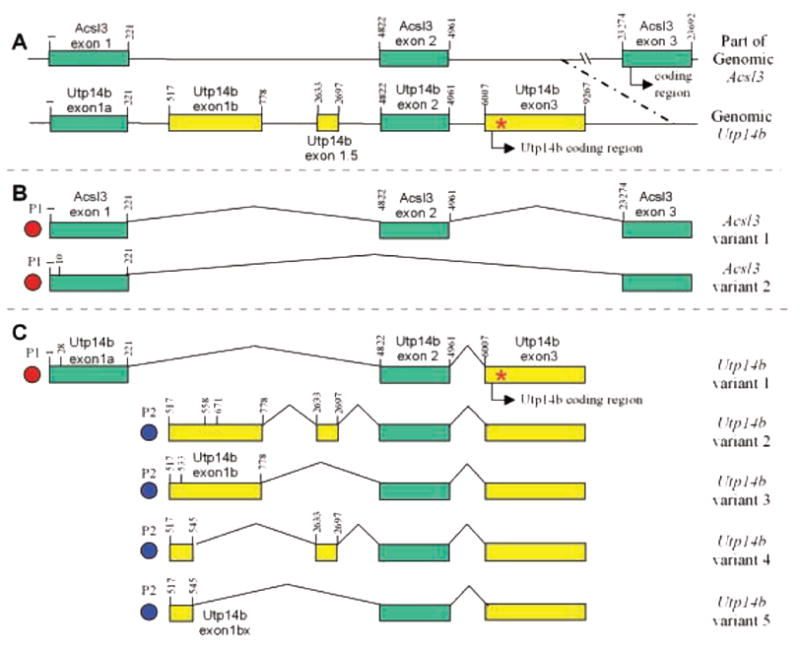
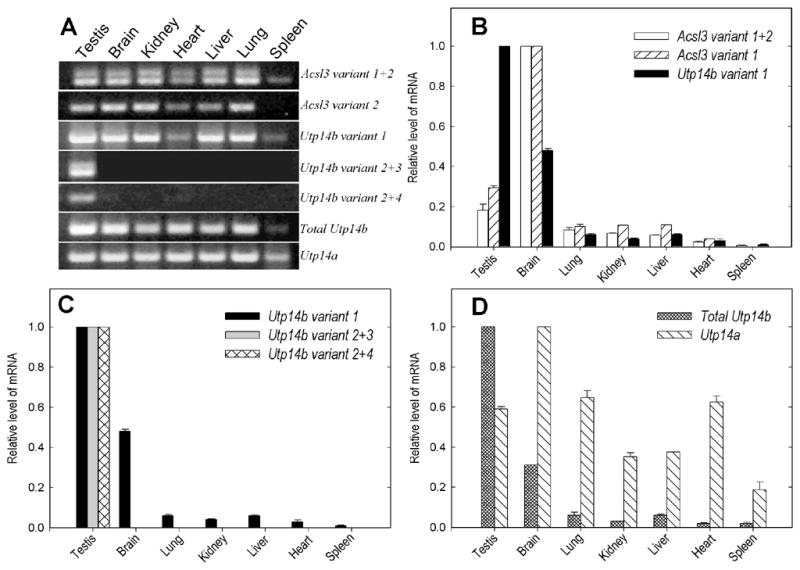
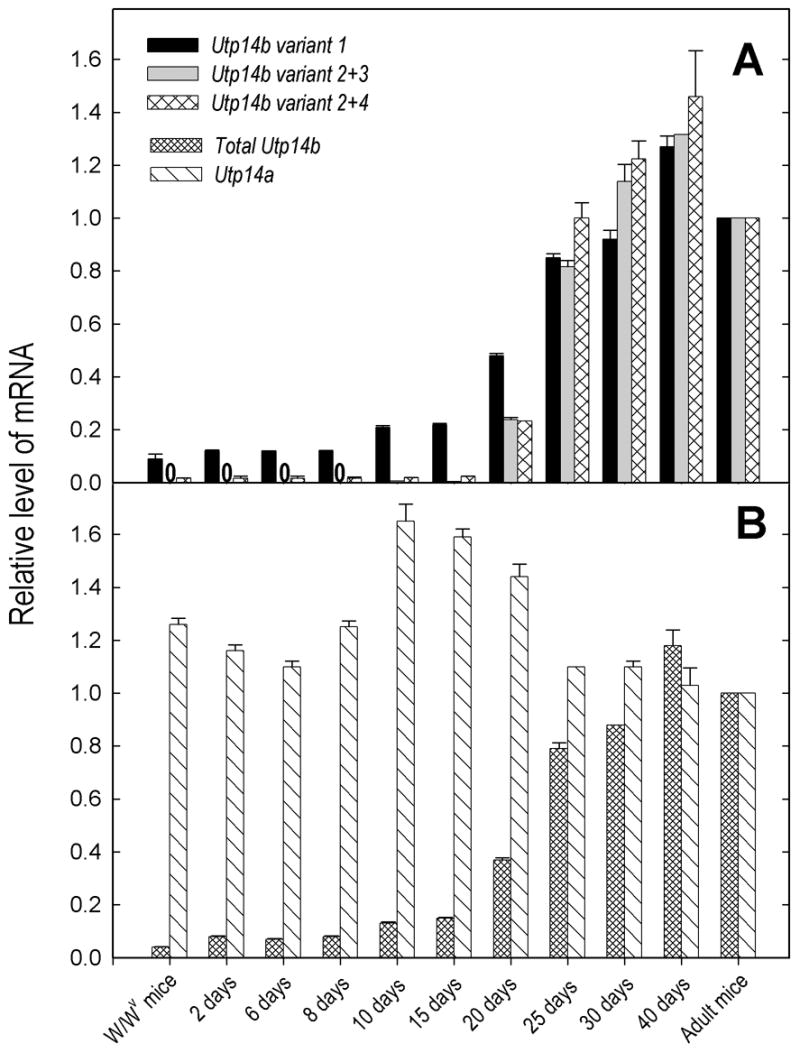
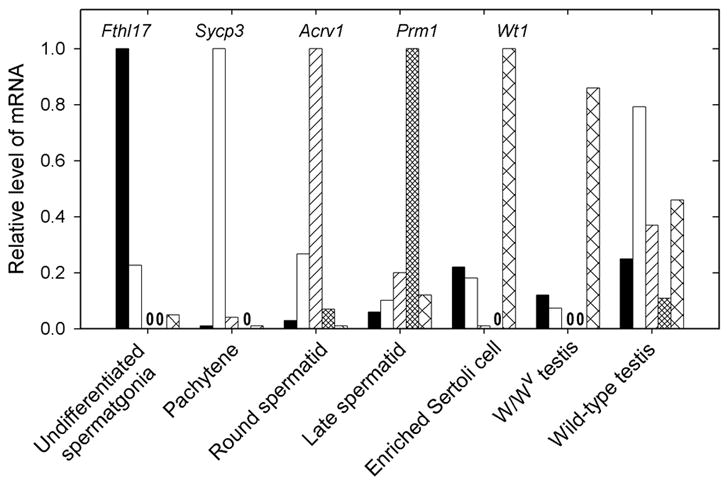
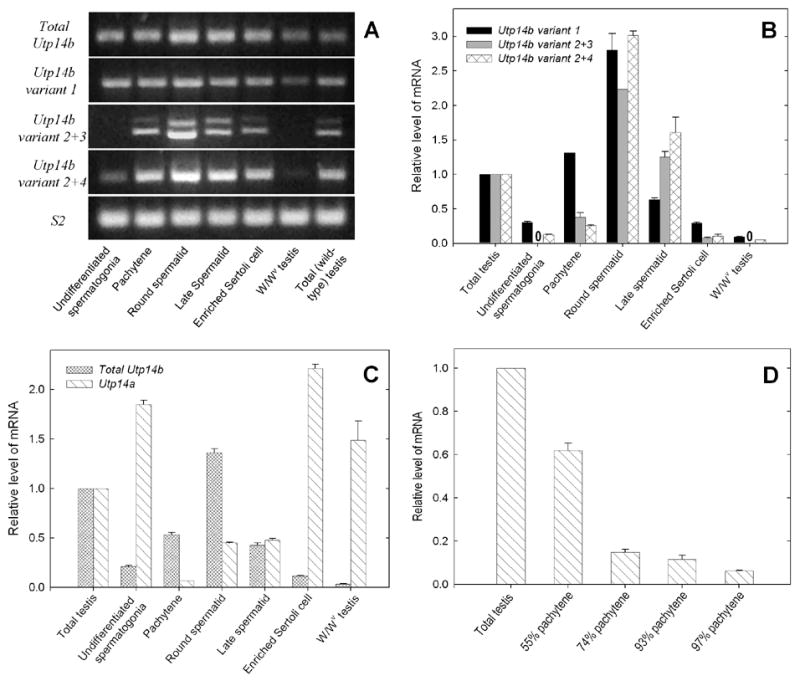
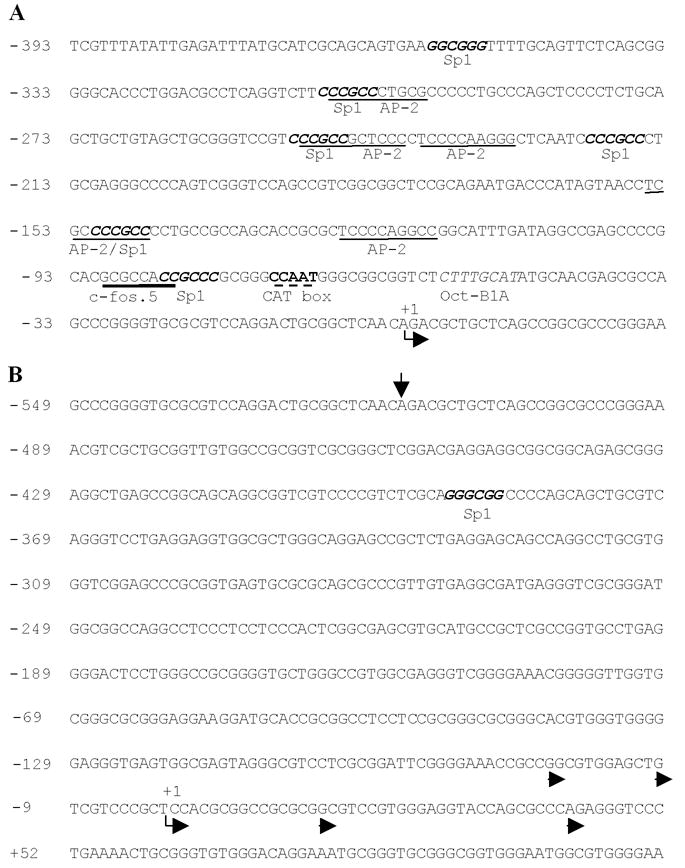
The mouse retrogene Utp14b is essential for male fertility, and a mutation in its sequence results in the sterile juvenile spermatogonial depletion (jsd) phenotype. It is a retrotransposed copy of the Utp14a gene, which is located on the X chromosome, and is inserted within an intron of the autosomal acyl-CoA synthetase long-chain family member 3 (Acsl3) gene. To elucidate the roles of the Utp14 genes in normal spermatogenic cell development as a basis for understanding the defects that result in the jsd phenotype, we analyzed the various mRNAs produced from the Utp14b retrogene and their expression in different cell types. Two classes of transcripts were identified: variant 1, a transcript driven by the host gene promoter, that is predominantly found in germ cells but is ubiquitously expressed at low levels; and variants 2-5, a group of alternatively spliced transcripts containing some unique untranslated exons that are transcribed from a novel promoter that is germ-cell-specific. Utp14b (predominantly variant 1) is expressed at moderately high levels in pachytene spermatocytes, the developmental stage at which the expression of the X-linked Utp14a is suppressed. The levels of both classes of Utp14b transcripts were highest in round spermatids despite the transcription of Utp14a in these cells. We propose that when Utp14b initially inserted into Acsl3, it utilized the Acsl3 promoter to drive expression in pachytene spermatocytes to compensate for inactivation of Utp14a expression. The novel cell-type-specific promoter for Utp14b likely evolved later, as the protein may have acquired a germ cell-specific function in spermatid development.
Figures
References
-
- Ayoub N, Richler C, Wahrman J. Xist RNA is associated with the transcriptionally inactive XY body in mammalian male meiosis. Chromosoma. 1997;106:1–10. - PubMed
-
- Ballow D, Meistrich ML, Matzuk M, Rajkovic A. Sohlh1 is essential for spermatogonial differentiation. Dev Biol. 2006;294:161–167. - PubMed
-
- Bedell MA, Mahakali Zama A. Genetic analysis of Kit ligand functions during mouse spermatogenesis. J Androl. 2004;25:188–199. - PubMed
-
- Boettger-Tong HL, Johnston DS, Russell LD, Griswold MD, Bishop CE. Juvenile spermatogonial depletion (jsd) mutant seminiferous tubules are capable of supporting transplanted spermatogenesis. Biol Reprod. 2000;63:1185–1191. - PubMed
Publication types
MeSH terms
Substances
Grants and funding
LinkOut - more resources
Full Text Sources
Molecular Biology Databases
Research Materials
Miscellaneous
