


Comprehensive analysis of 130 multicentric intraepithelial female lower genital tract lesions by HPV typing and p16 expression profile
- PMID: 17294241
- PMCID: PMC12160869
- DOI: 10.1007/s00432-006-0162-0
Comprehensive analysis of 130 multicentric intraepithelial female lower genital tract lesions by HPV typing and p16 expression profile
Abstract
Purpose: HPV associated cervical transformation is characterized by well-defined steps, including persistent HPV infection and deregulated oncogene expression. Recent studies have suggested that a number of lower genital tract lesions are clonally related to cervical lesions. In the current study, HPV infections and oncogene expression were assessed in a large series of patients with multicentric lower genital tract disease to analyze the transformation steps in extracervical disease.
Methods: One hundred and thirty biopsies of 52 women treated for multicentric synchronous or metachronous lower genital tract intraepithelial neoplasias were collected. Up to seven multicentric specimens taken from one patient were studied with a maximum follow up of 20 years. HPV typing and p16(ink4a) immunostaining was performed.
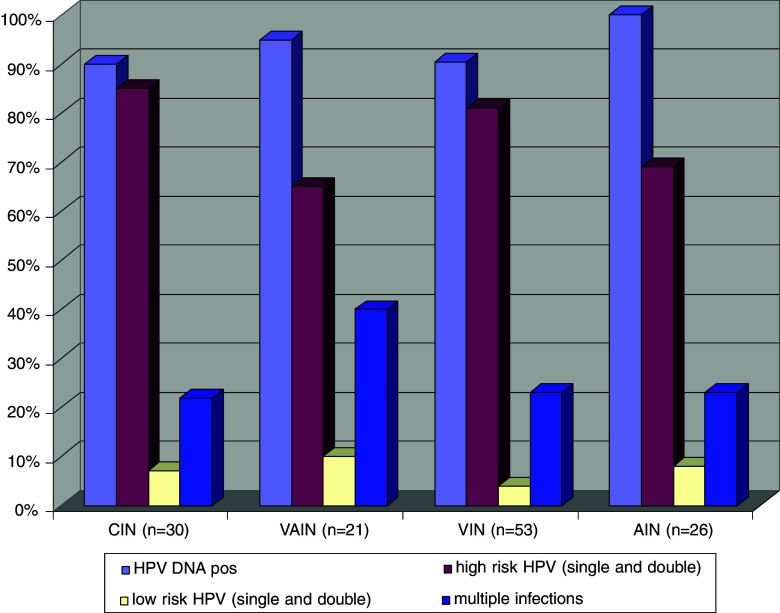
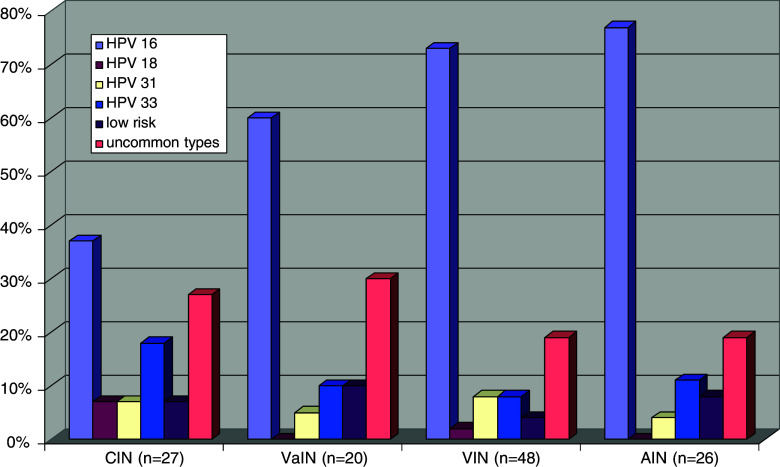
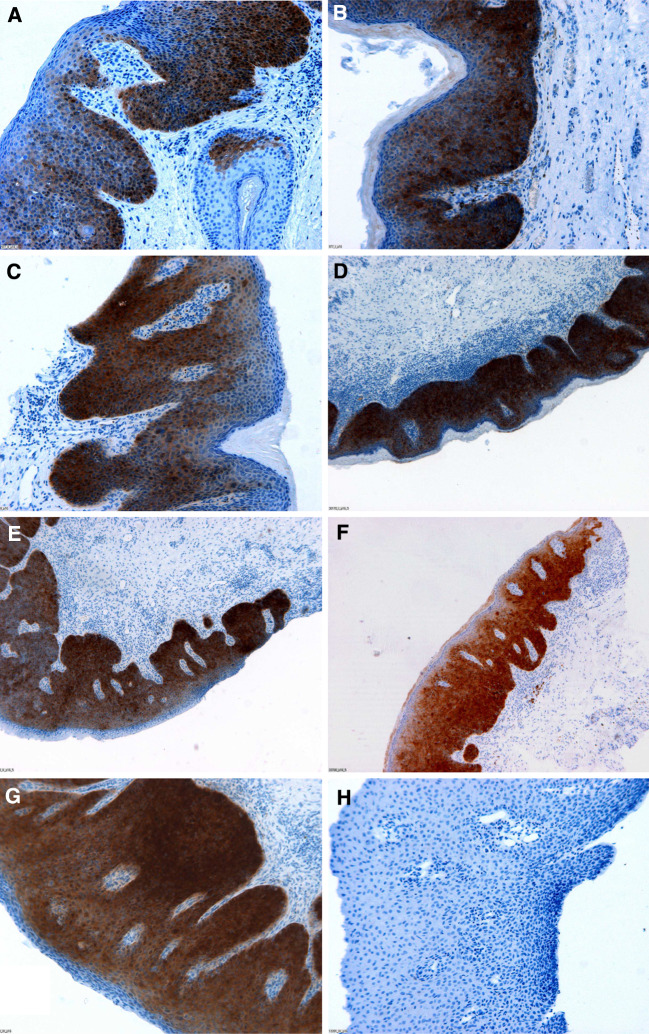
Results: HPV DNA was present in 121 of 130 specimens (93%). HPV16 was frequently found in VIN, VaIN and AIN (73, 60 and 77%, respectively), whereas only 37% of CIN were HPV16 positive. Infections with identical HPV types in multicentric lesions were diagnosed in 46% of the HPV positive patients. p16INK4a expression was negative in the nine HPV negative lesions whereas about 90% of the high grade lesions showed diffuse p16 staining.
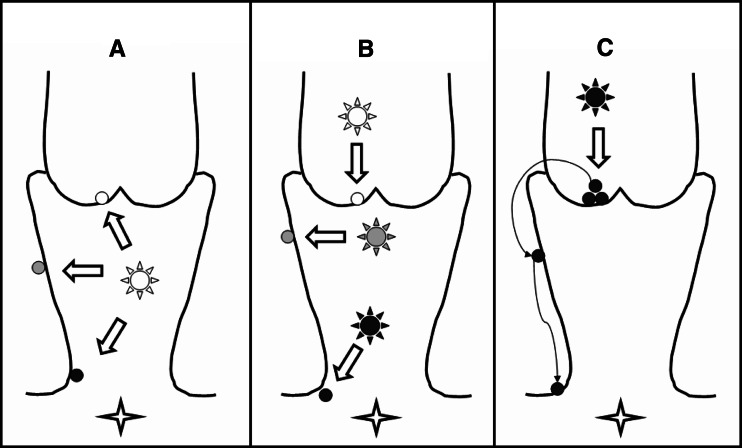
Conclusion: Our findings indicate that multicentric lower genital tract disease evolves through different pathways. Some cases were related to a high susceptibility towards HPV infections, while others exhibited features of clonal propagation of transformed cervical cell clones. The clinical management of the latter group is particularly challenging, because malignant cell clones can persist over a long time course.
Figures
References
-
- Andersen WA, Franquemont DW, Williams J, Taylor PT, Crum CP (1991) Vulvar squamous cell carcinoma and papillomaviruses: two separate entities? Am J Obstet Gynecol 165:329–335; discussion 335–336 - PubMed
-
- Bollmann R, Mehes G, Torka R, Speich N, Schmitt C, Bollmann M (2003) Human papillomavirus typing and DNA ploidy determination of squamous intraepithelial lesions in liquid-based cytologic samples. Cancer 99:57–62 - PubMed
-
- Castle PE, Solomon D, Schiffman M, Wheeler CM (2005) Human papillomavirus type 16 infections and 2-year absolute risk of cervical precancer in women with equivocal or mild cytologic abnormalities. J Natl Cancer Inst 97:1066–1071 - PubMed
-
- Chiasson MA, Ellerbrock TV, Bush TJ, Sun XW, Wright TC, Jr. (1997) Increased prevalence of vulvovaginal condyloma and vulvar intraepithelial neoplasia in women infected with the human immunodeficiency virus. Obstet Gynecol 89:690–694 - PubMed
-
- Dodge JA, Eltabbakh GH, Mount SL, Walker RP, Morgan A (2001) Clinical features and risk of recurrence among patients with vaginal intraepithelial neoplasia. Gynecol Oncol 83:363–369 - PubMed
MeSH terms
Substances
LinkOut - more resources
Full Text Sources
