


Green tea as inhibitor of the intestinal absorption of lipids: potential mechanism for its lipid-lowering effect
- PMID: 17296491
- PMCID: PMC1852441
- DOI: 10.1016/j.jnutbio.2006.12.005
Green tea as inhibitor of the intestinal absorption of lipids: potential mechanism for its lipid-lowering effect
Abstract
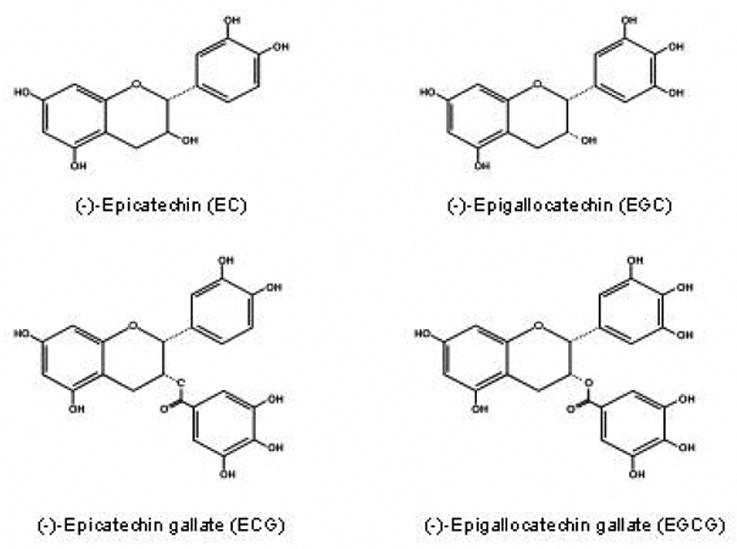
Animal and epidemiological studies suggest that green tea catechins may reduce the risk of cardiovascular diseases [e.g., coronary heart disease (CHD)]. The health benefit of green tea has been attributed to its antioxidant and anti-inflammatory properties; however, considerable evidence suggests that green tea and its catechins may reduce the risk of CHD by lowering the plasma levels of cholesterol and triglyceride. Although the mechanism underlying such effect of green tea is yet to be determined, it is evident from in vitro and in vivo studies that green tea or catechins inhibit the intestinal absorption of dietary lipids. Studies in vitro indicate that green tea catechins, particularly (-)-epigallocatechin gallate, interfere with the emulsification, digestion, and micellar solubilization of lipids, critical steps involved in the intestinal absorption of dietary fat, cholesterol, and other lipids. Based on the observations, it is likely that green tea or its catechins lower the absorption and tissue accumulation of other lipophilic organic compounds. The available information strongly suggests that green tea or its catechins may be used as safe and effective lipid-lowering therapeutic agents.
Figures
References
-
- Harbowy ME, Balentine D. Tea Chemistry, Critical Rev Plant Sci. 1997;16:415–80.
-
- Hayek T, Fuhrman B, Vaya J, Rosenblat M, Belinky P, Coleman R, Elis A, Aviram M. Reduced progression of atherosclerosis in apolipoprotein E-deficient mice following consumption of red wine, or its polyphenols quercetin or catechin, is associated with reduced susceptibility of LDL to oxidation and aggregation. Arterioscler Thromb Vasc Biol. 1997;17:2744–2752. - PubMed
-
- Chyu KY, Babbidge SM, Zhao X, Dandillaya R, Rietveld AG, Yano J, Dimayuga P, Cercek B, Shah PK. Differential effects of green tea-derived catechin on developing versus established atherosclerosis in apolipoprotein E-null mice. Circulation. 2004;109:2448–53. - PubMed
-
- Yang TTC, Koo MWL. Hypocholesterolemic effects of Chinese tea. Pharmacol Res. 1997;35:505–12. - PubMed
-
- Vinson JA, Teufel K, Wu N. Green and black teas inhibit atherosclerosis by lipid, antioxidant, and fibrinolytic mechanisms. J Agric Food Chem. 2004;52:3661–5. - PubMed
Publication types
MeSH terms
Substances
Grants and funding
LinkOut - more resources
Full Text Sources
Other Literature Sources
