


Revising the machine smoking regime for cigarette emissions: implications for tobacco control policy
- PMID: 17297067
- PMCID: PMC2598458
- DOI: 10.1136/tc.2005.015297
Revising the machine smoking regime for cigarette emissions: implications for tobacco control policy
Abstract
Background: The WHO Framework Convention on Tobacco Control includes provisions for testing and regulating cigarette emissions. However, the current international standard for generating cigarette emissions--the ISO machine smoking regime--is widely acknowledged to be inappropriate for purposes of setting regulatory restrictions.
Objective: To review alternatives to the ISO machine smoking regime and the extent to which they: 1) Represent human smoking behaviour, 2) Reduce the potential for industry exploitation, particularly in the area of risk communication, and 3) Serve as suitable measures for product regulation.
Methods: Emissions data from 238 Canadian cigarette brands tested under the ISO and "Canadian Intense" machine smoking regimes.
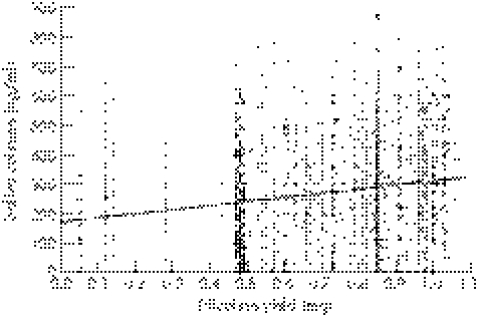
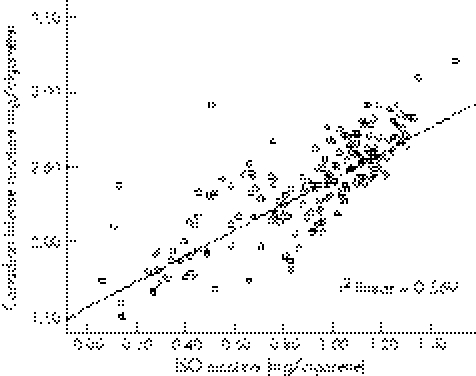
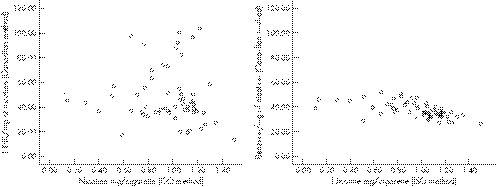
Results: None of the alternative smoking regimes, including the Canadian Intense method, are more "representative" of human smoking behaviour and none provide better predictors of human exposure.
Conclusions: Given that alternatives such as the Canadian Intense regime are subject to the same fundamental limitations as the ISO regime, key questions need to be addressed before any smoking regime should be used to set regulatory limits on smoke emissions. In the meantime, regulators should remove quantitative emission values from cigarette packages and more work should be done on alternative machine smoking methods.
Conflict of interest statement
Competing interests: None.
Comment in
-
Use of the precautionary principle in the debate about emissions limits: a cautionary note.Tob Control. 2008 Aug;17(4):286-7. doi: 10.1136/tc.2008.025783. Tob Control. 2008. PMID: 18653795 No abstract available.
References
-
- International Organization for Standardization Routine analytical cigarette‐smoking machine—definitions and standard conditions. ISO Standard 3308, 4th edn. ISO 2000
-
- US Department of Health and Human Services Risks associated with smoking cigarettes with low machine‐measured yields of tar and nicotine. Bethesda, MD: US Department of Health and Human Services, Public Health Services, National Institutes of Health, National Cancer Institute, 2001
-
- Benowitz N L. Biomarkers of cigarette smoking. The FTC cigarette test method for determining tar, nicotine, and carbon monoxide yields of U.S. cigarettes. Report of the NCI Expert Committee. Smoking and Tobacco Control Monograph No. 7. U.S. Department of Health and Human Services, National Institutes of Health, National Cancer Institute, NIH Publication No. 96‐4028. NIH: Bethesda, MD, 1996
-
- Schorp M K. Summary of literature data on smoking topography. A review of human smoking behaviour data and machne smoking of cigarettes. Report of the AD HOC WG9 Smoking Behaviour Review Team to ITC 126 WG 9. 2005
-
- Hammond D, Collishaw N, Callard C. Tobacco industry research on smoking behaviour and product design. Lancet 2006367781–787. - PubMed
Publication types
MeSH terms
Substances
Grants and funding
LinkOut - more resources
Full Text Sources
Medical
