


CD4+ T cell-mediated immunological control of enterochromaffin cell hyperplasia and 5-hydroxytryptamine production in enteric infection
- PMID: 17303597
- PMCID: PMC1994360
- DOI: 10.1136/gut.2006.103226
CD4+ T cell-mediated immunological control of enterochromaffin cell hyperplasia and 5-hydroxytryptamine production in enteric infection
Abstract
Background: Enterochromaffin (EC) cells are dispersed throughout the gastrointestinal (GI) mucosa and are the main source of 5-hydroxytryptamine (5-HT) in the gut. 5-HT has been implicated in the pathophysiology of several GI disorders, but the mechanisms regulating 5-HT production in the gut are unknown.
Aim: To investigate the role of CD4(+) T cells in the production of 5-HT using a model of enteric parasitic infection.
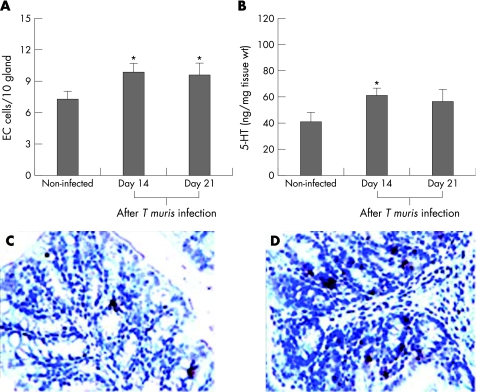
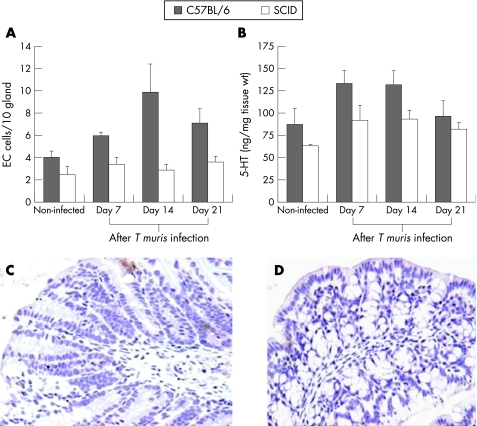
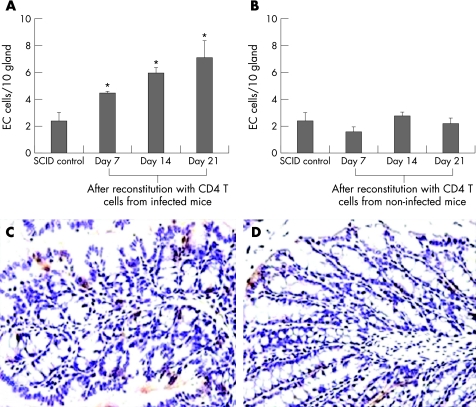
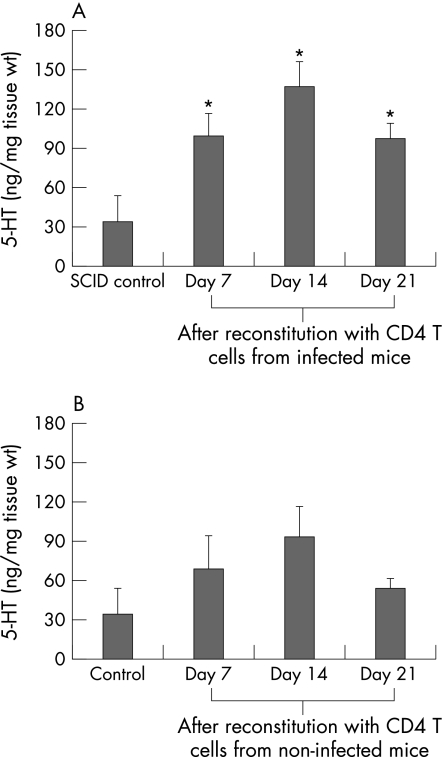
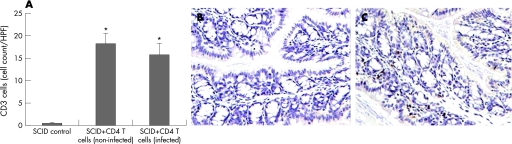
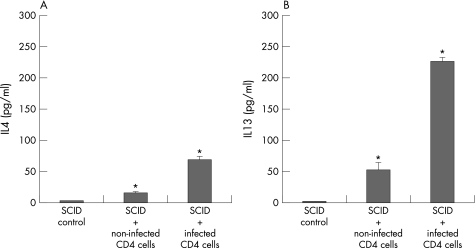
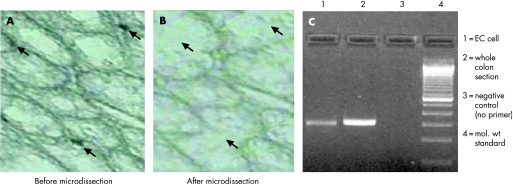
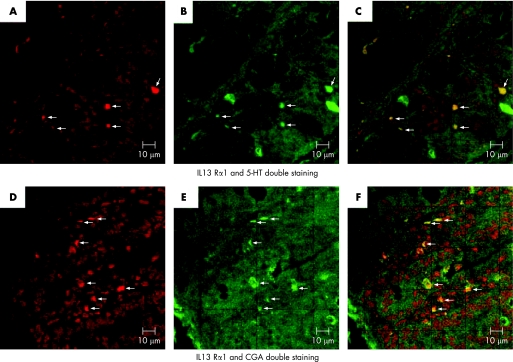
Methods and results: Severe combined immunodeficient (SCID) mice and their wild-type controls were infected with the nematode Trichuris muris and killed on various days after infection to study colonic EC cells and 5-HT production. The number of EC cells and the amount of 5-HT produced were significantly higher in infected wild-type mice than in non-infected mice. The number of EC cells and the amount of 5-HT after infection were significantly lower in SCID mice after infection than in wild-type mice. The number of EC cells and the amount of 5-HT was significantly increased after reconstitution of SCID mice with CD4(+) T cells from infected mice and this was accompanied by an upregulation of colonic CD3 T cells and T helper 2 (Th2) cytokines. Laser capture microdissection-based molecular and immunofluorescence techniques revealed the presence of interleukin 13 receptor alpha1-chain on EC cells.
Conclusion: These results show an important immunoendocrine axis in the gut, where secretory products from CD4(+) T cells interact with EC cells to enhance the production of 5-HT in the gut via Th2-based mechanisms. These results show new insights into the mechanisms of gut function, which may ultimately lead to improved therapeutic strategies in functional and inflammatory disorders of the GI tract.
Conflict of interest statement
Competing interests: None.
References
-
- Walsh J H, Dockray G J.Gut peptides. New York: Raven, 19941–884.
-
- Rehfield J F. The new biology of gastrointestinal hormones. Physiol Rev 1998781087–1108. - PubMed
-
- Sharkey K A, Mawe G M. Neuroimmune and epithelial interactions in intestinal inflammation. Curr Opin Pharmacol 20022669–677. - PubMed
-
- Gershon M D. Review article: roles played by 5‐hydroxytryptamine in the physiology of the bowel. Aliment Pharmacol Ther 199913(Suppl 2)15–30. - PubMed
-
- Lundgren O. Enteric nerves and diarrhoea. Pharmacol Toxicol 200290109–120. - PubMed
Publication types
MeSH terms
Substances
LinkOut - more resources
Full Text Sources
Medical
Research Materials
