


Effects of craving and DRD4 VNTR genotype on the relative value of alcohol: an initial human laboratory study
- PMID: 17309802
- PMCID: PMC1805446
- DOI: 10.1186/1744-9081-3-11
Effects of craving and DRD4 VNTR genotype on the relative value of alcohol: an initial human laboratory study
Abstract
Background: Craving for alcohol is a highly controversial subjective construct and may be clarified by Loewenstein's visceral theory, which emphasizes craving's behavioral effects on the relative value of alcohol. Based on the visceral theory, this study examined the effects of a craving induction on the relative value of alcohol as measured by a behavioral choice task. In addition, based on previous evidence of its role in the expression of craving, the influence of DRD4 VNTR genotype (DRD4-L vs. DRD4-S) was also examined.
Methods: Thirty-five heavy drinkers (54% male; 31% DRD4-L) were randomly assigned to receive either a craving induction (exposure to personally relevant alcohol cues) or a control induction (exposure to neutral cues), which was followed by an alcohol-money choice task. Participants were assessed for craving and positive/negative affect throughout the procedure, and relative value of alcohol was derived from participant choices for alcohol versus money. DRD4 VNTR status was assessed retrospectively via buccal samples using previously established protocols.
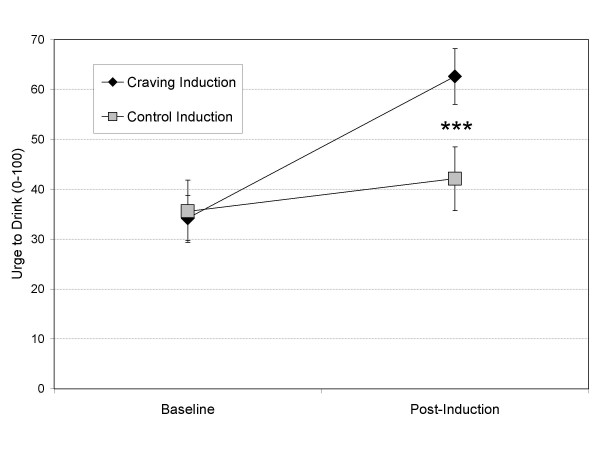
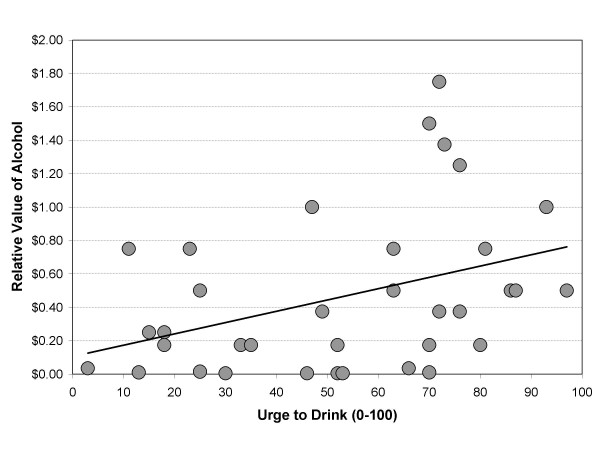
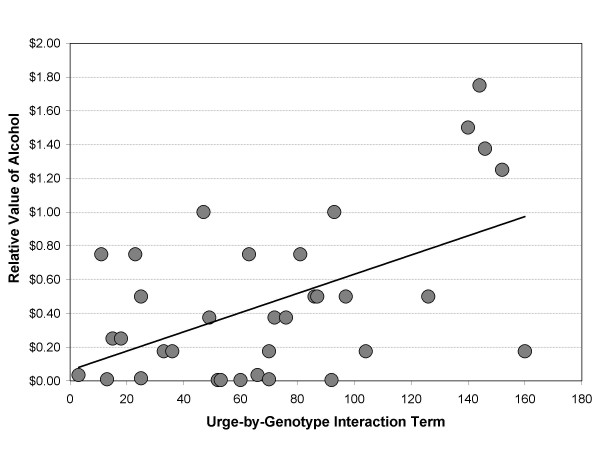
Results: Factorial analysis of the craving induction revealed that it was associated with significant increase in craving (p < .001), but not greater relative value of alcohol. Factorial analyses including DRD4 VNTR genotype of did not suggest an influence on reactivity to the craving induction, although this analysis was substantially compromised by small cell sample sizes. Continuous analyses revealed that craving was significantly associated with the relative value of alcohol (p < .05) and possession of the DRD4-L allele further amplified this relationship (p < .001).
Conclusion: These results are interpreted as generally supporting Loewenstein's visceral theory of craving and evidence of a functional role of DRD4 VNTR genotype in the expression of craving for alcohol. Methodological limitations, mechanisms underlying these findings, and future directions are discussed.
Figures
References
-
- Jellinek EM, Isbell H, Lundquist G, Tiebout HM, Duchene H, Mardones J, Macleod LD. The "Craving" for alcohol: A symposium by members of the WHO expert committees on mental health and alcohol. J Stud Alc. 1955;16:34–67. - PubMed
-
- Tiffany ST. Potential functions of classical conditioning in drug addiction. In: Drummond DC, Tiffany STS, Glautier S, Remington R, editor. Cue Exposure: Theory and Practice. Oxford, England: John Wiley and Sons; 1995. pp. 47–71.
-
- Tiffany ST, Carter BL. Is craving the source of compulsive drug use? J Psychopharmacol. 1998;12:23–30. - PubMed
Grants and funding
LinkOut - more resources
Full Text Sources
