Review
. 2007 May;62(5):457-70.
doi: 10.1111/j.1398-9995.2007.01341.x. Epub 2007 Feb 27.

Mechanisms of virus-induced asthma exacerbations: state-of-the-art. A GA2LEN and InterAirways document

Affiliations
Review

Mechanisms of virus-induced asthma exacerbations: state-of-the-art. A GA2LEN and InterAirways document

N G Papadopoulos et al. Allergy. 2007 May.

Abstract

Viral infections of the respiratory tract are the most common precipitants of acute asthma exacerbations. Exacerbations are only poorly responsive to current asthma therapies and new approaches to therapy are needed. Viruses, most frequently human rhinoviruses (RV), infect the airway epithelium, generate local and systemic immune responses, as well as neural responses, inducing inflammation and airway hyperresponsiveness. Using in vitro and in vivo experimental models the role of various proinflammatory or anti-inflammatory mediators, antiviral responses and molecular pathways that lead from infection to symptoms has been partly unravelled. In particular, mechanisms of susceptibility to viral infection have been identified and the bronchial epithelium appeared to be a key player. Nevertheless, additional understanding of the integration between the diverse elements of the antiviral response, especially in the context of allergic airway inflammation, as well as the interactions between viral infections and other stimuli that affect airway inflammation and responsiveness may lead to novel strategies in treating and/or preventing asthma exacerbations. This review presents the current knowledge and highlights areas in need of further research.


Figures

Figure 1
Figure 1
Overview of virus‐induced asthma exacerbations: respiratory viruses infect the airway epithelium inducing cellular damage, proinflammatory mediator production, a local and a systemic immune response and may affect neural homeostasis.
Figure 2
Figure 2
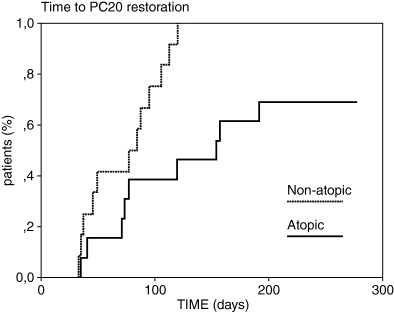
Duration of airway hyperresponsiveness (AHR) in atopic and nonatopic children with asthma, after an initial virus‐induced exacerbation. An increased number of symptomatic infections leads to considerably prolonged AHR in the atopic group [adapted from Ref. (28)].
Figure 3
Figure 3
Rhinovirus (RV) infection delays epithelial wood healing. BEAS‐2B cells were mechanically damaged and then infected or not with RV. Cells were stained with DAPI 24 h later, revealing a defect in epithelial repair in RV‐infected cells (31).
Figure 4
Figure 4
Upon a viral infection, epithelial and immune cells produce a wide variety of mediators, including interferons, proinflammatory cytokines, chemokines and pro‐fibrogenic growth factors, shaping the inflammatory response. Abbreviations: CCL, CC chemokine ligand; CCL5, RANTES (Regulated on Activation Normal T‐cell Expressed and Secreted); CCL11, eotaxin; CCL24, eotaxin‐2; CXCL, CXC chemokine ligand; CXCL10, IP‐10 (IFN‐γ‐inducible protein 10); FGF‐2, fibroblast growth factor‐2; GM‐CSF, granulocyte macrophage‐colony stimulating factor; ICAM‐1, intercellular adhesion molecule‐1; IFN, interferon; IL, interleukin; mDC, myeloid dendritic cell; NE, neutrophil elastase; pDC, plasmacytoid dendritic cell; RV, rhinovirus; TC1, cytotoxic CD8+ T‐lymphocyte type 1; TH1, T‐helper 1 CD4+ T lymphocyte; TLR, Toll‐like receptor; TNF‐α, tumour necrosis factor‐α; VEGF, vascular endothelial growth factor.
Figure 5
Figure 5
Nervous system involvement in virus‐induced exacerbations of asthma. (Top) Virus‐induced epithelial damage may permit irritant and allergen penetration and contact with nerve endings. (Middle) Epithelial damage may also affect the metabolism of neuropeptides, such as substance P and neurokinin‐A, which are implicated in cell activation in asthma. (Bottom) Viruses may damage the M2 muscarinic receptor that regulates cholinergic responses by a negative feedback loop, leading to increased cholinergic responsiveness.
Figure 6
Figure 6
Synergistic effect of allergic sensitization, allergen exposure and viral infection in increasing the risk of hospitalization for asthma in children. Combined exposure and viral infection in sensitized children increased almost 20‐fold such risk, while individual risk factor had weaker effects [adapted from Refs (146, 147)].

References

    1. Johnston SL, Pattemore PK, Sanderson G, Smith S, Lampe F, Josephs L et al. Community study of role of viral infections in exacerbations of asthma in 9–11 year old children. BMJ 1995;310:1225–1228. - PMC - PubMed
    1. Nicholson KG, Kent J, Ireland DC. Respiratory viruses and exacerbations of asthma in adults. BMJ 1993;307:982–986. - PMC - PubMed
    1. Silverman M, Wilson N. Wheezing phenotypes in childhood. Thorax 1997;52:936–937. - PMC - PubMed
    1. Papadopoulos NG, Velissariou I. The role of respiratory viruses in the pathogenesis of pediatric asthma. Pediatr Ann 2006;35:637–642. - PubMed
    1. Togias A. Systemic effects of local allergic disease. J Allergy Clin Immunol 2004;113:S8–14. - PubMed