


Prevalence and clinical relevance of Staphylococcus warneri in the neonatal intensive care unit
- PMID: 17326024
- PMCID: PMC1995750
- DOI: 10.1086/511998
Prevalence and clinical relevance of Staphylococcus warneri in the neonatal intensive care unit
Abstract
Objective: To describe the prevalence of Staphylococcus warneri on the hands of nurses and the clinical relevance of this organism among neonates in the neonatal intensive care unit (NICU).
Design: Prospective cohort study that examined the microbial flora on the hands of nurses and clinical isolates recovered from neonates during a 23-month period (March 1, 2001, through January 31, 2003).
Setting: Two high-risk NICUs in New York City.
Participants: All neonates hospitalized in the NICUs for more than 24 hours and all full-time nurses from the same NICUs who volunteered to participate.
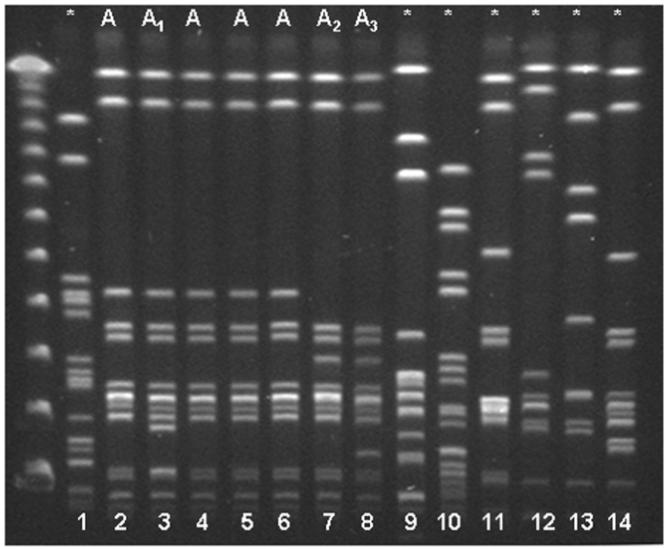
Intervention: At baseline and then every 3 months, samples for culture were obtained from each nurse's cleaned dominant hand. Pulsed-field electrophoresis compared S. warneri isolates from neonates and staff.
Results: Samples for culture (n=834) were obtained from the hands of 119 nurses; 520 (44%) of the 1,195 isolates of coagulase-negative staphylococci recovered were identified as S. warneri. Of the 647 clinically relevant isolates recovered from neonates, 17 (8%) of the 202 isolates that were identified to species level were S. warneri. Pulsed-field electrophoresis revealed a common strain of S. warneri that was shared among the nurses and neonates. Furthermore, 117 (23%) of 520 S. warneri isolates from nurses' hands had minimum inhibitory concentrations for vancomycin of 4 mu g/mL, which indicate decreasing susceptibility.
Conclusions: Our findings that S. warneri can be pathogenic in neonates, is a predominant species of coagulase-negative staphylococci cultured from the hands of nurses, and has decreased vancomycin susceptibility underscore the importance of continued surveillance for vancomycin resistance and pathogenicity in pediatric care settings.
Figures
References
-
- Gaynes RP, Edwards JR, Jarvis WR, Culver DH, Tolson JS, Martone WJ. Nosocomial infections among neonates in high-risk nurseries in the United States: National Nosocomial Infections Surveillance System. Pediatrics. 1996;98:357–361. - PubMed
-
- Grohskopf LA, Sinkowitz-Cochran RL, Garrett DO, et al. A national point-prevalence survey of pediatric intensive care unit-acquired infections in the United States. J Pediatr. 2002;140:432–438. - PubMed
-
- Fallat ME, Gallinero RN, Stover BH, Wilkerson S, Goldsmith LJ. Central venous catheter bloodstream infections in the neonatal intensive care unit. J Pediatr Surg. 1998;33:1383–1387. - PubMed
-
- Raimundo O, Heussler H, Bruhn JB, et al. Molecular epidemiology of coagulase-negative staphylococcal bacteraemia in a newborn intensive care unit. J Hosp Infect. 2002;51:33–42. - PubMed
-
- Udo EE, Jacob LE, Chugh TD. Antimicrobial resistance of coagulase-negative staphylococci from a Kuwait hospital. Microb Drug Resist. 1995;1:315–320. - PubMed
Publication types
MeSH terms
Substances
Grants and funding
LinkOut - more resources
Full Text Sources
Medical
Research Materials
Miscellaneous
