


Vulnerability of populations and the urban health care systems to nuclear weapon attack--examples from four American cities
- PMID: 17328796
- PMCID: PMC1828719
- DOI: 10.1186/1476-072X-6-5
Vulnerability of populations and the urban health care systems to nuclear weapon attack--examples from four American cities
Abstract
Background: The threat posed by the use of weapons of mass destruction (WMD) within the United States has grown significantly in recent years, focusing attention on the medical and public health disaster capabilities of the nation in a large scale crisis. While the hundreds of thousands or millions of casualties resulting from a nuclear weapon would, in and of itself, overwhelm our current medical response capabilities, the response dilemma is further exacerbated in that these resources themselves would be significantly at risk. There are many limitations on the resources needed for mass casualty management, such as access to sufficient hospital beds including specialized beds for burn victims, respiration and supportive therapy, pharmaceutical intervention, and mass decontamination.
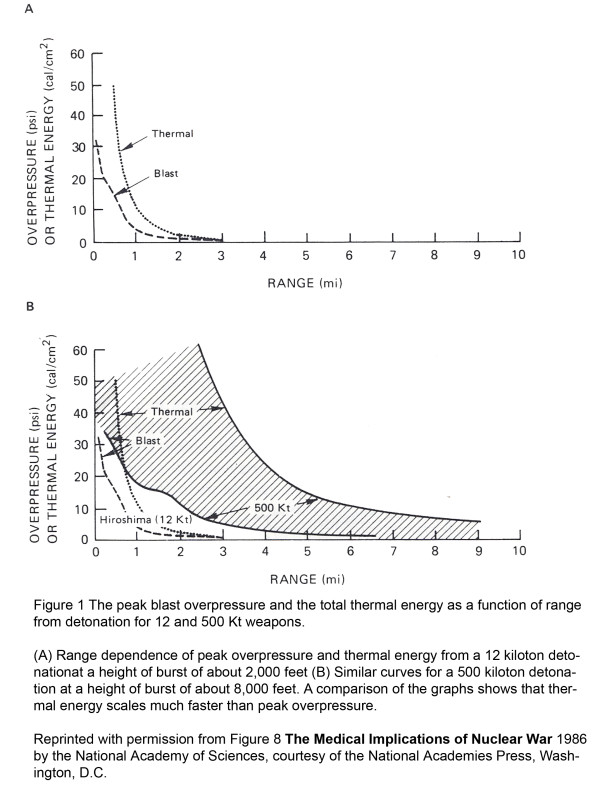
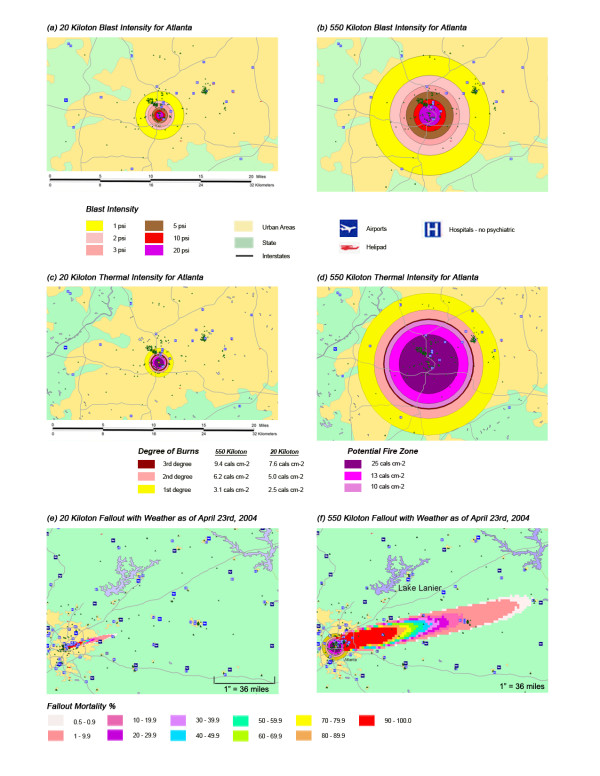
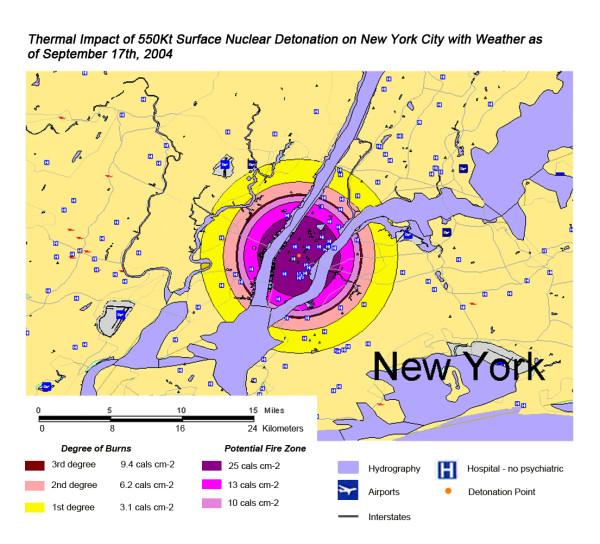
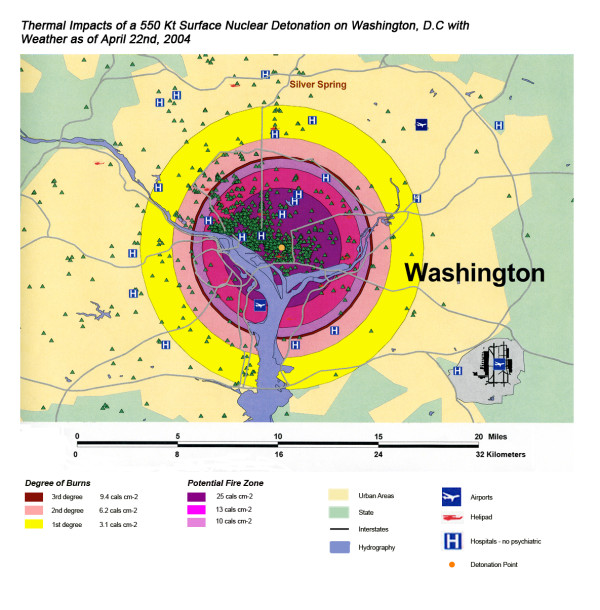
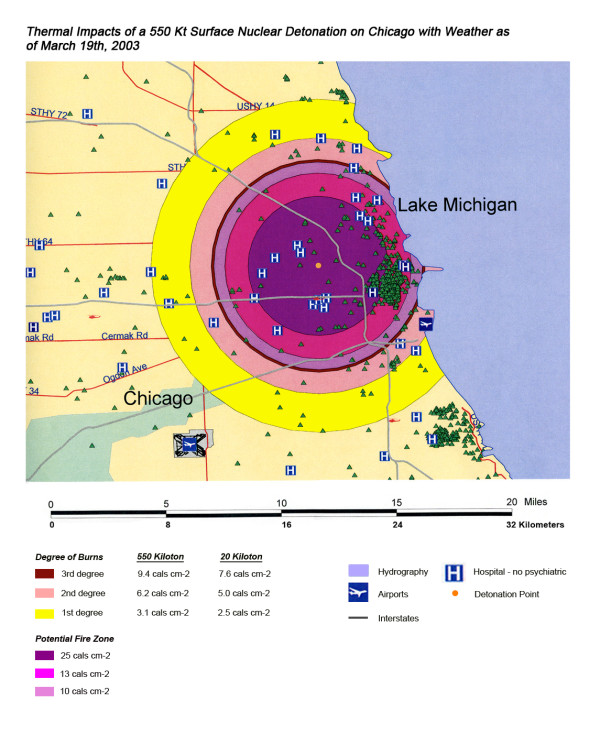
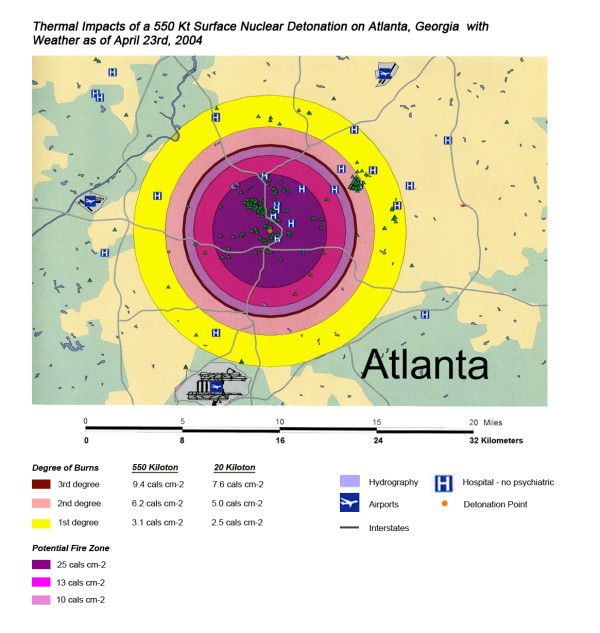
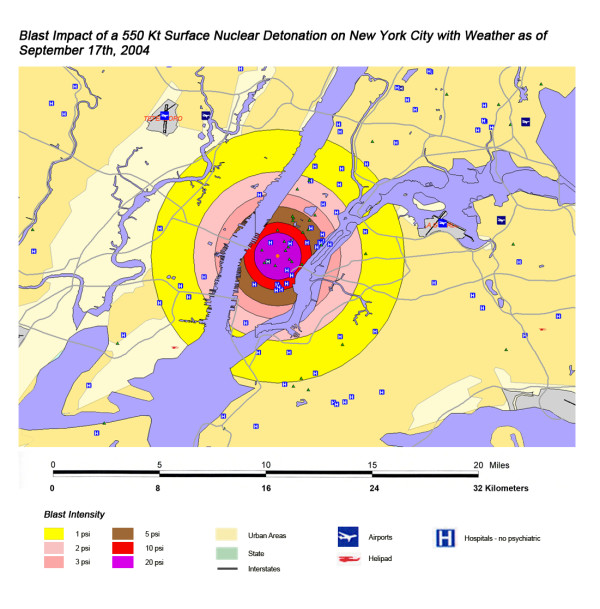
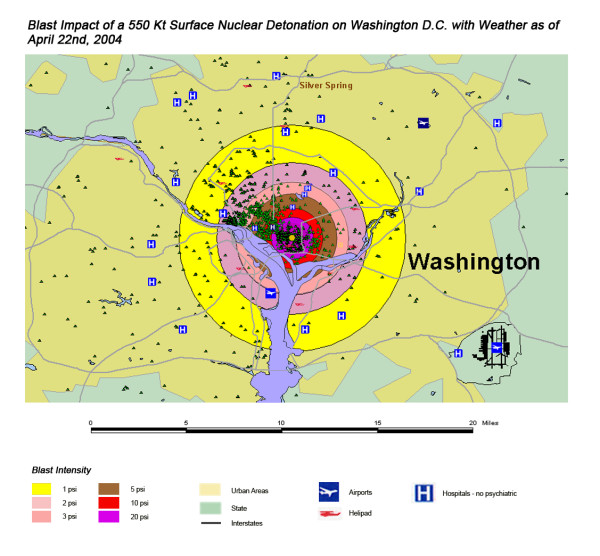
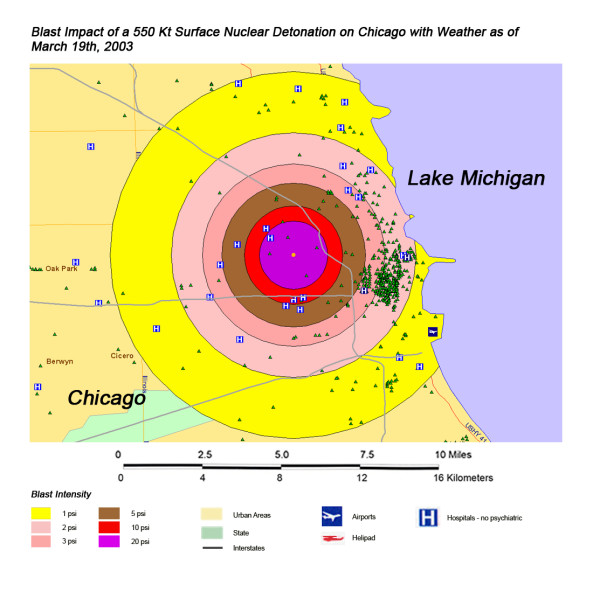
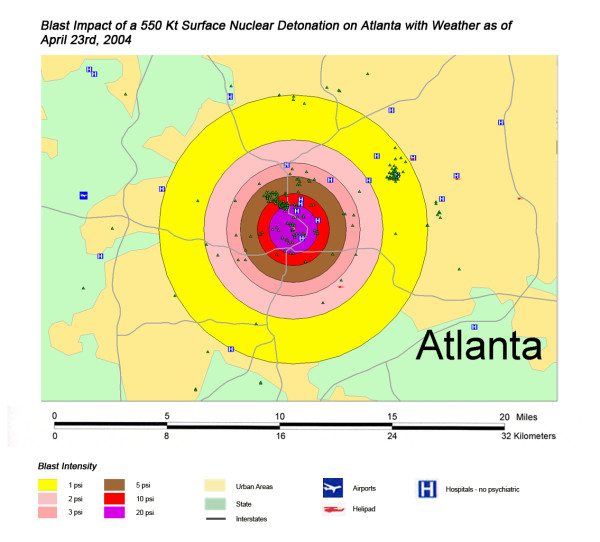
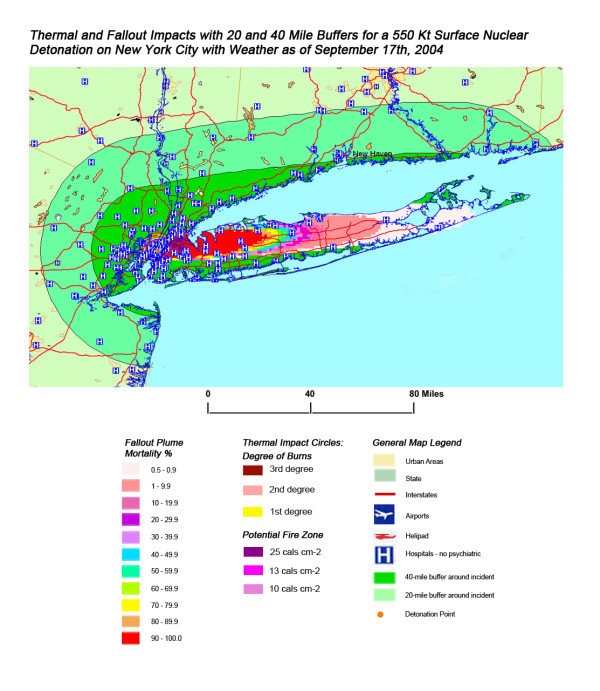
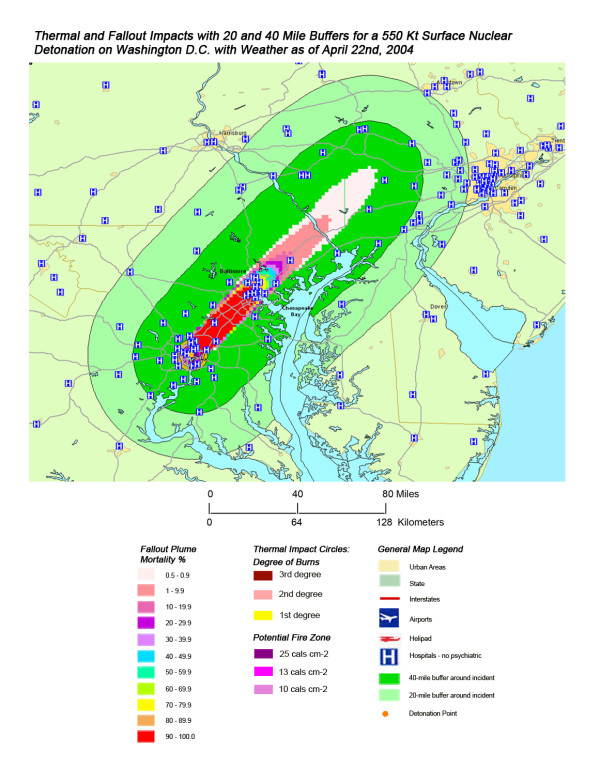
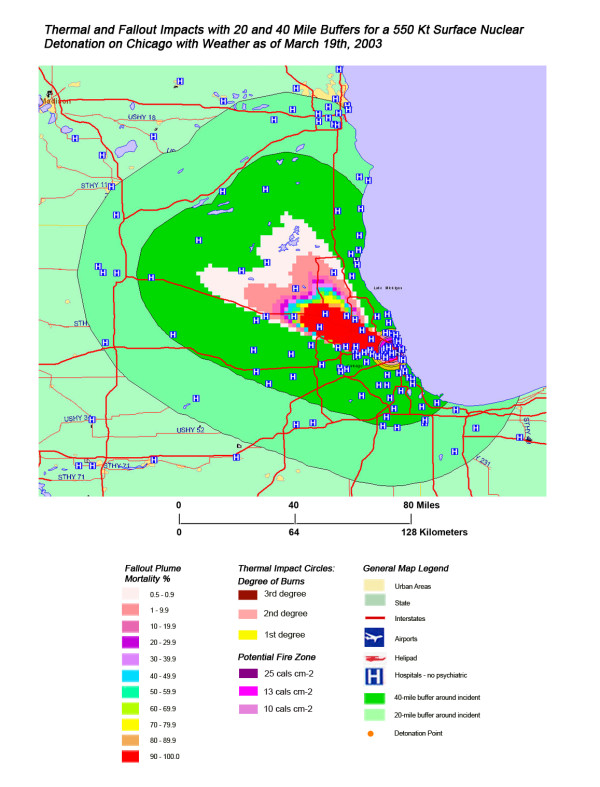
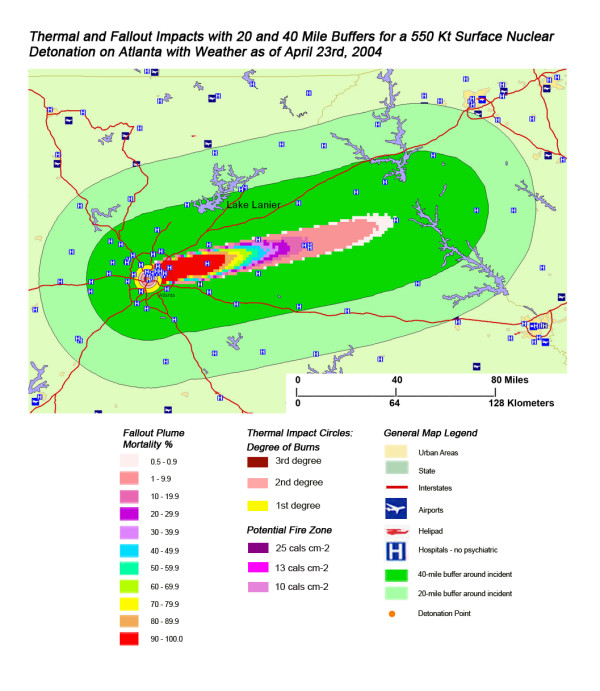
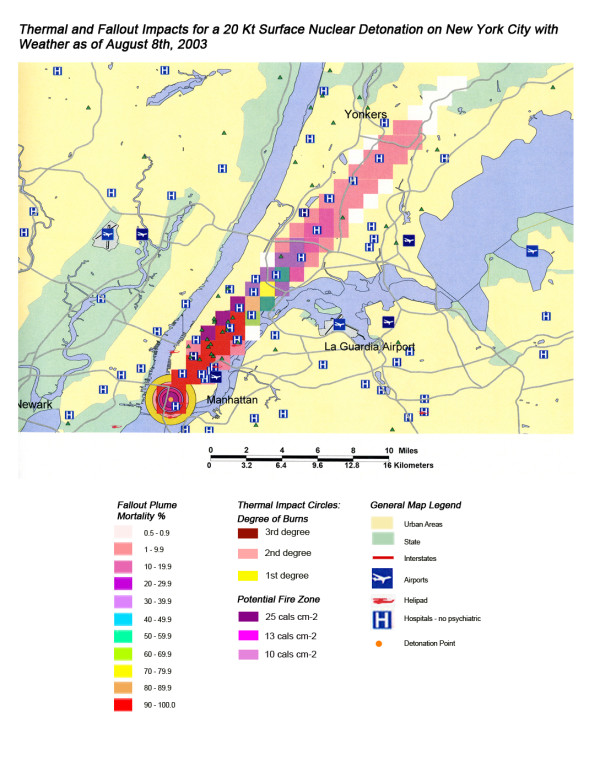
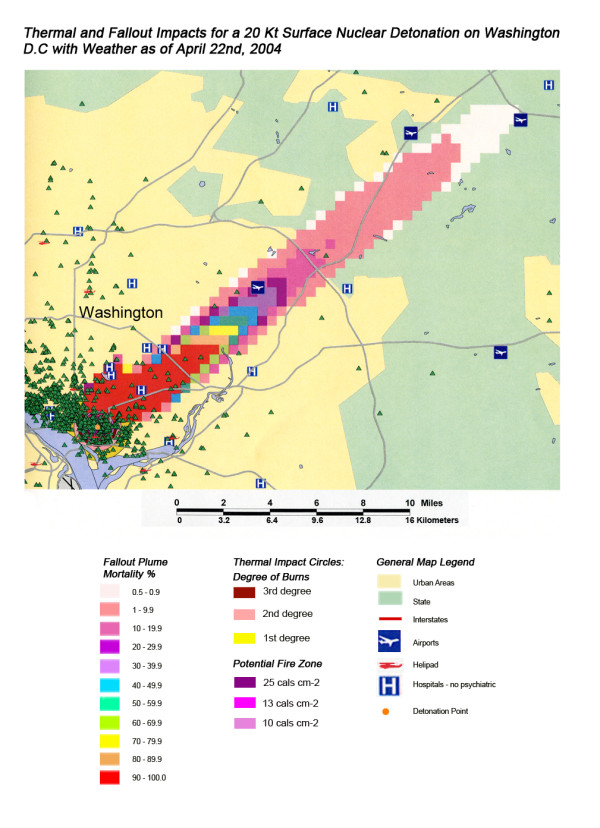
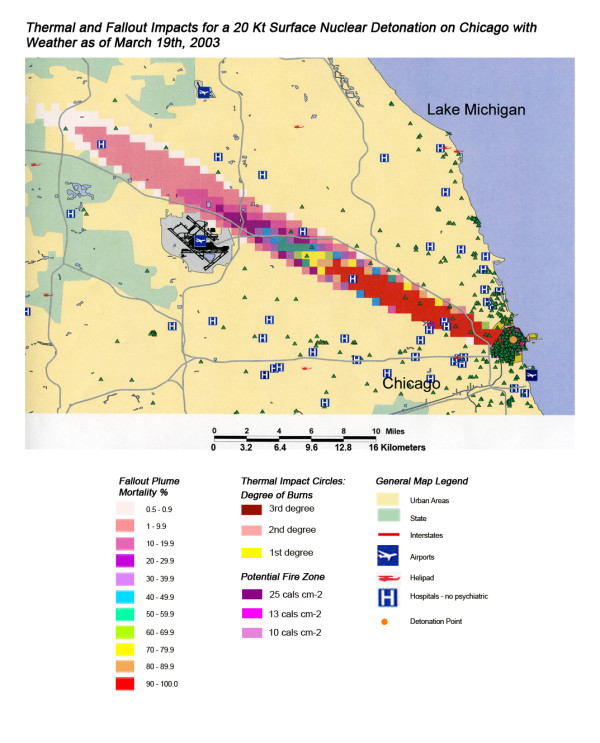
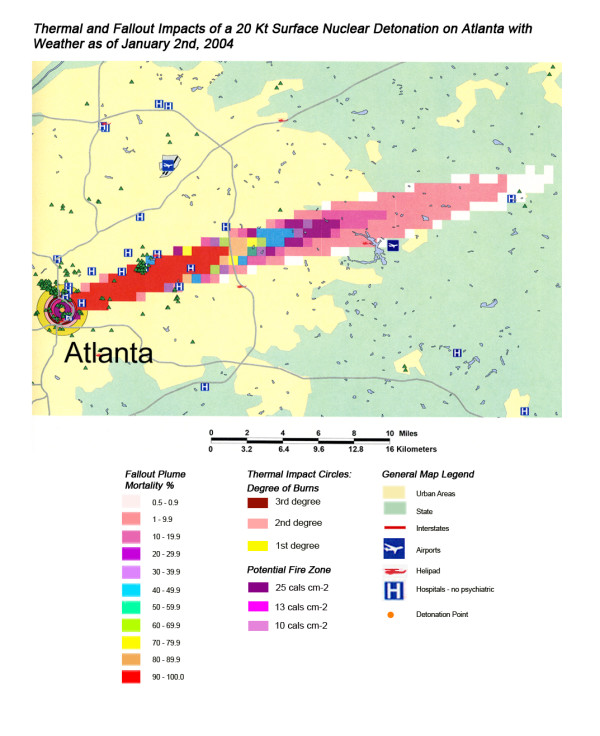
Results: The effects of 20 kiloton and 550 kiloton nuclear detonations on high priority target cities are presented for New York City, Chicago, Washington D.C. and Atlanta. Thermal, blast and radiation effects are described, and affected populations are calculated using 2000 block level census data. Weapons of 100 Kts and up are primarily incendiary or radiation weapons, able to cause burns and start fires at distances greater than they can significantly damage buildings, and to poison populations through radiation injuries well downwind in the case of surface detonations. With weapons below 100 Kts, blast effects tend to be stronger than primary thermal effects from surface bursts. From the point of view of medical casualty treatment and administrative response, there is an ominous pattern where these fatalities and casualties geographically fall in relation to the location of hospital and administrative facilities. It is demonstrated that a staggering number of the main hospitals, trauma centers, and other medical assets are likely to be in the fatality plume, rendering them essentially inoperable in a crisis.
Conclusion: Among the consequences of this outcome would be the probable loss of command-and-control, mass casualties that will have to be treated in an unorganized response by hospitals on the periphery, as well as other expected chaotic outcomes from inadequate administration in a crisis. Vigorous, creative, and accelerated training and coordination among the federal agencies tasked for WMD response, military resources, academic institutions, and local responders will be critical for large-scale WMD events involving mass casualties.
Figures
References
-
- G-7 (Group of seven industrialized nations – United States, Japan, Germany, Britain, France, Italy and Canada) Declaration on terrorism. June 27, 1996.
-
- US Senate, 104th Cong, 1st Sess, Part 1) Global proliferation of weapons of mass destruction. October 31 and November 1, 1995.
-
- US Congress, Office of Technology Assessment Proliferation of Weapons of Mass Destruction: Assessing the Risks. Office of Technology Assessment, Document OTA BP ISC:559. 1993.
-
- US Congress, Office of Technology Assessment, December Technologies Underlying Weapons of Mass Destruction. Office of Technology Assessment, Document OTA BP ISC. 1993;115
MeSH terms
LinkOut - more resources
Full Text Sources
Medical
Research Materials
