


Increase in bloodstream infections in Finland, 1995-2002
- PMID: 17335630
- PMCID: PMC2870761
- DOI: 10.1017/S0950268807008138
Increase in bloodstream infections in Finland, 1995-2002
Abstract
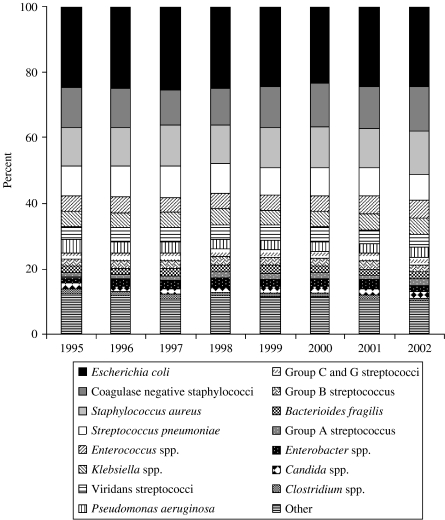
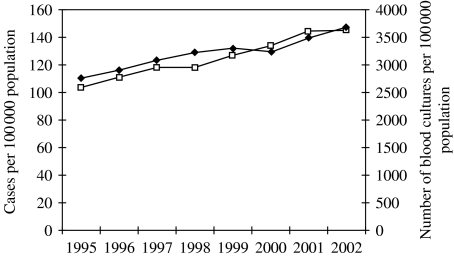
A national, population-based laboratory surveillance of bloodstream infections (BSI) in Finland was performed. Blood-culturing rates were determined from data from clinical microbiology laboratories and trends in rates were evaluated using Poisson regression. During 1995-2002, 51,510 cases of BSI were notified; the annual incidence increased from 104 to 145 cases/100,000 (40%). Rates increased in all age groups but persons aged >or= 75 years accounted for 28% of cases and showed the largest rate increase. Escherichia coli, coagulase-negative staphylococci, Staphylococcus aureus and Streptococcus pneumoniae accounted for 58% of isolates and their relative proportions were unchanged over time. The annual blood-culturing rate increased by one-third during the study period but the number of BSI detected per blood cultures remained unchanged. Regional BSI incidence was significantly associated with blood-culturing rates. We conclude that the increase in BSI rates may have been due to more frequent blood culturing but was not associated with changes in the reporting system or aetiology of BSI.
Figures
References
-
- Weinstein MP et al. The clinical significance of positive blood cultures in the 1990s: a prospective comprehensive evaluation of the microbiology, epidemiology, and outcome of bacteremia and fungemia in adults. Clinical Infectious Diseases. 1997;24:584–602. - PubMed
-
- Bouza E, Pérez-Molina J, Muñoz P. Report of ESGNI-001 and ESGNI-002 studies. Bloodstream infections in Europe. Clinical Microbiology and Infection. 1999;5:1–12. (Suppl. 2):
-
- Martin GS et al. The epidemiology of sepsis in the United States from 1979 through 2000. New England Journal of Medicine. 2003;348:1546. - PubMed
-
- Effler P et al. Statewide system of electronic notifiable disease reporting from clinical laboratories. Comparing automated reporting with conventional methods. Journal of American Medical Association. 1999;282:1845–1850. - PubMed
MeSH terms
LinkOut - more resources
Full Text Sources
