. 2007 Mar;32(3):297-309.
doi: 10.1016/j.jhsa.2006.10.024.

Biomechanical evaluation of the ligamentous stabilizers of the scaphoid and lunate: part III

Affiliations

Biomechanical evaluation of the ligamentous stabilizers of the scaphoid and lunate: part III

Walter H Short et al. J Hand Surg Am. 2007 Mar.

Abstract

Purpose: This study continued our previous investigations of the ligaments stabilizing the scaphoid and lunate in which we examined the scapholunate interosseous ligament, the radioscaphocapitate, and the scaphotrapezial ligament. In this current study, we examined the effects of sectioning the dorsal radiocarpal ligament, dorsal intercarpal ligament, scapholunate interosseous ligament, radioscaphocapitate, and scaphotrapezial ligaments. In the current study, the scapholunate interosseous ligament, radioscaphocapitate, and scaphotrapezial ligaments were sectioned in a different order than performed previously.

Methods: Three sets of 8 cadaver wrists were tested in a wrist joint motion simulator. In each set of wrists, only 3 of the 5 ligaments were cut in specific sequences. Each wrist was moved in continuous cycles of flexion-extension and radial-ulnar deviation. Kinematic data for the scaphoid and lunate were recorded for each wrist in the intact state, after the 3 ligaments were sectioned in various sequences and after the wrist was moved through 1,000 cycles of motion.

Results: Dividing the dorsal intercarpal or scaphotrapezial ligaments did not alter the motion of the scaphoid or lunate. Dividing the dorsal radiocarpal ligament alone caused a slight statistical increase in lunate radial deviation. Dividing the scapholunate interosseous ligament after first dividing the dorsal intercarpal, dorsal radiocarpal, or scaphotrapezial ligaments caused large increases in scaphoid flexion and lunate extension.

Conclusions: Based on these findings, we concluded that the scapholunate interosseous ligament is the primary stabilizer and that the other ligaments are secondary stabilizers of the scapholunate articulation. Dividing the dorsal radiocarpal, dorsal intercarpal, or scaphotrapezial ligaments after cutting the scapholunate interosseous ligament produces further changes in scapholunate instability or results in changes in the kinematics for a larger portion of the wrist motion cycle.


Figures
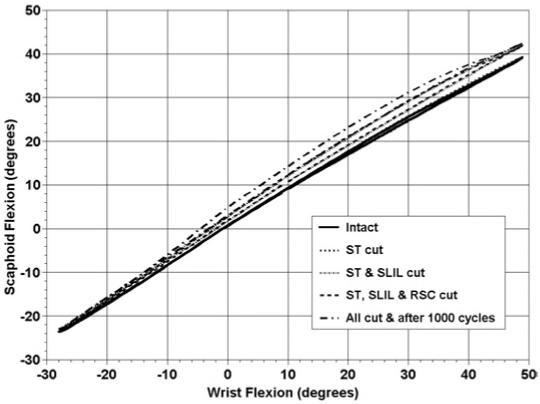
Figure 1
Figure 1
Average scaphoid flexion and extension as a function of wrist flexion and extension in the intact wrist and after sequential ligamentous sectioning in the first group of arms. The graph represents the motion of the scaphoid during a complete cycle of wrist motion from flexion to extension to flexion. Flexion is positive.
Figure 2
Figure 2
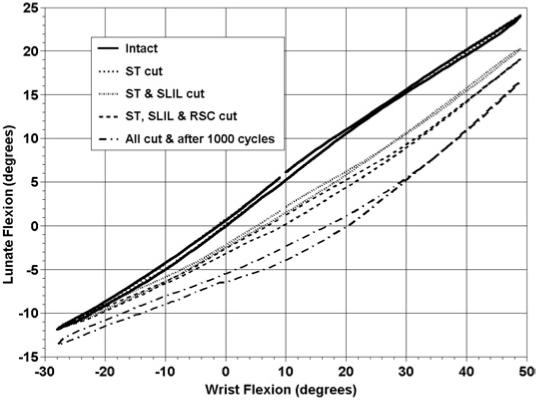
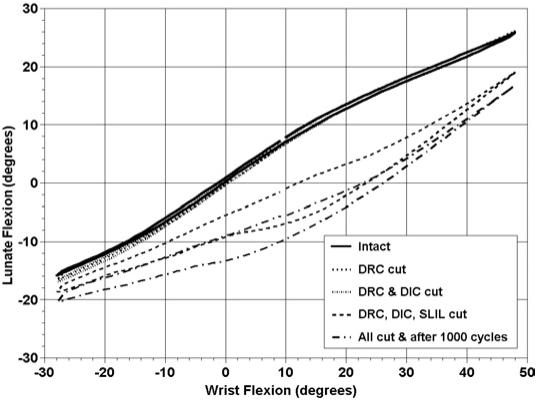
Average lunate flexion and extension as a function of wrist flexion and extension in the intact wrist and after sequential ligamentous sectioning in the first group of arms. The graph represents the motion of the lunate during a complete cycle of wrist motion from flexion to extension to flexion. Flexion is positive.
Figure 3
Figure 3
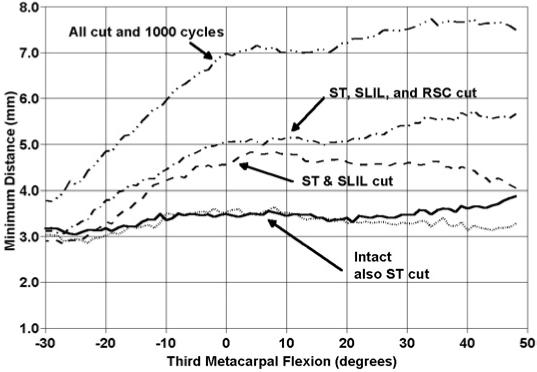
Average minimum distance between the scaphoid and lunate in the intact wrist and after sequential sectioning in the first group of arms. The graph represents the portion of the wrist motion cycle as the wrist is moving from wrist flexion to extension.
Figure 4
Figure 4
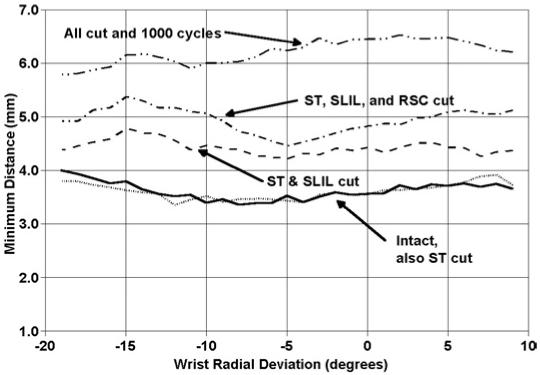
Average minimum distance between the scaphoid and lunate in the intact wrist and after sequential ligament sectioning in the first group of arms. The graph represents the portion of the wrist motion cycle as the wrist is moving from radial to ulnar deviation.
Figure 5
Figure 5
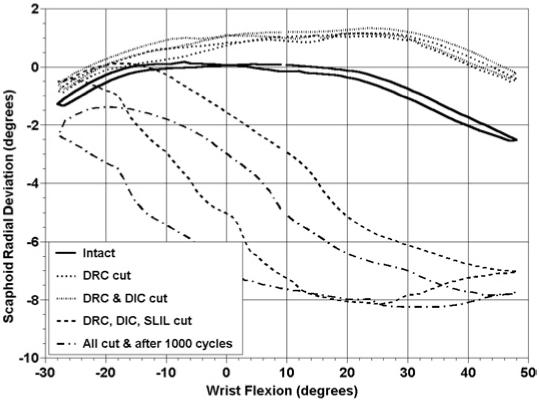
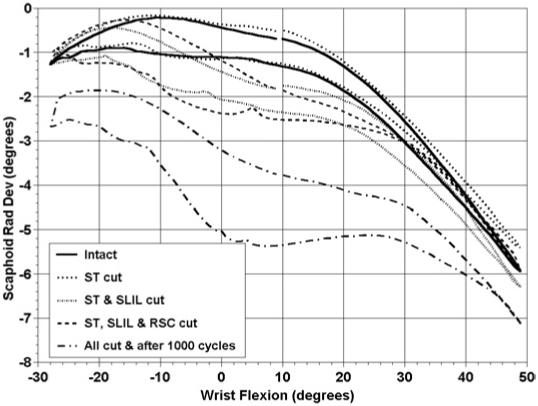
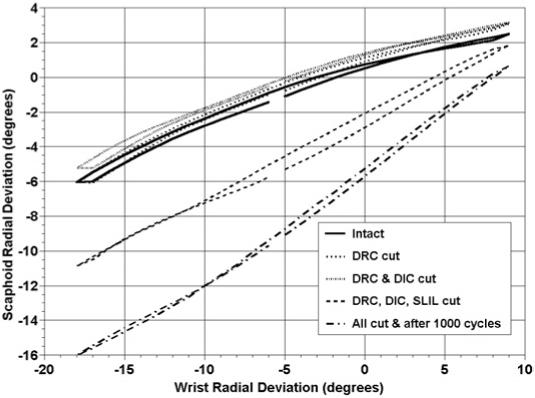
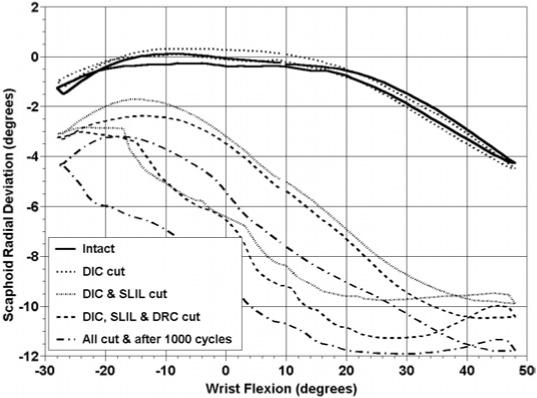
Average scaphoid radial and ulnar deviation as a function of wrist flexion and extension in the intact wrist and after sequential ligamentous sectioning in the second group of arms. The graph represents the motion of the scaphoid during a complete cycle of wrist motion from flexion to extension to flexion. Flexion and radial deviation are positive.
Figure 6
Figure 6
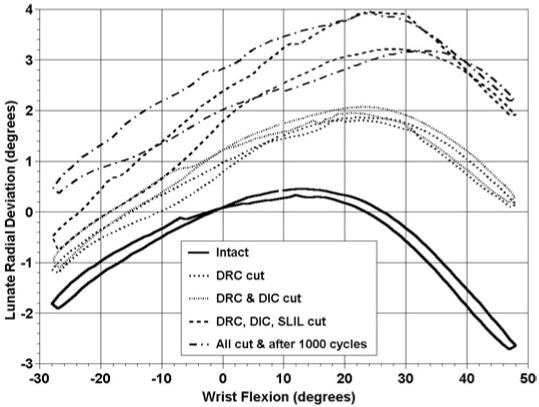
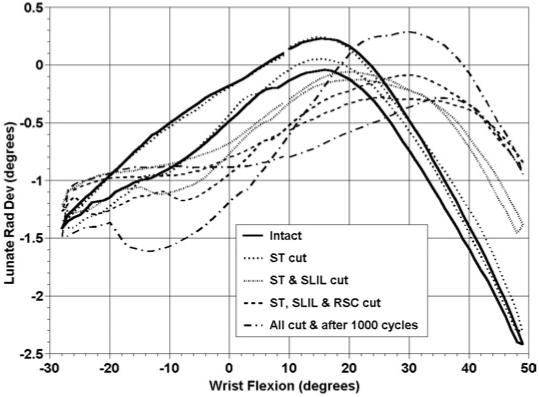
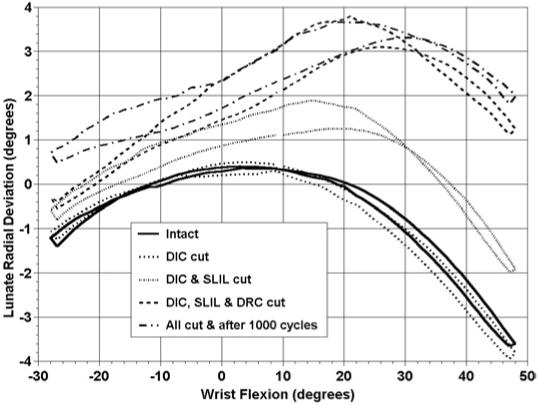
Average lunate radial and ulnar deviation as a function of wrist flexion and extension in the intact wrist and after sequential ligamentous sectioning in the second group of arms. The graph represents the motion of the lunate during a complete cycle of wrist motion from flexion to extension to flexion. Flexion and radial deviation are positive.
Figure 7
Figure 7
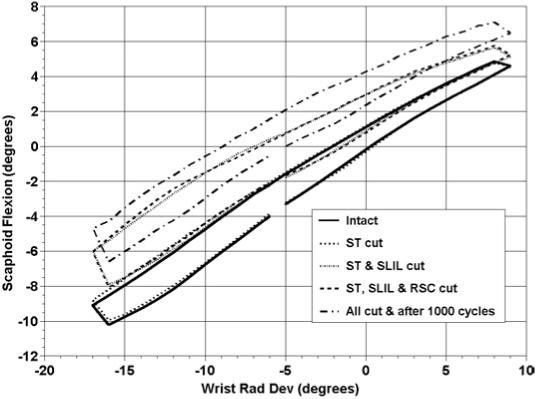
Average scaphoid flexion and extension as a function of wrist radial and ulnar deviation in the intact wrist and after sequential ligamentous sectioning in the second group of arms. The graph represents the motion of the scaphoid during a complete cycle of wrist motion from radial deviation to ulnar deviation to radial deviation. Flexion and radial deviation are positive. The irregular ends of the curves are the result of including only the data points common to all 8 arms during a range of motion. Some arms continued beyond the shown end points.
Figure 8
Figure 8
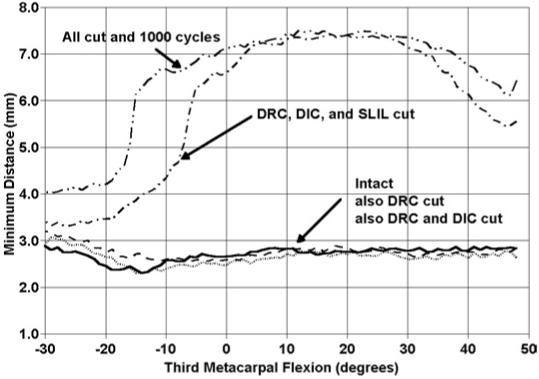
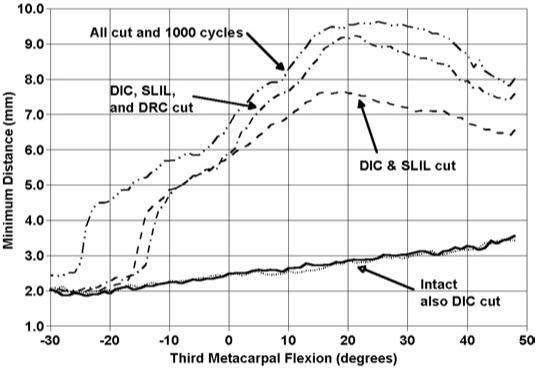
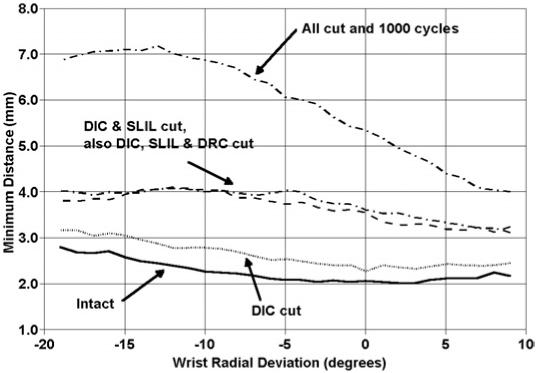
Average minimum distance between the scaphoid and lunate in the intact wrist and after sequential ligamentous sectioning in the second group of arms. The graph represents the portion of the wrist motion cycle as the wrist is moving from wrist flexion to extension.
Figure 9
Figure 9
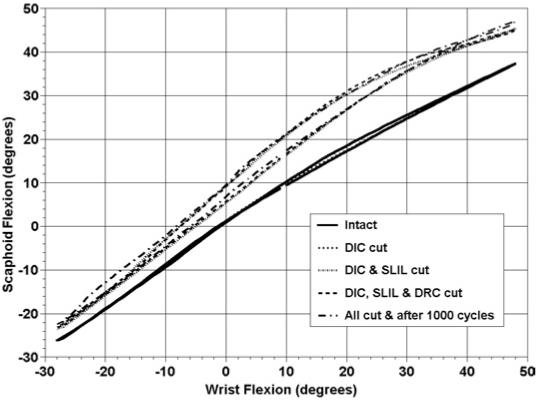
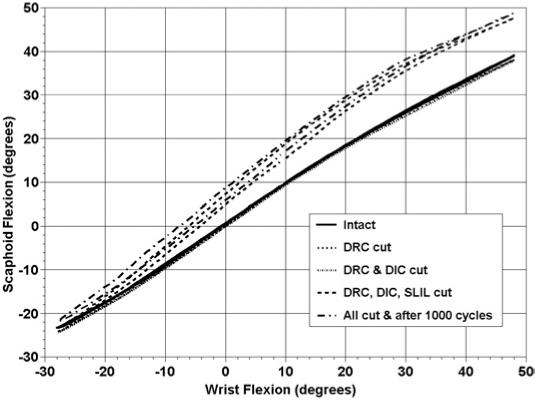
Average scaphoid flexion and extension as a function of wrist flexion and extension in the intact wrist and after sequential ligamentous sectioning in the third group of arms. The graph represents the motion of the scaphoid during a complete cycle of wrist motion from flexion to extension to flexion. Flexion is positive.
Figure 10
Figure 10
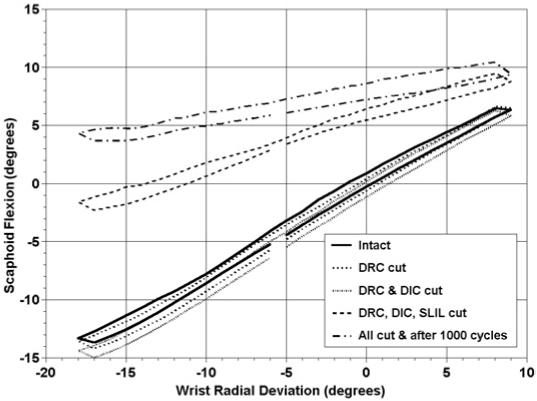
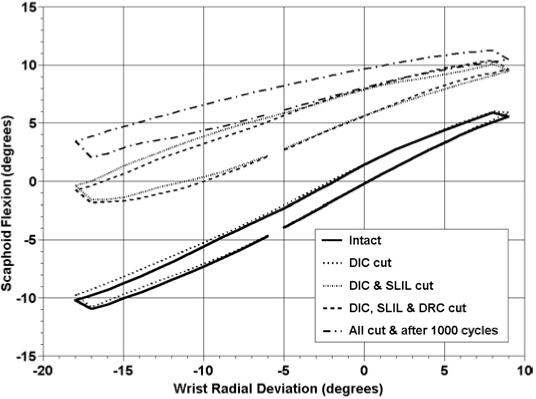
Average scaphoid flexion and extension as a function of wrist radial and ulnar deviation in the intact wrist and after sequential ligamentous sectioning in the third group of arms. The graph represents the motion of the scaphoid during a complete cycle of wrist motion from radial deviation to ulnar deviation to radial deviation. Flexion and radial deviation are positive. The irregular ends of the curves are the result of including only the data points common to all 8 arms during a range of motion. Some arms continued beyond the shown end points.
Figure A1
Figure A1
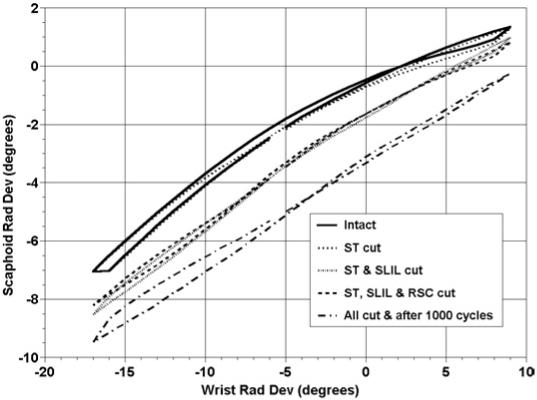
Average scaphoid radial and ulnar deviation as a function of wrist flexion and extension in the intact wrist and after sequential ligamentous sectioning in the first group of arms. The graph represents the motion of the scaphoid during a complete cycle of wrist motion from flexion to extension to flexion. Flexion and radial deviation are positive.
Figure A2
Figure A2
Average lunate radial and ulnar deviation as a function of wrist flexion and extension deviation in the intact wrist and after sequential ligamentous sectioning in the first group of arms. The graph represents the motion of the lunate during a complete cycle of wrist motion from flexion to extension to flexion. Flexion and radial deviation are positive.
Figure A3
Figure A3
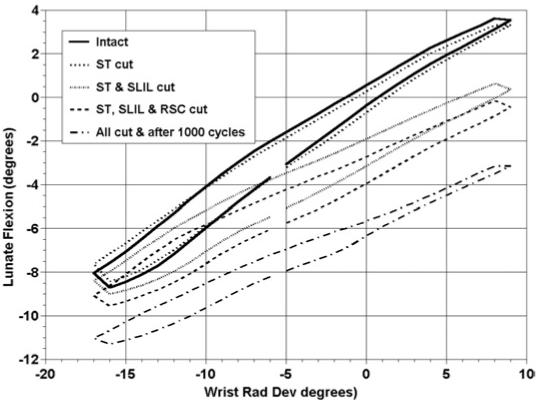
Average scaphoid flexion and extension as a function of wrist radial and ulnar deviation in the intact wrist and after sequential ligamentous sectioning in the first group of arms. The graph represents the motion of the scaphoid during a complete cycle of wrist motion from radial deviation to ulnar deviation to radial deviation. Flexion and radial deviation are positive. The irregular ends of the curves are the result of including only the data points common to all 8 arms during a range of motion. Some arms continued beyond the shown end points.
Figure A4
Figure A4
Average scaphoid radial and ulnar deviation as a function of wrist radial and ulnar deviation in the intact wrist and after sequential ligamentous sectioning in the first group of arms. The graph represents the motion of the scaphoid during a complete cycle of wrist motion from radial deviation to ulnar deviation to radial deviation. Flexion and radial deviation are positive. The irregular ends of the curves are the result of including only the data points common to all 8 arms during a range of motion. Some arms continued beyond the shown end points.
Figure A5
Figure A5
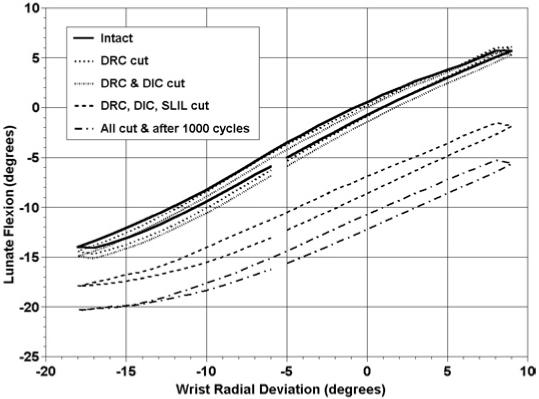
Average lunate flexion and extension as a function of wrist radial and ulnar deviation in the intact wrist and after sequential ligamentous sectioning in the first group of arms. The graph represents the motion of the lunate during a complete cycle of wrist motion from radial deviation to ulnar deviation to radial deviation. Flexion and radial deviation are positive. The irregular ends of the curves are the result of including only the data points common to all 8 arms during a range of motion. Some arms continued beyond the shown end points.
Figure A6
Figure A6
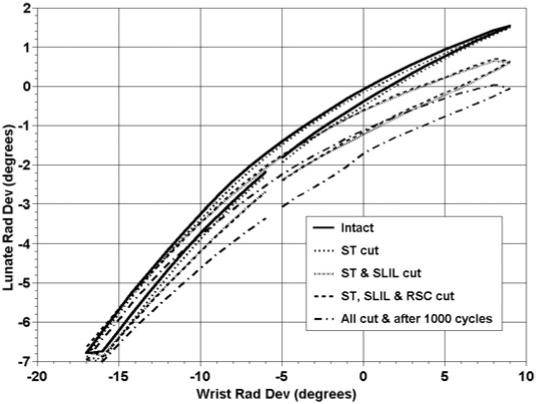
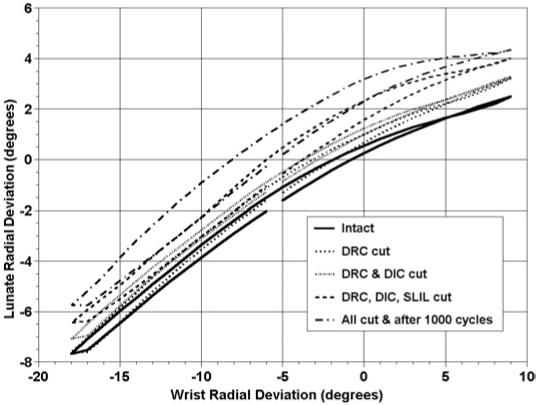
Average lunate radial and ulnar deviation as a function of wrist radial and ulnar deviation in the intact wrist and after sequential ligamentous sectioning in the first group of arms. The graph represents the motion of the lunate during a complete cycle of wrist motion from radial deviation to ulnar deviation to radial deviation. Flexion and radial deviation are positive. The irregular ends of the curves are the result of including only the data points common to all 8 arms during a range of motion. Some arms continued beyond the shown end points.
Figure A7
Figure A7
Average scaphoid flexion and extension as a function of wrist flexion and extension in the intact wrist and after sequential ligamentous sectioning in the second group of arms. The graph represents the motion of the scaphoid during a complete cycle of wrist motion from flexion to extension to flexion. Flexion is positive.
Figure A8
Figure A8
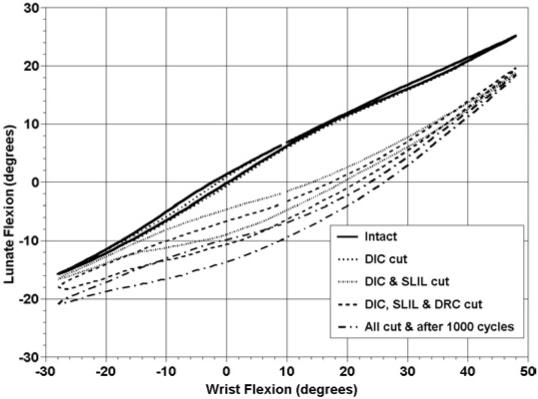
Average lunate flexion and extension as a function of wrist flexion and extension in the intact wrist and after sequential ligamentous sectioning in the second group of arms. The graph represents the motion of the lunate during a complete cycle of wrist motion from flexion to extension to flexion. Flexion is positive.
Figure A9
Figure A9
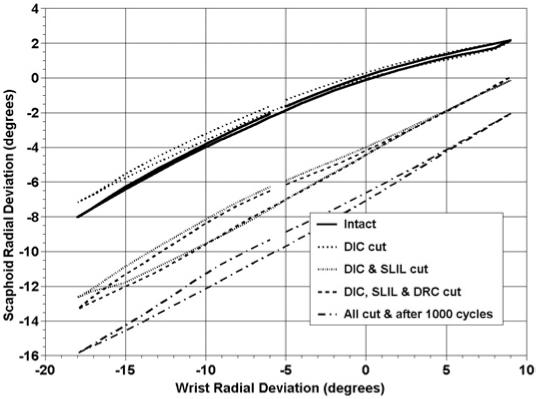
Average scaphoid radial and ulnar deviation as a function of wrist radial and ulnar deviation in the intact wrist and after sequential ligamentous sectioning in the second group of arms. The graph represents the motion of the scaphoid during a complete cycle of wrist motion from radial deviation to ulnar deviation to radial deviation. Flexion and radial deviation are positive.
Figure A10
Figure A10
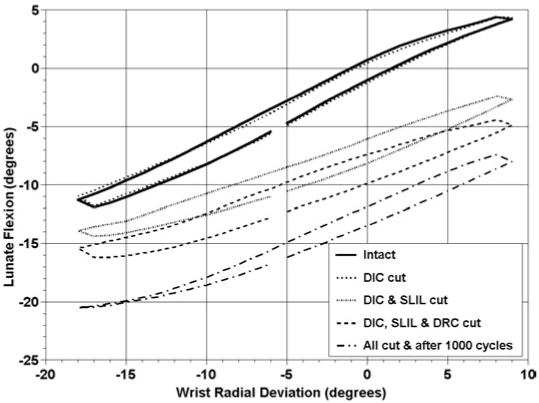
Average lunate flexion and extension as a function of wrist radial and ulnar deviation in the intact wrist and after sequential ligamentous sectioning in the second group of arms. The graph represents the motion of the lunate during a complete cycle of wrist motion from radial deviation to ulnar deviation to radial deviation. Flexion and radial deviation are positive.
Figure A11
Figure A11
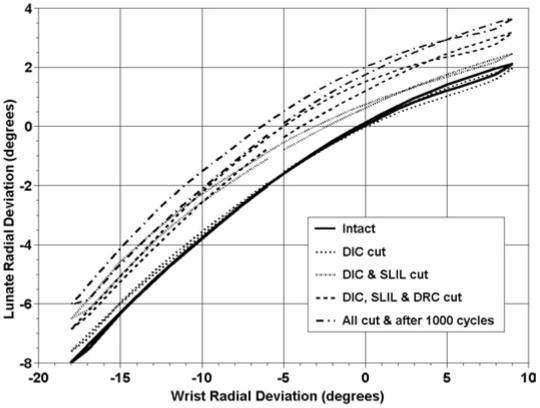
Average lunate radial and ulnar deviation as a function of wrist radial and ulnar deviation in the intact wrist and after sequential ligamentous sectioning in the second group of arms. The graph represents the motion of the lunate during a complete cycle of wrist motion from radial deviation to ulnar deviation to radial deviation. Flexion and radial deviation are positive.
Figure A12
Figure A12
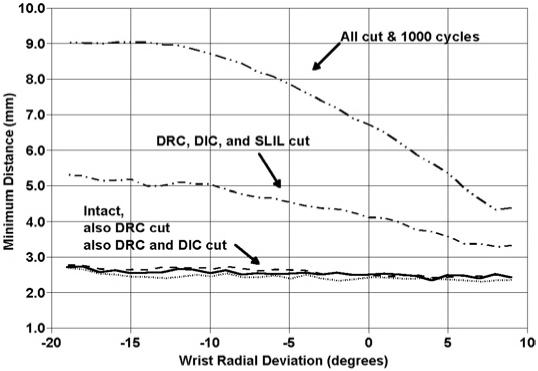
Average minimum distance between the scaphoid and lunate in the intact wrist and after sequential ligamentous sectioning in the second group of arms. The graph represents the portion of the wrist motion cycle as the wrist is moving from radial to ulnar deviation.
Figure A13
Figure A13
Average scaphoid radial and ulnar deviation as a function of wrist flexion and extension in the intact wrist and after sequential ligamentous sectioning in the third group of arms. The graph represents the motion of the scaphoid during a complete cycle of wrist motion from flexion to extension to flexion. Flexion and radial deviation are positive.
Figure A14
Figure A14
Average lunate flexion and extension as a function of wrist flexion and extension in the intact wrist and after sequential ligamentous sectioning in the third group of arms. The graph represents the motion of the lunate during a complete cycle of wrist motion from flexion to extension to flexion. Flexion is positive.
Figure A15
Figure A15
Average lunate radial and ulnar deviation as a function of wrist flexion and extension deviation in the intact wrist and after sequential ligamentous sectioning in the third group of arms. The graph represents the motion of the lunate during a complete cycle of wrist motion from flexion to extension to flexion. Flexion and radial deviation are positive. The irregular ends of the curves are the result of including only the data points common to all 8 arms during a range of motion. Some arms continued beyond the shown end points.
Figure A16
Figure A16
Average scaphoid radial and ulnar deviation as a function of wrist radial and ulnar deviation in the intact wrist and after sequential ligamentous sectioning in the third group of arms. The graph represents the motion of the scaphoid during a complete cycle of wrist motion from radial deviation to ulnar deviation to radial deviation. Flexion and radial deviation are positive.
Figure A17
Figure A17
Average lunate flexion and extension as a function of wrist radial and ulnar deviation in the intact wrist and after sequential ligamentous sectioning in the third group of arms. The graph represents the motion of the lunate during a complete cycle of wrist motion from radial deviation to ulnar deviation to radial deviation. Flexion and radial deviation are positive. The irregular ends of the curves are the result of including only the data points common to all 8 arms during a range of motion. Some arms continued beyond the shown end points.
Figure A18
Figure A18
Average lunate radial and ulnar deviation as a function of wrist radial and ulnar deviation in the intact wrist and after sequential ligamentous sectioning in the third group of arms. The graph represents the motion of the lunate during a complete cycle of wrist motion from radial deviation to ulnar deviation to radial deviation. Flexion and radial deviation are positive.
Figure A19
Figure A19
Average minimum distance between the scaphoid and lunate in the intact wrist and after sequential ligamentous sectioning in the third group of arms. The graph represents the portion of the wrist motion cycle as the wrist is moving from wrist flexion to extension.
Figure A20
Figure A20
Average minimum distance between the scaphoid and lunate in the intact wrist and after sequential ligamentous sectioning in the third group of arms. The graph represents the portion of the wrist motion cycle as the wrist is moving from radial to ulnar deviation.

References

    1. Short WH, Werner FW, Green JK, Masaoka S. Biomechanical evaluation of ligamentous stabilizers of the scaphoid and lunate. J Hand Surg. 2002;27A:991–1002. - PMC - PubMed
    1. Short WH, Werner FW, Green JK, Masaoka S. Biomechanical evaluation of the ligamentous stabilizers of the scaphoid and lunate: part II. J Hand Surg. 2005;30A:24–34. - PubMed
    1. Berger RA. The gross and histologic anatomy of the scapholunate interosseous ligament. J Hand Surg. 1996;21A:170–178. - PubMed
    1. Berger RA. The ligaments of the wrist. A current overview of anatomy with considerations of their potential functions. Hand Clin. 1997;13:63–82. - PubMed
    1. Berger RA, Landsmeer JM. The palmar radiocarpal ligaments: a study of adult and fetal human wrist joints. J Hand Surg. 1990;15A:847–854. - PubMed

Publication types