


Cloning, characterization, and molecular application of a beta-agarase gene from Vibrio sp. strain V134
- PMID: 17337564
- PMCID: PMC1892855
- DOI: 10.1128/AEM.02872-06
Cloning, characterization, and molecular application of a beta-agarase gene from Vibrio sp. strain V134
Abstract
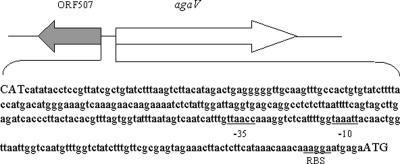
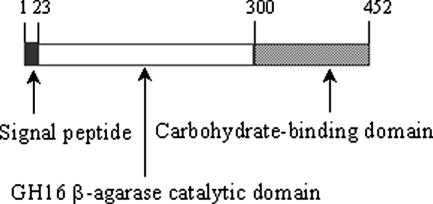
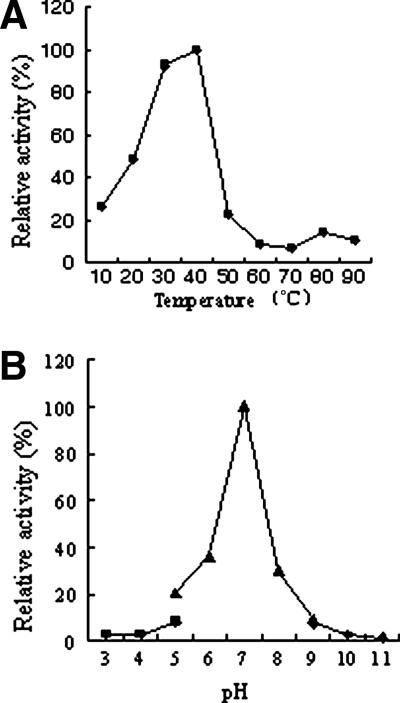
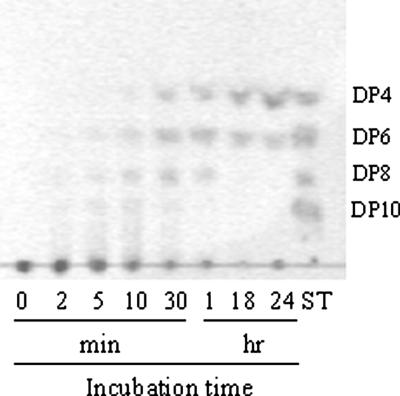
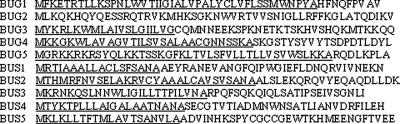
V134, a marine isolate of the Vibrio genus, was found to produce a new beta-agarase of the GH16 family. The relevant agarase gene agaV was cloned from V134 and conditionally expressed in Escherichia coli. Enzyme activity analysis revealed that the optimum temperature and pH for the purified recombinant agarase were around 40 degrees C and 7.0. AgaV was demonstrated to be useful in two aspects: first, as an agarolytic enzyme, the purified recombinant AgaV could be employed in the recovery of DNA from agarose gels; second, as a secretion protein, AgaV was explored at the genetic level and used as a reporter in the construction of a secretion signal trap which proved to be a simple and efficient molecular tool for the selection of genes encoding secretion proteins from both gram-positive and gram-negative bacteria.
Figures
References
-
- Allouch, J., M. Jam, W. Helbert, T. Barbeyron, B. Kloareg, B. Henrissat, and M. Czjzek. 2003. The three-dimensional structures of two beta-agarases. J. Biol. Chem. 278:47171-47180. - PubMed
-
- Aoki, T., T. Araki, and M. Kitamikado. 1990. Purification and characterization of β-agarase from Vibrio sp. AP-2. Eur. J. Biochem. 187:461-465. - PubMed
-
- Dong, J., Y. Tamaru, and T. Araki. 2007. Molecular cloning, expression, and characterization of a beta-agarase gene, agaD, from a marine bacterium, Vibrio sp. strain PO-303. Biosci. Biotechnol. Biochem. 71:38-46. - PubMed
-
- Downing, K. J., R. A. McAdam, and V. Mizrahi. 1999. Staphylococcus aureus nuclease is a useful secretion reporter for mycobacteria. Gene 239:293-299. - PubMed
Publication types
MeSH terms
Substances
Associated data
- Actions
- Actions
- Actions
- Actions
- Actions
- Actions
- Actions
- Actions
- Actions
LinkOut - more resources
Full Text Sources
Molecular Biology Databases
