


Cardiac-restricted angiotensin-converting enzyme overexpression causes conduction defects and connexin dysregulation
- PMID: 17337599
- PMCID: PMC3160110
- DOI: 10.1152/ajpheart.00684.2006
Cardiac-restricted angiotensin-converting enzyme overexpression causes conduction defects and connexin dysregulation
Abstract
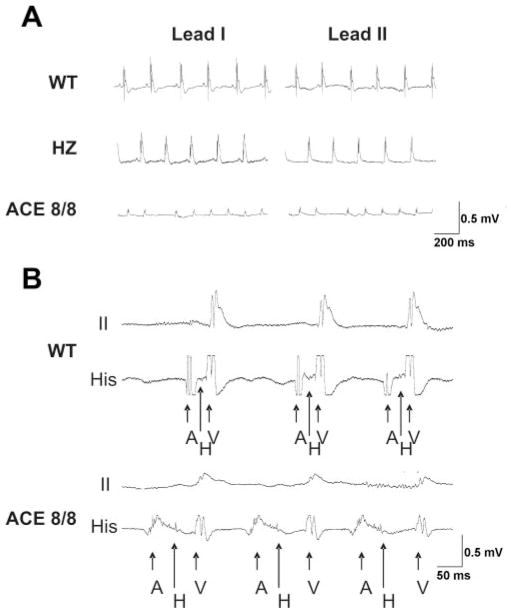
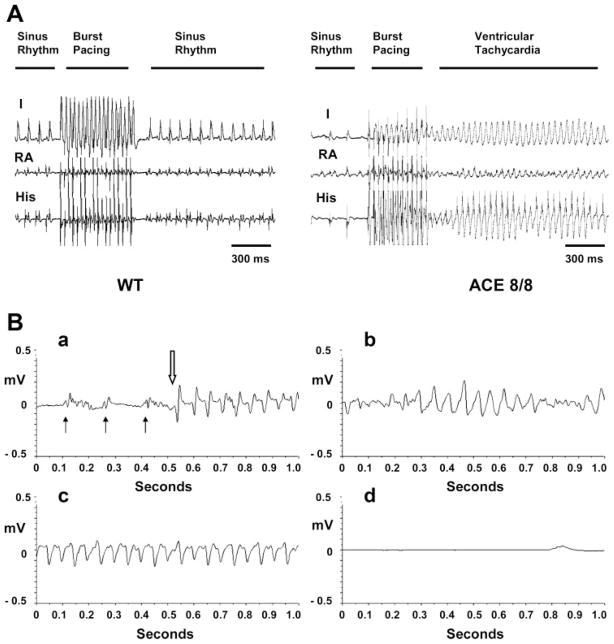
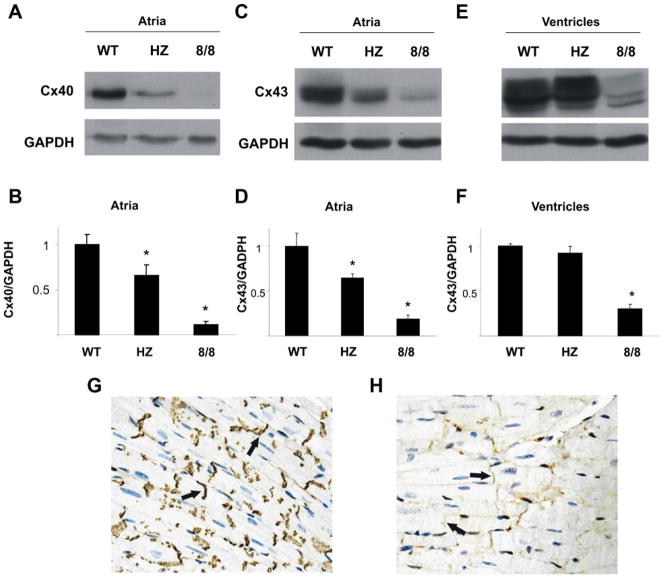
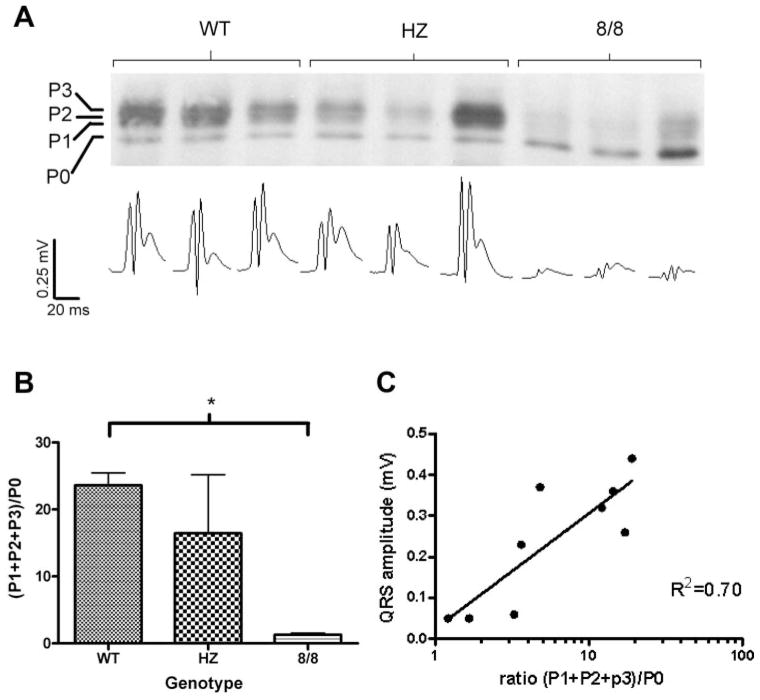
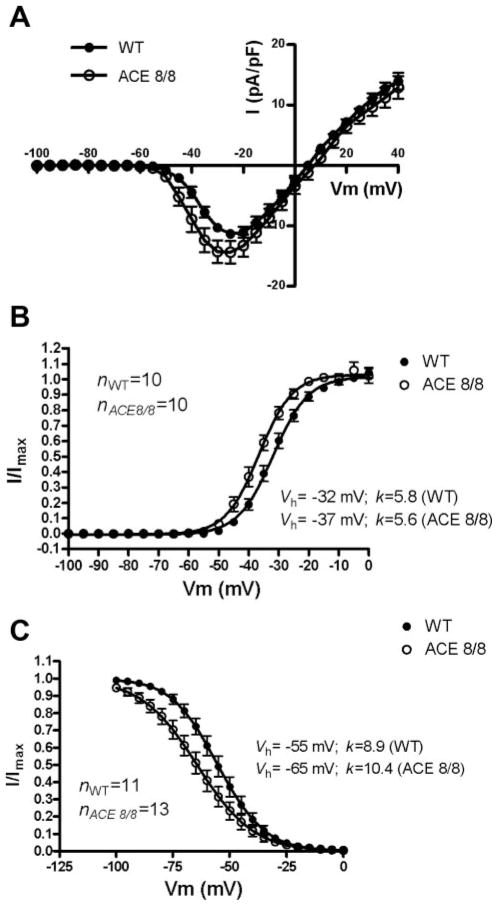
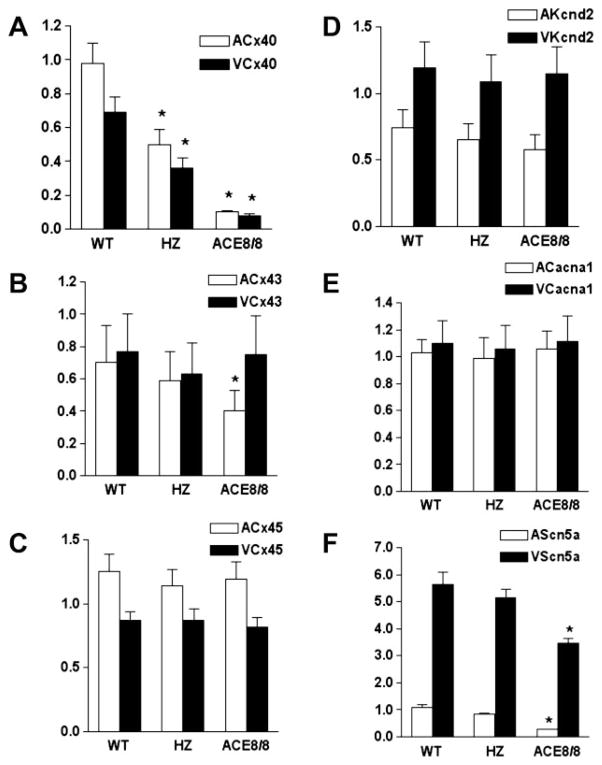
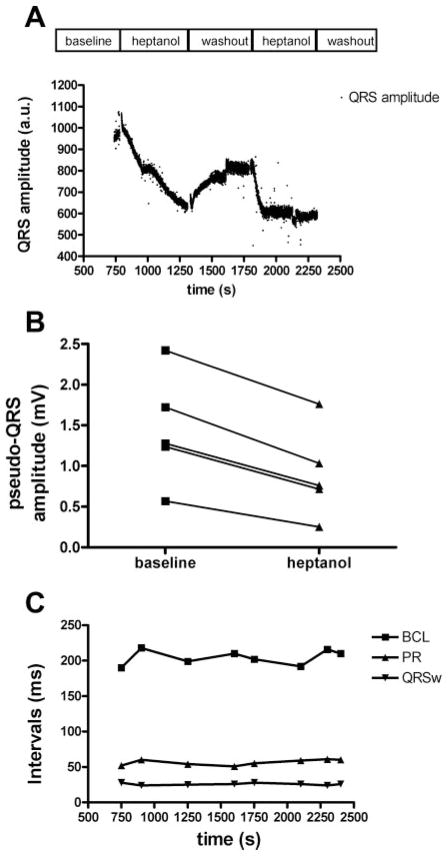
Renin-angiotensin (RAS) system activation is associated with an increased risk of sudden death. Previously, we used cardiac-restricted angiotensin-converting enzyme (ACE) overexpression to construct a mouse model of RAS activation. These ACE 8/8 mice die prematurely and abruptly. Here, we have investigated cardiac electrophysiological abnormalities that may contribute to early mortality in this model. In ACE 8/8 mice, surface ECG voltages are reduced. Intracardiac electrograms showed atrial and ventricular potential amplitudes of 11% and 24% compared with matched wild-type (WT) controls. The atrioventricular (AV), atrio-Hisian (AH), and Hisian-ventricular (HV) intervals were prolonged 2.8-, 2.6-, and 3.9-fold, respectively, in ACE 8/8 vs. WT mice. Various degrees of AV nodal block were present only in ACE 8/8 mice. Intracardiac electrophysiology studies demonstrated that WT and heterozygote (HZ) mice were noninducible, whereas 83% of ACE 8/8 mice demonstrated ventricular tachycardia with burst pacing. Atrial connexin 40 (Cx40) and connexin 43 (Cx43) protein levels, ventricular Cx43 protein level, atrial and ventricular Cx40 mRNA abundances, ventricular Cx43 mRNA abundance, and atrial and ventricular cardiac Na(+) channel (Scn5a) mRNA abundances were reduced in ACE 8/8 compared with WT mice. ACE 8/8 mice demonstrated ventricular Cx43 dephosphorylation. Atrial and ventricular L-type Ca(2+) channel, Kv4.2 K(+) channel alpha-subunit, and Cx45 mRNA abundances and the peak ventricular Na(+) current did not differ between the groups. In isolated heart preparations, a connexin blocker, 1-heptanol (0.5 mM), produced an electrophysiological phenotype similar to that seen in ACE 8/8 mice. Therefore, cardiac-specific ACE overexpression resulted in changes in connexins consistent with the phenotype of low-voltage electrical activity, conduction defects, and induced ventricular arrhythmia. These results may help explain the increased risk of arrhythmia in states of RAS activation such as heart failure.
Figures
References
-
- Ai X, Pogwizd SM. Connexin 43 downregulation and dephosphorylation in nonischemic heart failure is associated with enhanced colocalized protein phosphatase type 2A. Circ Res. 2005;96:54–63. - PubMed
-
- Akar FG, Spragg DD, Tunin RS, Kass DA, Tomaselli GF. Mechanisms underlying conduction slowing and arrhythmogenesis in nonischemic dilated cardiomyopathy. Circ Res. 2004;95:717–725. - PubMed
-
- Akar FG, Tomaselli GF. Ion channels as novel therapeutic targets in heart failure. Ann Med. 2005;37:44–54. - PubMed
-
- Ambrosioni E, Borghi C, Magnani B. The effect of the angiotensin-converting enzyme inhibitor zofenopril on mortality and morbidity after anterior myocardial infarction. The Survival of Myocardial Infarction Long-Term Evaluation (SMILE) Study Investigators. N Engl J Med. 1995;332:80–85. - PubMed
-
- Armoundas AA, Wu R, Juang G, Marban E, Tomaselli GF. Electrical and structural remodeling of the failing ventricle. Pharmacol Ther. 2001;92:213–230. - PubMed
Publication types
MeSH terms
Substances
Grants and funding
LinkOut - more resources
Full Text Sources
Other Literature Sources
Molecular Biology Databases
Miscellaneous
