


Unexplained anaemia in older persons is characterised by low erythropoietin and low levels of pro-inflammatory markers
- PMID: 17341272
- PMCID: PMC2669300
- DOI: 10.1111/j.1365-2141.2007.06502.x
Unexplained anaemia in older persons is characterised by low erythropoietin and low levels of pro-inflammatory markers
Abstract
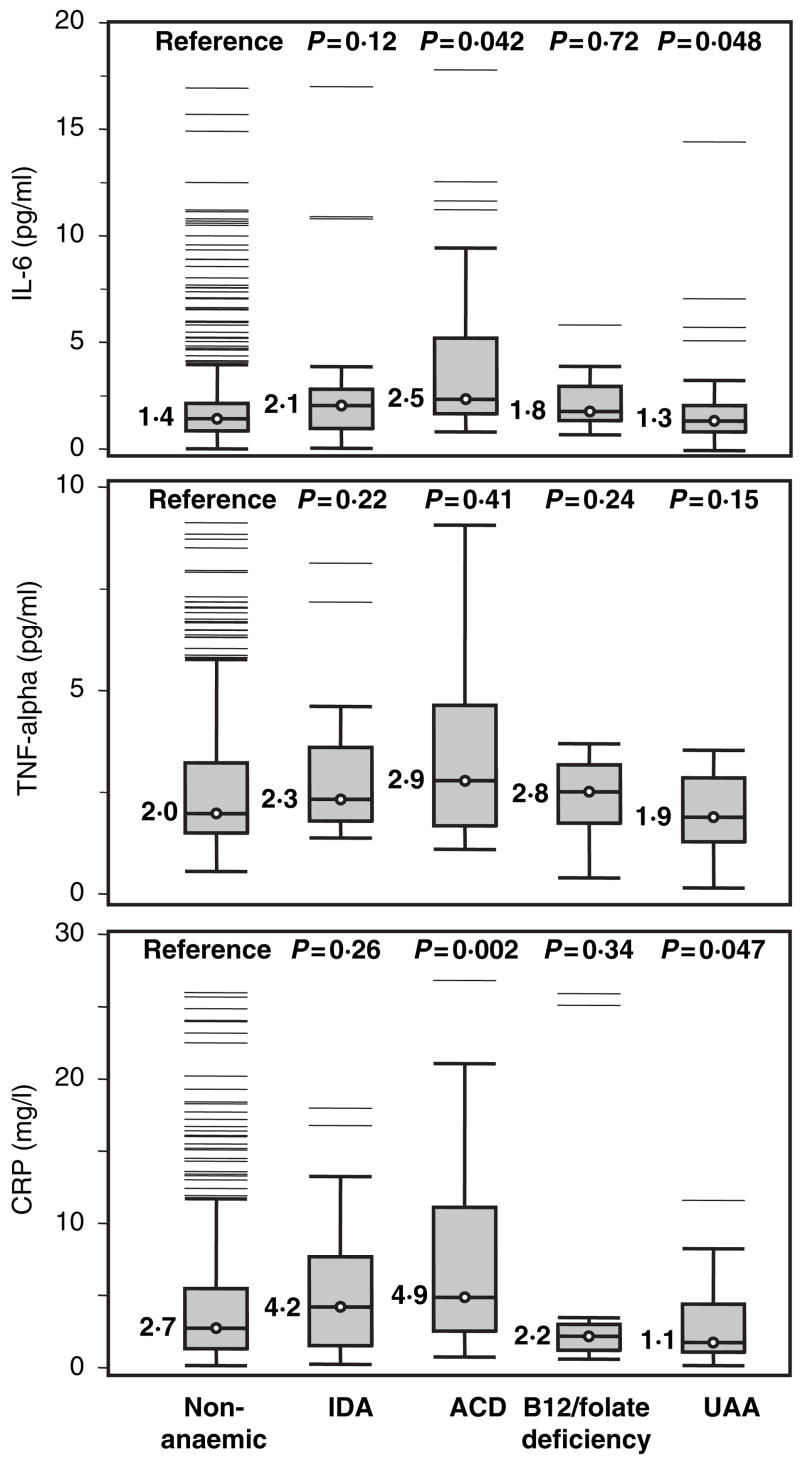
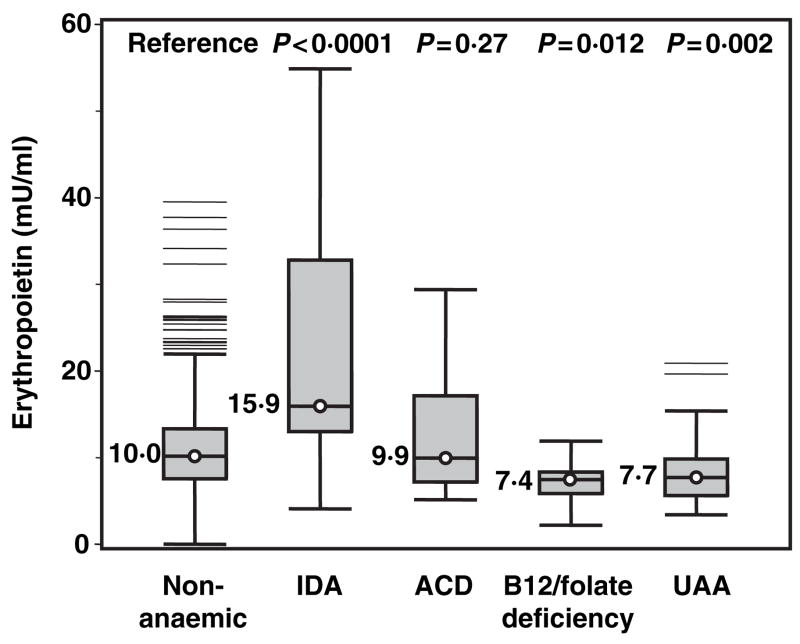
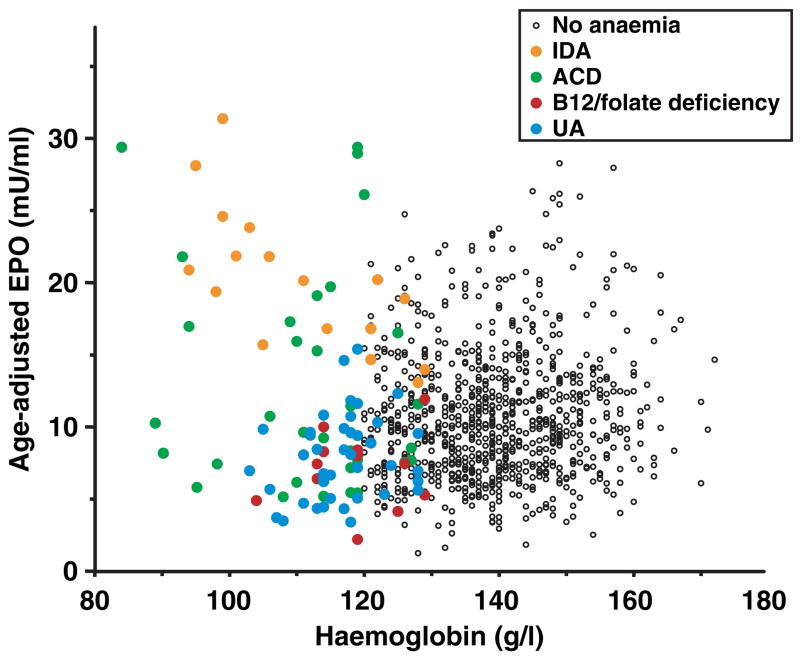
Epidemiological studies report that a third of the cases of anaemia in older persons is unexplained. We compared erythropoietin (EPO), inflammatory markers and major comorbidities between older subjects with normal haemoglobin levels and those with different aetiologic forms of anaemia, including unexplained anaemia. Participants were a representative sample of 964 persons aged > or =65 years, with no evidence of bleeding, complete blood tests, and a complete blood count within 6 h of phlebotomy. Anaemia was defined as haemoglobin <130 g/l in men and 120 g/l in women, and classified as a result of chronic kidney disease, iron deficiency, chronic disease and B12/folate deficiency anaemia, or unexplained anaemia based on standard criteria. Of the 124 anaemic participants, 42 (36.8%) had unexplained anaemia. Participants with anaemia of chronic diseases had significantly higher interleukin-6 (IL-6) and C-reactive protein (CRP) levels, while those with unexplained anaemia had significantly lower CRP than non-anaemic controls. Iron deficiency anaemia was characterised by significantly higher EPO levels compared with other types of anaemia and normal haemoglobin, B12 and/or folate deficiency. Unexplained anaemia was characterised by unexpectedly low EPO and low lymphocyte count. Unexplained anaemia is associated with reduced kidney EPO response, low levels of pro-inflammatory markers and low lymphocyte counts.
Figures
References
-
- Artz AS, Fergusson D, Drinka PJ, Gerald M, Bidenbender R, Lechich A, Silverstone F, McCamish MA, Dai J, Keller E, Ershler WB. Mechanisms of unexplained anemia in the nursing home. Journal of the American Geriatrics Society. 2004;52:423–427. - PubMed
-
- Baillie FJ, Morrison AE, Fergus I. Soluble transferrin receptor: a discriminating assay for iron deficiency. Clinical and Laboratory Haematology. 2003;25:353–357. - PubMed
-
- Balducci L. Epidemiology of anemia in the elderly: information on diagnostic evaluation. Journal of the American Geriatrics Society. 2003;51:S2–S9. - PubMed
-
- Balducci L, Hardy CL, Lyman GH. Hemopoiesis and aging. Cancer Treatment and Research. 2005;124:109–134. - PubMed
Publication types
MeSH terms
Substances
Grants and funding
LinkOut - more resources
Full Text Sources
Medical
Research Materials
Miscellaneous
