


Quantitative evaluation and selection of reference genes in mouse oocytes and embryos cultured in vivo and in vitro
- PMID: 17341302
- PMCID: PMC1832186
- DOI: 10.1186/1471-213X-7-14
Quantitative evaluation and selection of reference genes in mouse oocytes and embryos cultured in vivo and in vitro
Abstract
Background: Real-time PCR is an efficient tool to measure transcripts and provide valuable quantitative information on gene expression of preimplantation stage embryos. Finding valid reference genes for normalization is essential to interpret the real-time PCR results accurately, and understand the biological dynamics during early development. The use of reference genes also known as housekeeping genes is the most widely applied approach. However, the different genes are not systematically compared, and as a result there is no uniformity between studies in selecting the reference gene. The goals of this study were to compare a wide selection of the most commonly used housekeeping genes in mouse oocytes and preimplantation stage embryos produced under different culture conditions, and select the best stable genes for normalization of gene expression data.
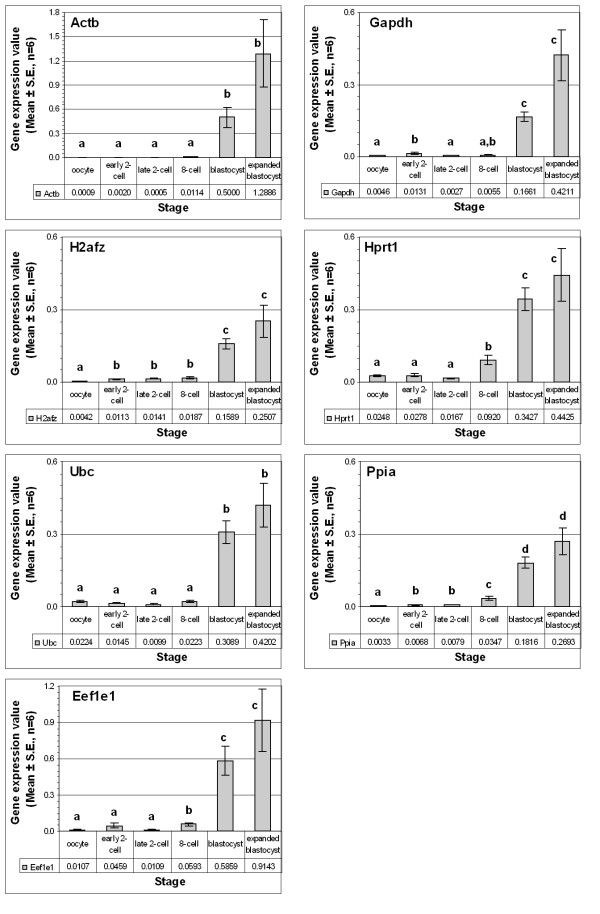
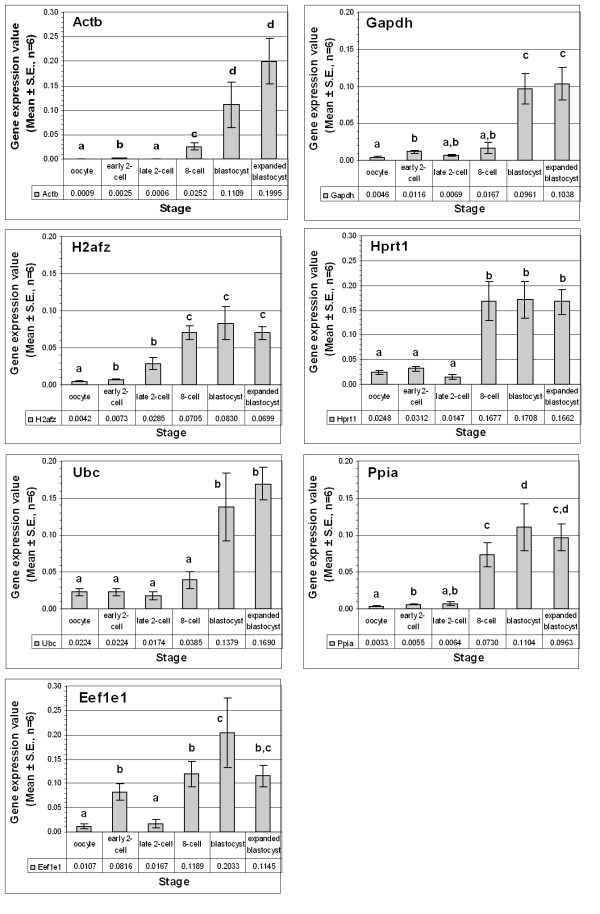
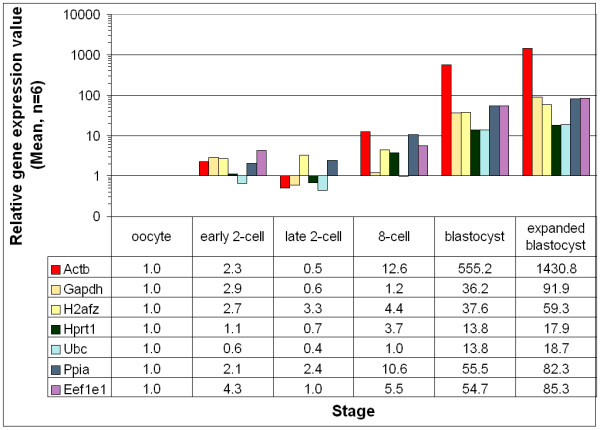
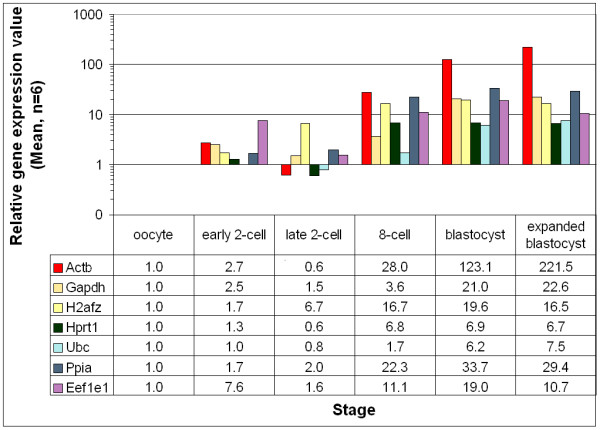
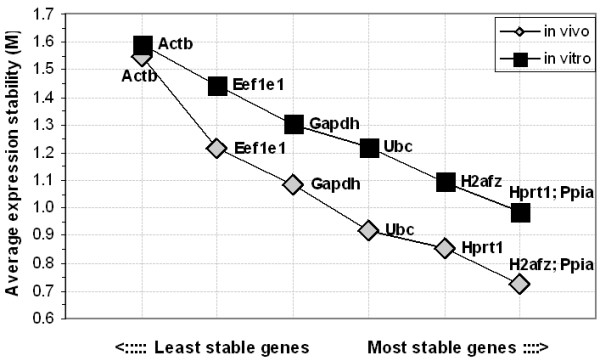
Results: Quantitative real time PCR method was used to evaluate 12 commonly used housekeeping genes (Actb, Gapdh, H2afz, Hprt, Ppia, Ubc, Eef1e1, Tubb4, Hist2h2aa1, Tbp, Bmp7, Polr2a) in multiple individual embryos representing six different developmental stages. The results were analysed, and stable genes were selected using the geNorm software. The expression pattern was almost similar despite differences in the culture system; however, the transcript levels were affected by culture conditions. The genes have showed various stabilities, and have been ranked accordingly.
Conclusion: Compared to earlier studies with similar objectives, we used a unique approach in analysing larger number of genes, comparing embryo samples derived in vivo or in vitro, analysing the expression in the early and late maternal to zygote transition periods separately, and using multiple individual embryos. Based on detailed quantification, pattern analyses and using the geNorm application, we found Ppia, H2afz and Hprt1 genes to be the most stable across the different stages and culture conditions, while Actb, the classical housekeeping gene, showed the least stability. We recommend the use of the geometric averages of those three genes for normalization in mouse preimplantation-stage gene expression studies.
Figures
References
-
- Hahnel AC, Rappolee DA, Millan JL, Mannes T, Ziomek CA, Theodosiou NG, Werb Z, Pedersen RA, Schultz GA. Two alkaline phosphatase genes are expressed during early development in the mouse embryo. Development. 1990;110:555–564. - PubMed
-
- Rothstein JL, Johnson D, DeLoia JA, Skowronski J, Solter D, Knowles B. Gene expression during preimplantation mouse development. Genes Dev. 1992;6:1190–1201. - PubMed
Publication types
MeSH terms
Substances
Grants and funding
LinkOut - more resources
Full Text Sources
Research Materials
Miscellaneous
