Measures of adiposity and dementia risk in elderly persons
- PMID: 17353383
- PMCID: PMC1821350
- DOI: 10.1001/archneur.64.3.392
Measures of adiposity and dementia risk in elderly persons
Abstract
Background: Studies relating adiposity to dementia are conflicting. We explored the associations of body mass index (BMI), (calculated as weight in kilograms divided by the square of height in meters) waist circumference, and weight change to dementia, probable Alzheimer disease, and dementia associated with stroke (DAS).
Design: Persons without dementia were followed up for 5 years; 893 persons had BMI data, 907 had waist circumference data, and 709 had a second weight measurement. Dementia was ascertained using standard methods. Cox proportional hazards regression was used for analyses using follow-up as time to event, adjusting for demographics and apolipoprotein E-epsilon4 status.
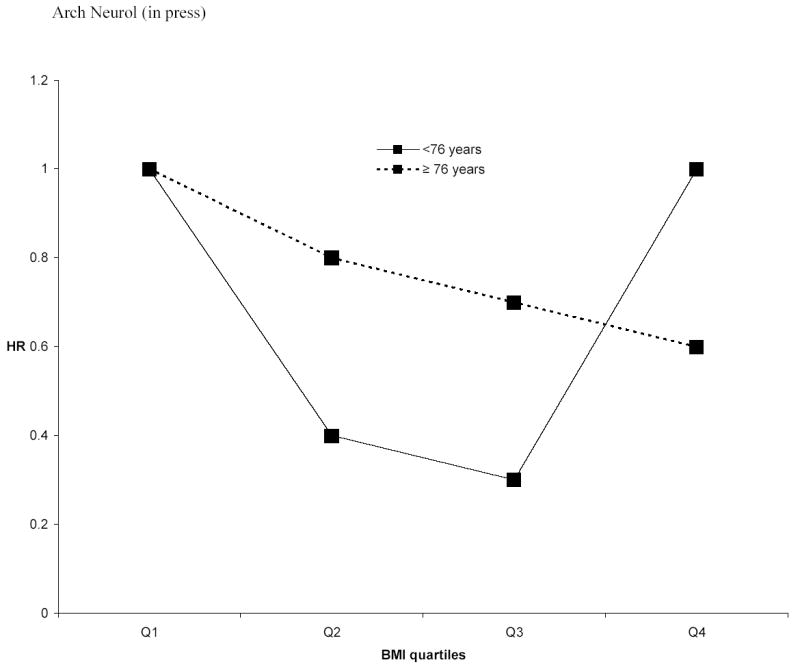
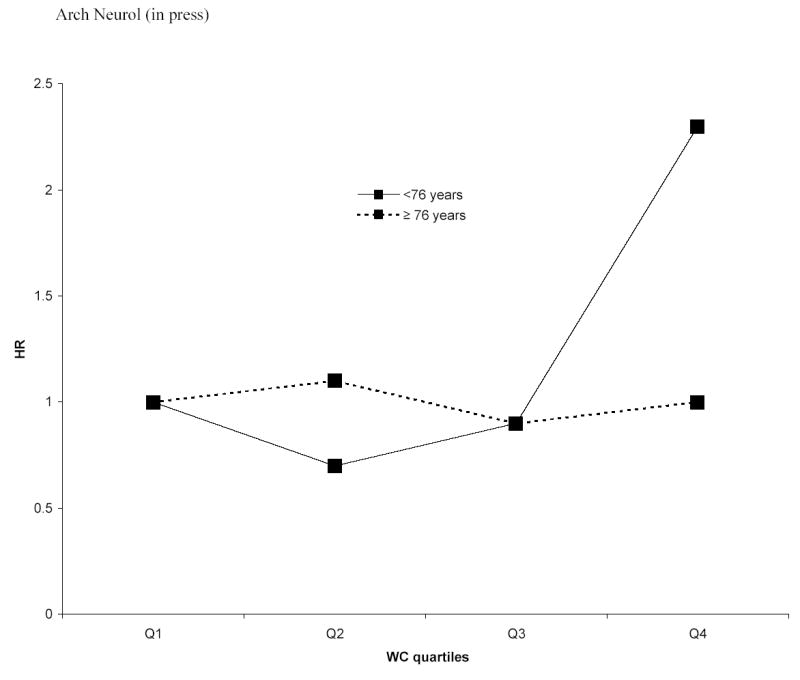
Results: Compared with persons in the first quartile of BMI, persons in the third quartile had a lower dementia and Alzheimer disease risk and persons in the second quartile had a lower DAS risk. The association between BMI and dementia resembled a U shape in those younger than 76 years, while dementia risk decreased with higher BMI in those 76 years and older. The fourth quartile of waist circumference was related to a higher DAS risk in the whole sample, and to dementia and Alzheimer disease in persons younger than 76 years. Weight loss was related to a higher dementia and DAS risk, and weight gain was related to a higher DAS risk only.
Conclusions: The prospective association between adiposity and dementia differs depending on the anthropometric measure used, and is modified by age. This may explain previous conflicting reports.
Figures
References
-
- Knowler WC, Narayan KM, Hanson RL, et al. Preventing non-insulin-dependent diabetes. Diabetes. 1995;44:483–488. - PubMed
-
- Harris MI. Diabetes in America: epidemiology and scope of the problem. Diabetes Care. 1998;21 (Suppl 3):C11–14. - PubMed
-
- Harris MI, Flegal KM, Cowie CC, et al. Prevalence of diabetes, impaired fasting glucose, and impaired glucose tolerance in U.S. adults. The Third National Health and Nutrition Examination Survey, 1988–1994. Diabetes Care. 1998;21:518–524. - PubMed
-
- Mann J. Stemming the tide of diabetes mellitus. Lancet. 2000;356:1454–1455. - PubMed
Publication types
MeSH terms
Grants and funding
LinkOut - more resources
Full Text Sources
Medical