


HIV behavioral surveillance in the U.S.: a conceptual framework
- PMID: 17354523
- PMCID: PMC1804114
- DOI: 10.1177/00333549071220S104
HIV behavioral surveillance in the U.S.: a conceptual framework
Abstract
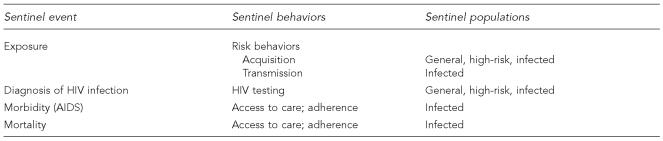
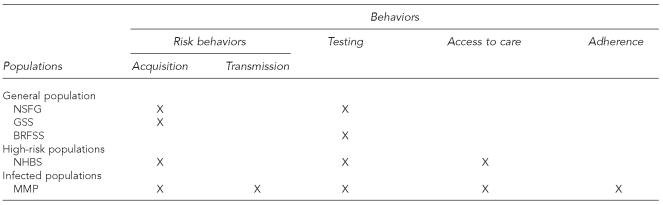
This article describes a conceptual framework for HIV behavioral surveillance in the United States. The framework includes types of behaviors to monitor, such as risk behaviors, HIV testing behaviors, adherence to HIV treatment, and care-seeking for HIV/AIDS. The framework also describes the population groups in which specific behaviors should be monitored. Because the framework is multifaceted in terms of behaviors and populations, behavioral data from multiple surveillance systems are integrated to achieve HIV behavioral surveillance program objectives. Defining surveillance activities more broadly to include behavioral surveillance in multiple populations will provide more comprehensive data for prevention planning, and lead to a more effective response to HIV/AIDS in the United States.
Figures
References
-
- Centers for Disease Control and Prevention (US) Atlanta: Department of Health and Human Services (US); 2004. HIV/AIDS surveillance report, 2003 (vol. 15) pp. 1–46.
-
- CDC (US) HIV Prevention Strategic Plan through 2005. [cited 2005 Mar 19]. Available from: URL: http://www.cdc.gov/hiv/partners/psp.htm.
-
- Pisani E, Brown T, Saidel T, Rehle T, Carael M. Meeting the behavioural data collection needs of national HIV/AIDS and STD programmes. UNAIDS. 1998
MeSH terms
LinkOut - more resources
Full Text Sources
Medical
