


Randomised, double blind, placebo controlled trial of intravenous antioxidant (n-acetylcysteine, selenium, vitamin C) therapy in severe acute pancreatitis
- PMID: 17356040
- PMCID: PMC2000286
- DOI: 10.1136/gut.2006.115873
Randomised, double blind, placebo controlled trial of intravenous antioxidant (n-acetylcysteine, selenium, vitamin C) therapy in severe acute pancreatitis
Abstract
Background: Based on equivocal clinical data, intravenous antioxidant therapy has been used for the treatment of severe acute pancreatitis. To date there is no randomised comparison of this therapy in severe acute pancreatitis.
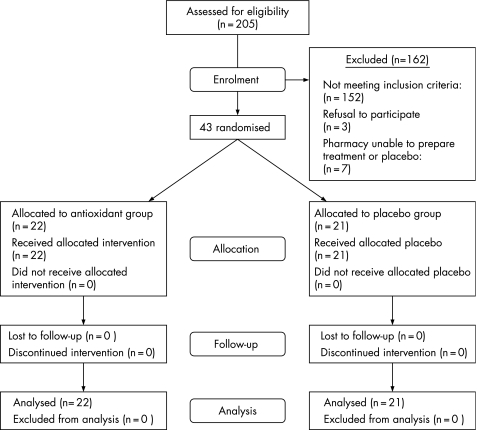
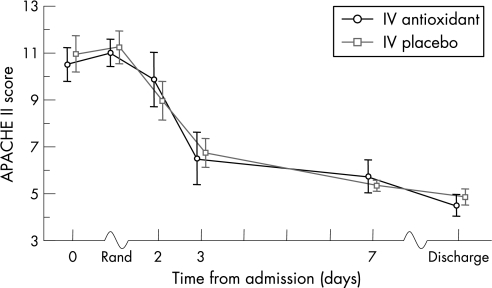
Methods: We conducted a randomised, double blind, placebo controlled trial of intravenous antioxidant (n-acetylcysteine, selenium, vitamin C) therapy in patients with predicted severe acute pancreatitis. Forty-three patients were enrolled from three hospitals in the Manchester (UK) area over the period June 2001 to November 2004. Randomisation stratified for APACHE-II score and hospital site, and delivered groups that were similar at baseline.
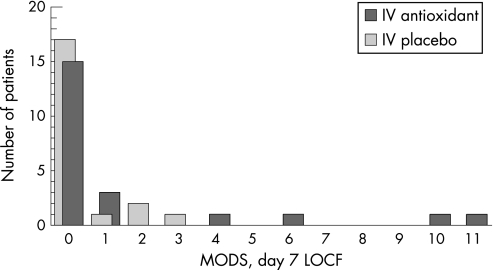
Results: Relative serum levels of antioxidants rose while markers of oxidative stress fell in the active treatment group during the course of the trial. However, at 7 days, there was no statistically significant difference in the primary end point, organ dysfunction (antioxidant vs placebo: 32% vs 17%, p = 0.33) or any secondary end point of organ dysfunction or patient outcome.
Conclusions: This study provides no evidence to justify continued use of n-acetylcysteine, selenium, vitamin C based antioxidant therapy in severe acute pancreatitis. In the context of any future trial design, careful consideration must be given to the risks raised by the greater trend towards adverse outcome in patients in the treatment arm of this study.
Conflict of interest statement
Conflicts of interest: none.
Comment in
-
Antioxidants in acute pancreatitis.Gut. 2007 Oct;56(10):1344-5. doi: 10.1136/gut.2007.122101. Gut. 2007. PMID: 17872567 Free PMC article.
References
-
- Dąbrowski A, Konturek P C, Konturek S J, Büchler M W, Uhl W, Friess H.et al Role of reactive oxygen species in the pathogenesis of caerulein‐induced acute pancreatitis. In: et al eds. Acute pancreatitis, novel concepts in biology and therapy. Berlin: Blackwell Wissenschafts‐Verlag, 199977–87.
-
- Braganza J M, Scott P, Bilton D.et al Evidence for early oxidative stress in acute pancreatitis. Clues for correction. Int J Pancreatol 19951769–81. - PubMed
-
- Bonham M J D, Abu‐Zidan F M, Simovic M O.et al Early ascorbic acid depletion is related to the severity of acute pancreatitis. Br J Surg 1999861296–1301. - PubMed
-
- Curran F J M, Sattar N, Talwar D.et al Relationship of carotenoid and vitamins A and E with the acute inflammatory response in acute pancreatitis. Br J Surg 200087301–305. - PubMed
-
- Fu K, Sarras M P, Jr, De Lisle R C.et al Expression of oxidative stress response genes and cytokine genes during caerulein‐induced acute pancreatitis. Am J Physiol 1997273G696–G705. - PubMed
Publication types
MeSH terms
Substances
LinkOut - more resources
Full Text Sources
Other Literature Sources
Medical
