


Quantitative conformationally sampled pharmacophore for delta opioid ligands: reevaluation of hydrophobic moieties essential for biological activity
- PMID: 17367120
- PMCID: PMC2631547
- DOI: 10.1021/jm0612463
Quantitative conformationally sampled pharmacophore for delta opioid ligands: reevaluation of hydrophobic moieties essential for biological activity
Abstract
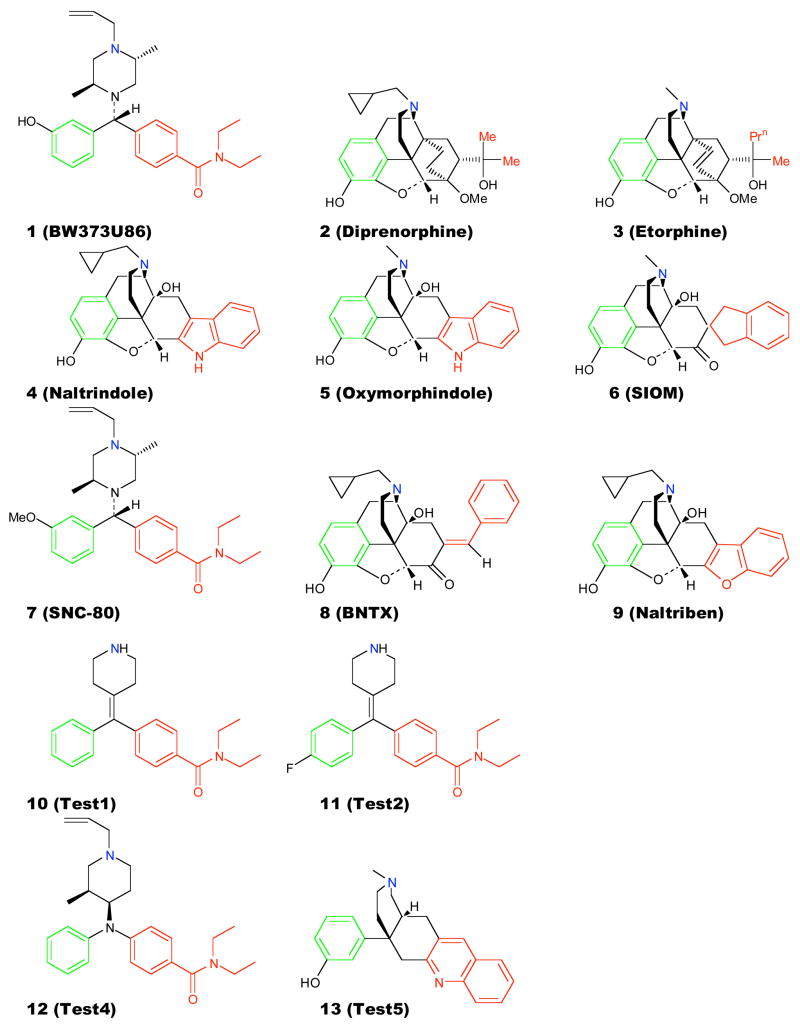
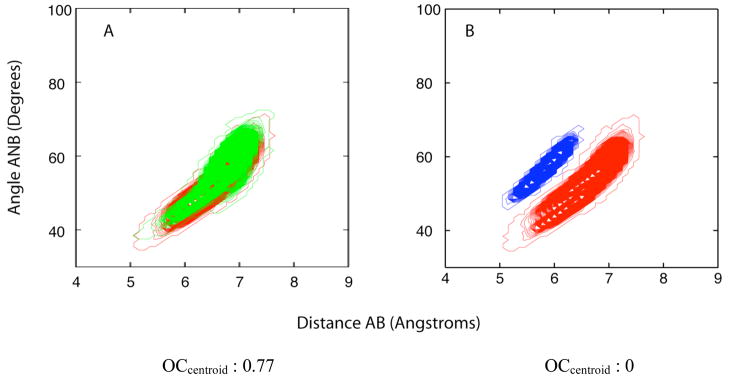
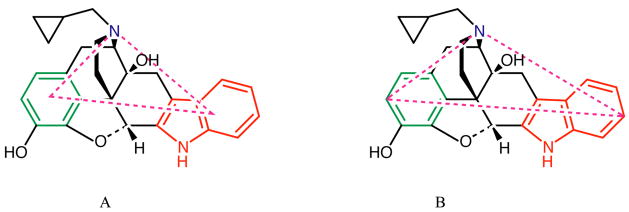
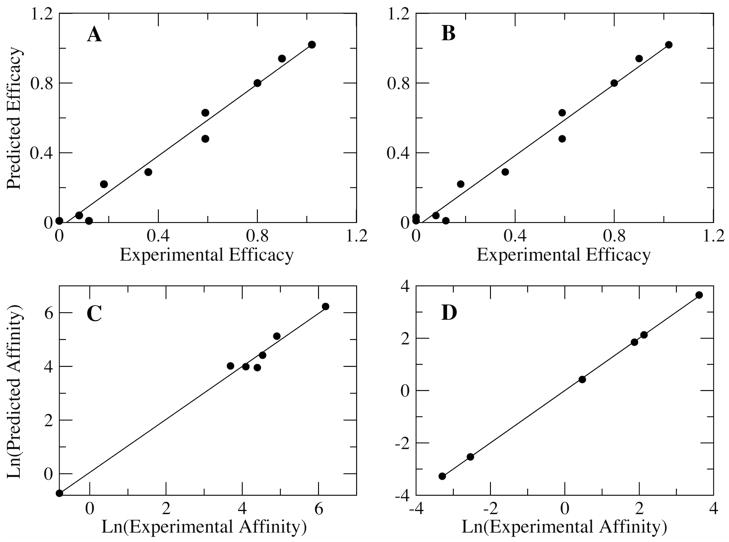
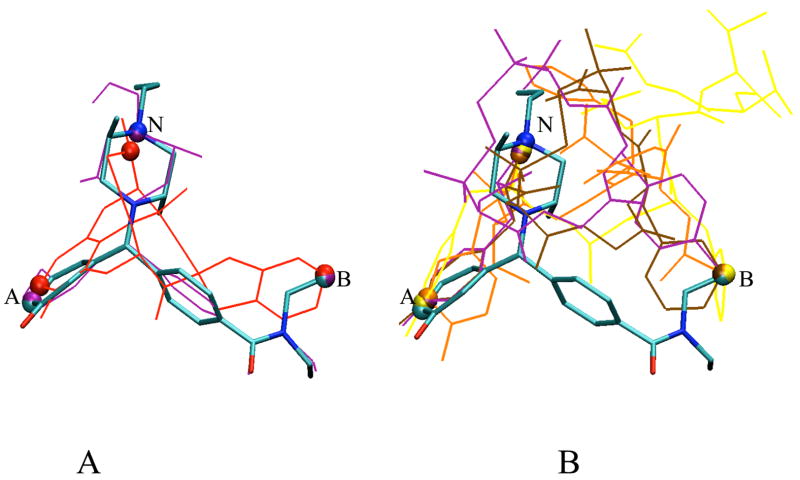
Recent studies have indicated several therapeutic applications for delta opioid agonists and antagonists. To exploit the therapeutic potential of delta opioids developing a structural basis for the activity of ligands at the delta opioid receptor is essential. The conformationally sampled pharmacophore (CSP) method (Bernard et al. J. Am. Chem. Soc. 2003, 125, 3103-3107) is extended here to obtain quantitative models of delta opioid ligand efficacy and affinity. Quantification is performed via overlap integrals of the conformational space sampled by ligands with respect to a reference compound. Iterative refinement of the CSP model identified hydrophobic groups other than the traditional phenylalanine residues as important for efficacy and affinity in DSLET and ICI 174 864. The obtained models for a structurally diverse set of peptidic and nonpeptidic delta opioid ligands offer good predictions with R2 values>0.9, and the predicted efficacy for a set of test compounds was consistent with the experimental values.
Figures
References
-
- Martin TJ, Eisenach JC. Pharmacology of Opioid and Nonopioid Analgesics in Chronic Pain States. J Pharmacol Exp Ther. 2001;299:811–817. - PubMed
-
- Coop A, MacKerell AD., Jr The future of opioid analgesics. Am J Pharm Educ. 2003;66:153–156.
-
- White JM, Irvine RJ. Mechanisms of Fatal Opioid Overdose. Addiction. 1999;94:961–972. - PubMed
-
- Pappagallo M. Incidence, prevalence and management of opioid bowel dysfunction. Am J Surg. 2001;182:S11–S18. - PubMed
-
- Chakrabarti S, Wang L, Tang WJ, Gintzler AR. Chronic Morphine Augments Adenylyl Cyclase Phosphorylation: Relevance to Altered Signaling during Tolerance/Dependence. Mol Pharmacol. 1998;54:949–953. - PubMed
Publication types
MeSH terms
Substances
Grants and funding
LinkOut - more resources
Full Text Sources
