


Mouse embryo culture induces changes in postnatal phenotype including raised systolic blood pressure
- PMID: 17372207
- PMCID: PMC1838459
- DOI: 10.1073/pnas.0610317104
Mouse embryo culture induces changes in postnatal phenotype including raised systolic blood pressure
Abstract
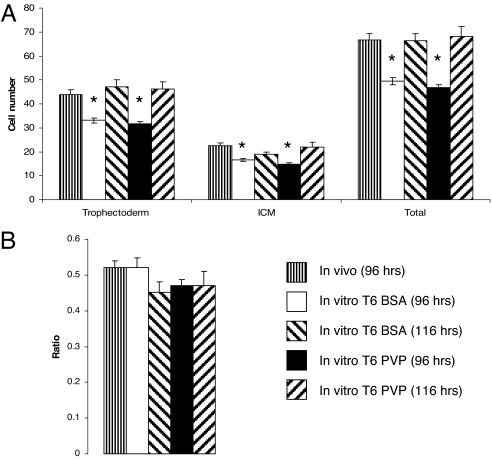
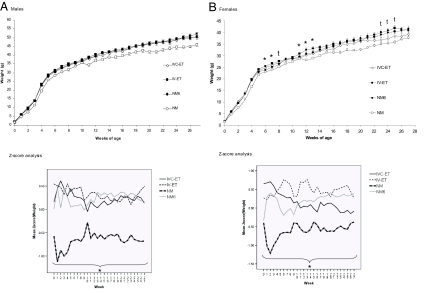
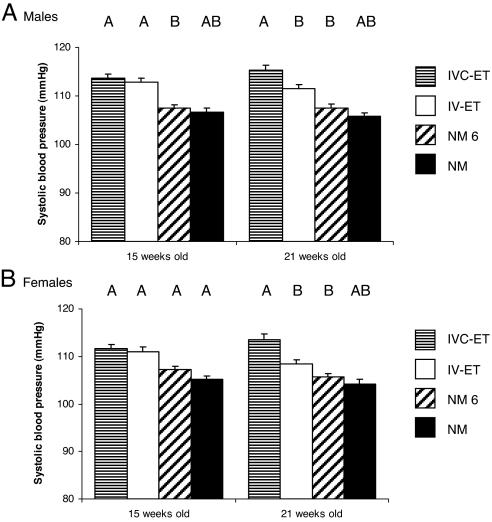
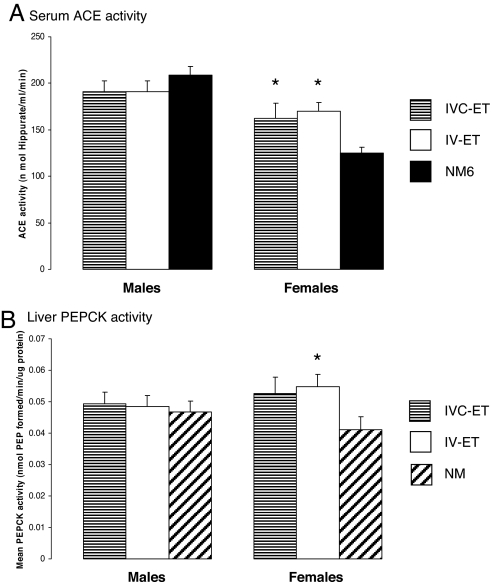
A key factor in the use of assisted reproductive technologies (ART) for diverse species is the safety of procedures for long-term health. By using a mouse model, we have investigated the effect of in vitro culture and embryo transfer (ET) of superovulated embryos on postnatal growth and physiological activity compared with that of embryos developing in vivo. Embryo culture from two-cell to blastocyst stages in T6 medium either with or without a protein source reduced blastocyst trophectoderm and inner cell mass cell number compared with that of embryos developing in vivo. Embryo culture and ET had minimal effects on postnatal growth when compared with in vivo development with an equivalent litter size. However, embryo culture, and to a lesser extent ET, led to an enhanced systolic blood pressure at 21 weeks compared with in vivo development independent of litter size, maternal origin, or body weight. Moreover, activity of enzymatic regulators of cardiovascular and metabolic physiology, namely, serum angiotensin-converting enzyme and the gluconeogenesis controller, hepatic phosphoenolpyruvate carboxykinase, were significantly elevated in response to embryo culture and/or ET in female offspring at 27 weeks, independent of maternal factors and postnatal growth. These animal data indicate that postnatal physiological criteria important in cardiovascular and metabolic health may be more sensitive to routine ART procedures than growth.
Conflict of interest statement
The authors declare no conflict of interest.
Figures
References
-
- Fleming TP, Kwong WY, Porter R, Ursell E, Fesenko I, Wilkins A, Miller DJ, Watkins AJ, Eckert JJ. Biol Reprod. 2004;71:1046–1054. - PubMed
-
- Harlow GM, Quinn P. Aust J Biol Sci. 1982;35:187–193. - PubMed
-
- Rinaudo P, Schultz RM. Reproduction. 2004;128:301–311. - PubMed
-
- Khosla S, Dean W, Brown D, Reik W, Feil R. Biol Reprod. 2001;64:918–926. - PubMed
-
- Lane M, Gardner DK. J Reprod Fertil. 1997;109:153–164. - PubMed
Publication types
MeSH terms
Substances
Grants and funding
LinkOut - more resources
Full Text Sources
Other Literature Sources
