


Aging is associated with elevated intracellular calcium levels and altered calcium homeostatic mechanisms in hippocampal neurons
- PMID: 17374449
- PMCID: PMC2094130
- DOI: 10.1016/j.neulet.2007.03.005
Aging is associated with elevated intracellular calcium levels and altered calcium homeostatic mechanisms in hippocampal neurons
Abstract
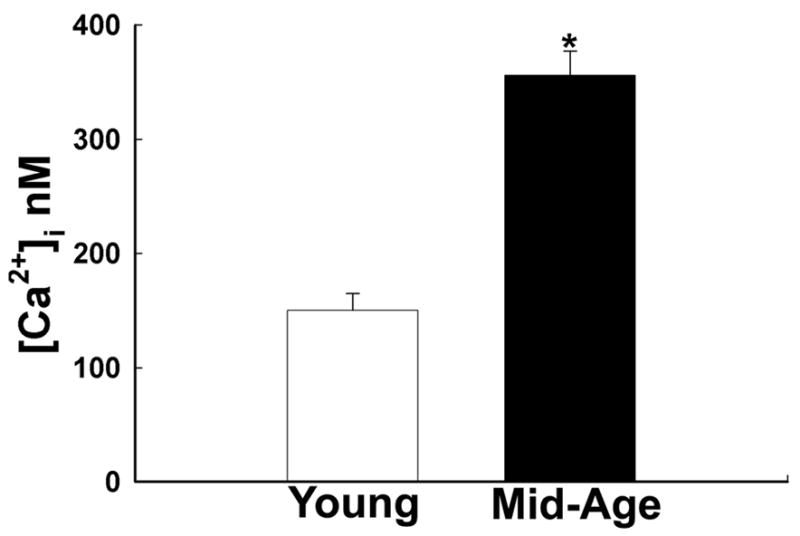
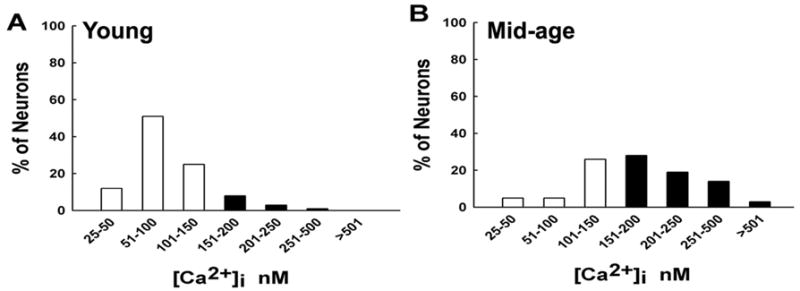
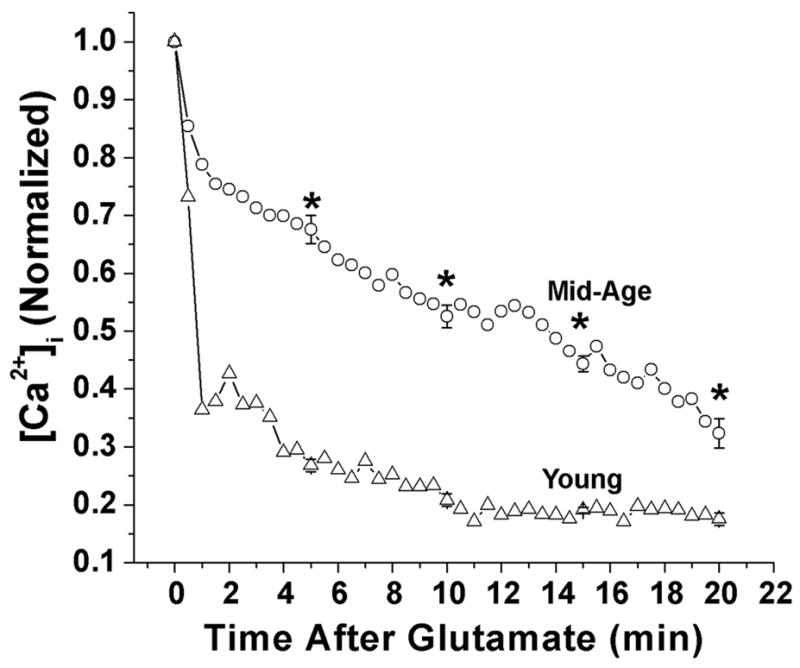
Aging is associated with increased vulnerability to neurodegenerative conditions such as Parkinson's and Alzheimer's disease and greater neuronal deficits after stroke and epilepsy. Emerging studies have implicated increased levels of intracellular calcium ([Ca(2+)](i)) for the neuronal loss associated with aging related disorders. Recent evidence demonstrates increased expression of voltage gated Ca(2+) channel proteins and associated Ca(2+) currents with aging. However, a direct comparison of [Ca(2+)](i) levels and Ca(2+) homeostatic mechanisms in hippocampal neurons acutely isolated from young and mid-age adult animals has not been performed. In this study, Fura-2 was used to determine [Ca(2+)](i) levels in CA1 hippocampal neurons acutely isolated from young (4-5 months) and mid-age (12-16 months) Sprague-Dawley rats. Our data provide the first direct demonstration that mid-age neurons in comparison to young neurons manifest significant elevations in basal [Ca(2+)](i) levels. Upon glutamate stimulation and a subsequent [Ca(2+)](i) load, mid-age neurons took longer to remove the excess [Ca(2+)](i) in comparison to young neurons, providing direct evidence that altered Ca(2+) homeostasis may be present in animals at significantly younger ages than those that are commonly considered aged (> or =24 months). These alterations in Ca(2+) dynamics may render aging neurons more vulnerable to neuronal death following stroke, seizures or head trauma. Elucidating the functionality of Ca(2+) homeostatic mechanisms may offer an understanding of the increased neuronal loss that occurs with aging, and allow for the development of novel therapeutic agents targeted towards decreasing [Ca(2+)](i) levels thereby restoring the systems that maintain normal Ca(2+) homeostasis in aged neurons.
Figures
References
Publication types
MeSH terms
Substances
Grants and funding
LinkOut - more resources
Full Text Sources
Medical
Miscellaneous
