Epstein-Barr virus infection of Langerhans cell precursors as a mechanism of oral epithelial entry, persistence, and reactivation
- PMID: 17376908
- PMCID: PMC1933305
- DOI: 10.1128/JVI.02754-06
Epstein-Barr virus infection of Langerhans cell precursors as a mechanism of oral epithelial entry, persistence, and reactivation
Abstract
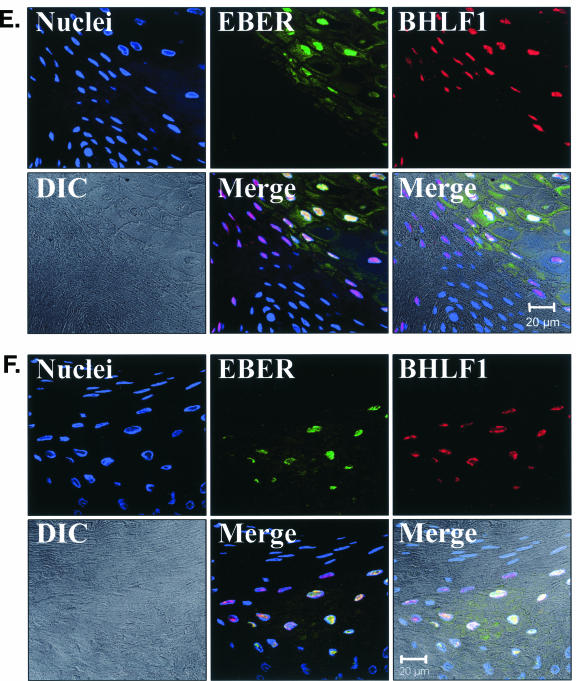
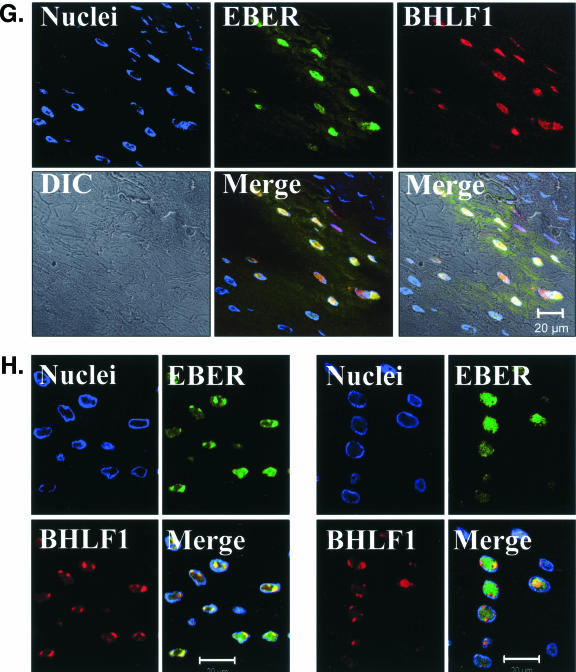
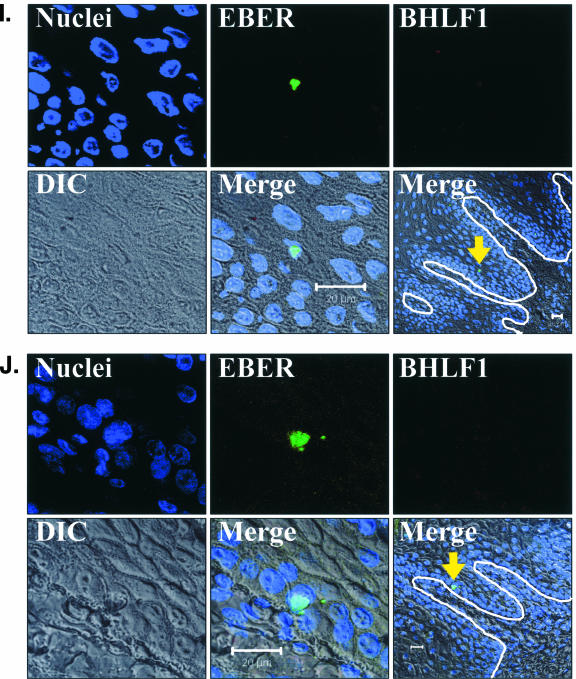
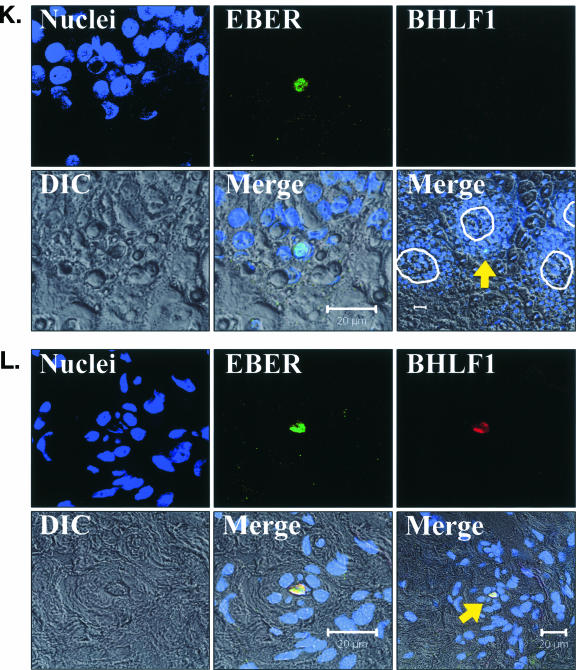
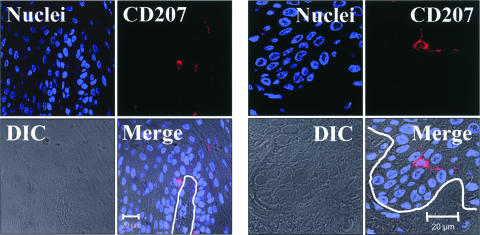
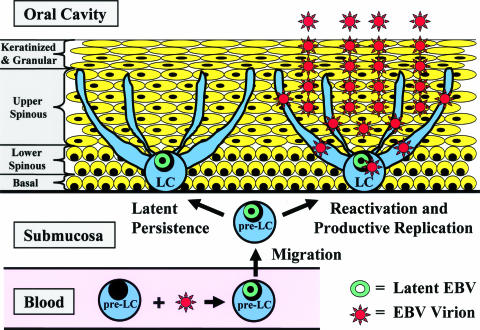
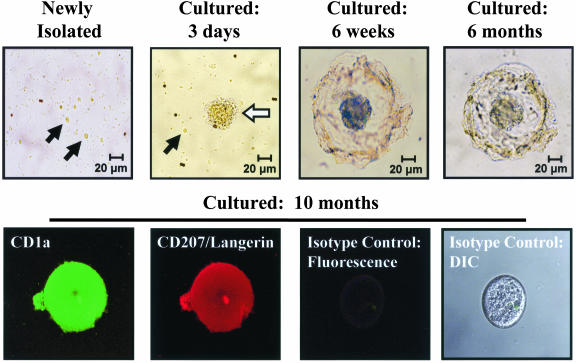
Epstein-Barr virus (EBV) is a ubiquitous human herpesvirus associated with many malignant and nonmalignant human diseases. Life-long latent EBV persistence occurs in blood-borne B lymphocytes, while EBV intermittently productively replicates in mucosal epithelia. Although several models have previously been proposed, the mechanism of EBV transition between these two reservoirs of infection has not been determined. In this study, we present the first evidence demonstrating that EBV latently infects a unique subset of blood-borne mononuclear cells that are direct precursors to Langerhans cells and that EBV both latently and productively infects oral epithelium-resident cells that are likely Langerhans cells. These data form the basis of a proposed new model of EBV transition from blood to oral epithelium in which EBV-infected Langerhans cell precursors serve to transport EBV to the oral epithelium as they migrate and differentiate into oral Langerhans cells. This new model contributes fresh insight into the natural history of EBV infection and the pathogenesis of EBV-associated epithelial disease.
Figures
Similar articles
-
Secreted Oral Epithelial Cell Membrane Vesicles Induce Epstein-Barr Virus Reactivation in Latently Infected B Cells.J Virol. 2016 Jan 13;90(7):3469-79. doi: 10.1128/JVI.02830-15. J Virol. 2016. PMID: 26764001 Free PMC article.
-
Effect of Epstein-Barr virus replication on Langerhans cells in pathogenesis of oral hairy leukoplakia.J Infect Dis. 2004 May 1;189(9):1656-63. doi: 10.1086/383132. Epub 2004 Apr 13. J Infect Dis. 2004. PMID: 15116302 Clinical Trial.
-
Persistence and transition of Epstein-Barr virus genotypes in the pathogenesis of oral hairy leukoplakia.J Infect Dis. 2004 Jul 15;190(2):387-95. doi: 10.1086/421708. Epub 2004 Jun 9. J Infect Dis. 2004. PMID: 15216477
-
Regulation and dysregulation of Epstein-Barr virus latency: implications for the development of autoimmune diseases.Autoimmunity. 2008 May;41(4):298-328. doi: 10.1080/08916930802024772. Autoimmunity. 2008. PMID: 18432410 Review.
-
[The entry of Epstein-Barr virus into B lymphocytes and epithelial cells during infection].Bing Du Xue Bao. 2014 Jul;30(4):476-82. Bing Du Xue Bao. 2014. PMID: 25272606 Review. Chinese.
Cited by
-
The Role of Indoleamine 2, 3-Dioxygenase in Immune Suppression and Autoimmunity.Vaccines (Basel). 2015 Sep 10;3(3):703-29. doi: 10.3390/vaccines3030703. Vaccines (Basel). 2015. PMID: 26378585 Free PMC article. Review.
-
Epstein-Barr virus infection induces indoleamine 2,3-dioxygenase expression in human monocyte-derived macrophages through p38/mitogen-activated protein kinase and NF-κB pathways: impairment in T cell functions.J Virol. 2014 Jun;88(12):6660-71. doi: 10.1128/JVI.03678-13. Epub 2014 Apr 2. J Virol. 2014. PMID: 24696473 Free PMC article.
-
Efficient replication of Epstein-Barr virus in stratified epithelium in vitro.Proc Natl Acad Sci U S A. 2014 Nov 18;111(46):16544-9. doi: 10.1073/pnas.1400818111. Epub 2014 Oct 13. Proc Natl Acad Sci U S A. 2014. PMID: 25313069 Free PMC article.
-
Epstein-Barr virus encoded dUTPase containing exosomes modulate innate and adaptive immune responses in human dendritic cells and peripheral blood mononuclear cells.PLoS One. 2013 Jul 22;8(7):e69827. doi: 10.1371/journal.pone.0069827. Print 2013. PLoS One. 2013. PMID: 23894549 Free PMC article.
-
Epstein Barr virus-associated tumours: an update for the attention of the working pathologist.J Clin Pathol. 2007 Dec;60(12):1358-64. doi: 10.1136/jcp.2006.044586. Epub 2007 Sep 14. J Clin Pathol. 2007. PMID: 17873116 Free PMC article. Review.
References
-
- Anagnostopoulos, I., M. Hummel, C. Kreschel, and H. Stein. 1995. Morphology, immunophenotype, and distribution of latently and/or productively Epstein-Barr virus-infected cells in acute infectious mononucleosis: implications for the interindividual infection route of Epstein-Barr virus. Blood 85:744-750. - PubMed
-
- Arrand, J. R. 2000. Expressed but enigmatic RNAs. EBV Rep. 7:145-149.
-
- Banchereau, J., F. Briere, C. Caux, J. Davoust, S. Lebecque, Y. J. Liu, B. Pulendran, and K. Palucka. 2000. Immunobiology of dendritic cells. Annu. Rev. Immunol. 18:767-811. - PubMed
-
- Corso, B., L. R. Eversole, and L. Hutt-Fletcher. 1989. Hairy leukoplakia: Epstein-Barr virus receptors on oral keratinocyte plasma membranes. Oral Surg. Oral Med. Oral Pathol. 67:416-421. - PubMed
Publication types
MeSH terms
LinkOut - more resources
Full Text Sources
Other Literature Sources
Medical