


PPARs, Obesity, and Inflammation
- PMID: 17389767
- PMCID: PMC1783744
- DOI: 10.1155/2007/95974
PPARs, Obesity, and Inflammation
Abstract
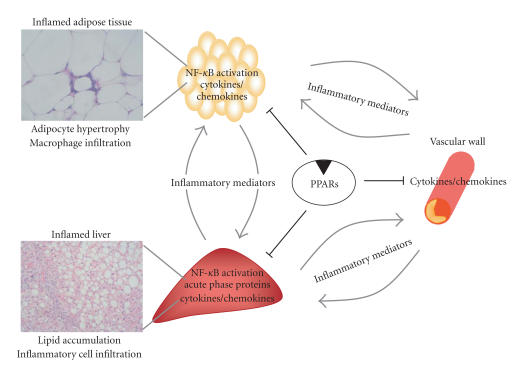
The worldwide prevalence of obesity and related metabolic disorders is rising rapidly, increasing the burden on our healthcare system. Obesity is often accompanied by excess fat storage in tissues other than adipose tissue, including liver and skeletal muscle, which may lead to local insulin resistance and may stimulate inflammation, as in steatohepatitis. In addition, obesity changes the morphology and composition of adipose tissue, leading to changes in protein production and secretion. Some of these secreted proteins, including several proinflammatory mediators, may be produced by macrophages resident in the adipose tissue. The changes in inflammatory status of adipose tissue and liver with obesity feed a growing recognition that obesity represents a state of chronic low-level inflammation. Various molecular mechanisms have been implicated in obesity-induced inflammation, some of which are modulated by the peroxisome proliferator-activated receptors (PPARs). PPARs are ligand-activated transcription factors involved in the regulation of numerous biological processes, including lipid and glucose metabolism, and overall energy homeostasis. Importantly, PPARs also modulate the inflammatory response, which makes them an interesting therapeutic target to mitigate obesity-induced inflammation and its consequences. This review will address the role of PPARs in obesity-induced inflammation specifically in adipose tissue, liver, and the vascular wall.
Figures
References
-
- Mokdad AH, Bowman BA, Ford ES, Vinicor F, Marks JS, Koplan JP. The continuing epidemics of obesity and diabetes in the United States. Journal of the American Medical Association. 2001;286(10):1195–1200. - PubMed
-
- Malecka-Tendera E, Mazur A. Childhood obesity: a pandemic of the twenty-first century. International Journal of Obesity. 2006;30, supplement 2:S1–S3. - PubMed
-
- Jernås M, Palming J, Sjöholm K, et al. Separation of human adipocytes by size: hypertrophic fat cells display distinct gene expression. The FASEB Journal. 2006;20(9):1540–1542. - PubMed
-
- Farrell GC, Larter CZ. Nonalcoholic fatty liver disease: from steatosis to cirrhosis. Hepatology. 2006;43(2, supplement 1):S99–S112. - PubMed
-
- Reaven GM. Banting Lecture 1988. Role of insulin resistance in human disease. Diabetes. 1988;37(12):1595–1607. - PubMed
LinkOut - more resources
Full Text Sources
Other Literature Sources
