


In vitro prediction of stop-codon suppression by intravenous gentamicin in patients with cystic fibrosis: a pilot study
- PMID: 17394637
- PMCID: PMC1852113
- DOI: 10.1186/1741-7015-5-5
In vitro prediction of stop-codon suppression by intravenous gentamicin in patients with cystic fibrosis: a pilot study
Erratum in
-
Correction to: In vitro prediction of stop-codon suppression by intravenous gentamicin in patients with cystic fibrosis: a pilot study.BMC Med. 2018 Aug 25;16(1):159. doi: 10.1186/s12916-018-1138-z. BMC Med. 2018. PMID: 30143037 Free PMC article.
Abstract
Background: Cystic fibrosis (CF) is caused by mutations in the gene encoding the cystic fibrosis transmembrane conductance regulator (CFTR) protein, which acts as a chloride channel activated by cyclic AMP (cAMP). The most frequent mutation found in 70% of CF patients is F508del, while premature stop mutations are found in about 10% of patients. In vitro aminoglycoside antibiotics (e.g. gentamicin) suppress nonsense mutations located in CFTR permitting translation to continue to the natural termination codon. Pharmacologic suppression of stop mutations within the CFTR may be of benefit to a significant number of patients. Our pilot study was conducted to determine whether intravenous gentamicin suppresses stop codons in CF patients and whether it has clinical benefits.
Methods: A dual gene reporter system was used to determine the gentamicin-induced readthrough level of the most frequent stop mutations within the CFTR in the French population. We investigated readthrough efficiency in response to 10 mg/kg once-daily intravenous gentamicin perfusions in patients with and without stop mutations. Respiratory function, sweat chloride concentration, nasal potential difference (NPD) and CFTR expression in nasal epithelial cells were measured at baseline and after 15 days of treatment.
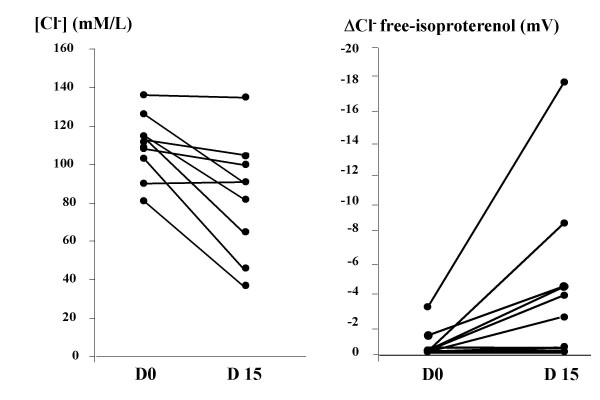
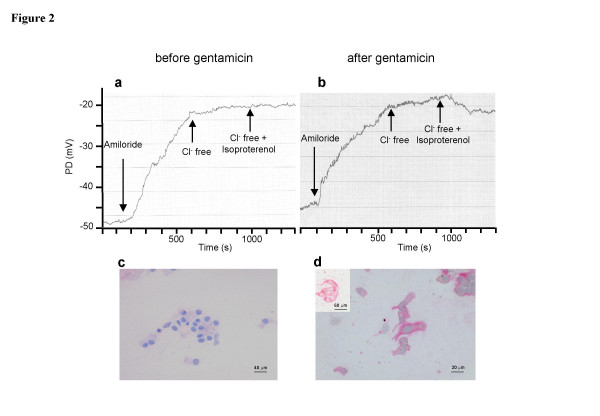
Results: After in vitro gentamicin incubation, the readthrough efficiency for the Y122X mutation was at least five times higher than that for G542X, R1162X, and W1282X. In six of the nine patients with the Y122X mutation, CFTR immunodetection showed protein at the membrane of the nasal epithelial cells and the CFTR-dependent Cl- secretion in NPD measurements increased significantly. Respiratory status also improved in these patients, irrespective of the gentamicin sensitivity of the bacteria present in the sputum. Mean sweat chloride concentration decreased significantly and normalised in two patients. Clinical status, NPD and sweat Cl- values did not change in the Y122X patients with no protein expression, in patients with the other stop mutations investigated in vitro and those without stop mutations.
Conclusion: Suppression of stop mutations in the CFTR gene with parenteral gentamicin can be predicted in vitro and is associated with clinical benefit and significant modification of the CFTR-mediated Cl- transport in nasal and sweat gland epithelium.
Figures
References
-
- The Cystic Fibrosis database http://www.genet.sickkids.on.ca/cftr/
Publication types
MeSH terms
Substances
LinkOut - more resources
Full Text Sources
Other Literature Sources
Medical
