. 2007 Apr 3;49(13):1474-81.
doi: 10.1016/j.jacc.2006.11.040. Epub 2007 Mar 21.

Measurement of collagen and smooth muscle cell content in atherosclerotic plaques using polarization-sensitive optical coherence tomography

Affiliations

Measurement of collagen and smooth muscle cell content in atherosclerotic plaques using polarization-sensitive optical coherence tomography

Seemantini K Nadkarni et al. J Am Coll Cardiol. .

Abstract

Objectives: The purpose of this study was to investigate the measurement of collagen and smooth muscle cell (SMC) content in atherosclerotic plaques using polarization-sensitive optical coherence tomography (PSOCT).

Background: A method capable of evaluating plaque collagen content and SMC density can provide a measure of the mechanical fidelity of the fibrous cap and can enable the identification of high-risk lesions. Optical coherence tomography has been demonstrated to provide cross-sectional images of tissue microstructure with a resolution of 10 mum. A recently developed technique, PSOCT measures birefringence, a material property that is elevated in tissues such as collagen and SMCs.

Methods: We acquired PSOCT images of 87 aortic plaques obtained from 20 human cadavers. Spatially averaged PSOCT birefringence, Phi, was measured and compared with plaque collagen and SMC content, quantified morphometrically by picrosirius red and smooth muscle actin staining at the corresponding locations.

Results: There was a high positive correlation between PSOCT measurements of Phi and total collagen content in all plaques (r = 0.67, p < 0.001) and in fibrous caps of necrotic core fibroatheromas (r = 0.68, p < 0.001). Polarization-sensitive optical coherence tomography measurements of Phi demonstrated a strong positive correlation with thick collagen fiber content (r = 0.76, p < 0.001) and SMC density (r = 0.74, p < 0.01).

Conclusions: Our results demonstrate that PSOCT enables the measurement of birefringence in plaques and in fibrous caps of necrotic core fibroatheromas. Given its potential to evaluate collagen content, collagen fiber thickness, and SMC density, we anticipate that PSOCT will significantly improve our ability to evaluate plaque stability in patients.


Figures
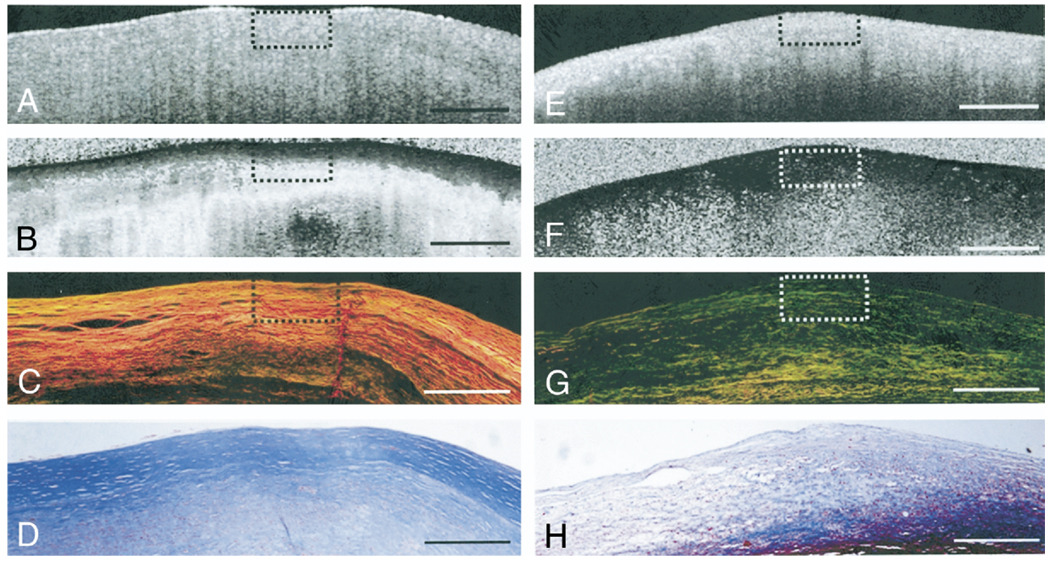
Figure 1
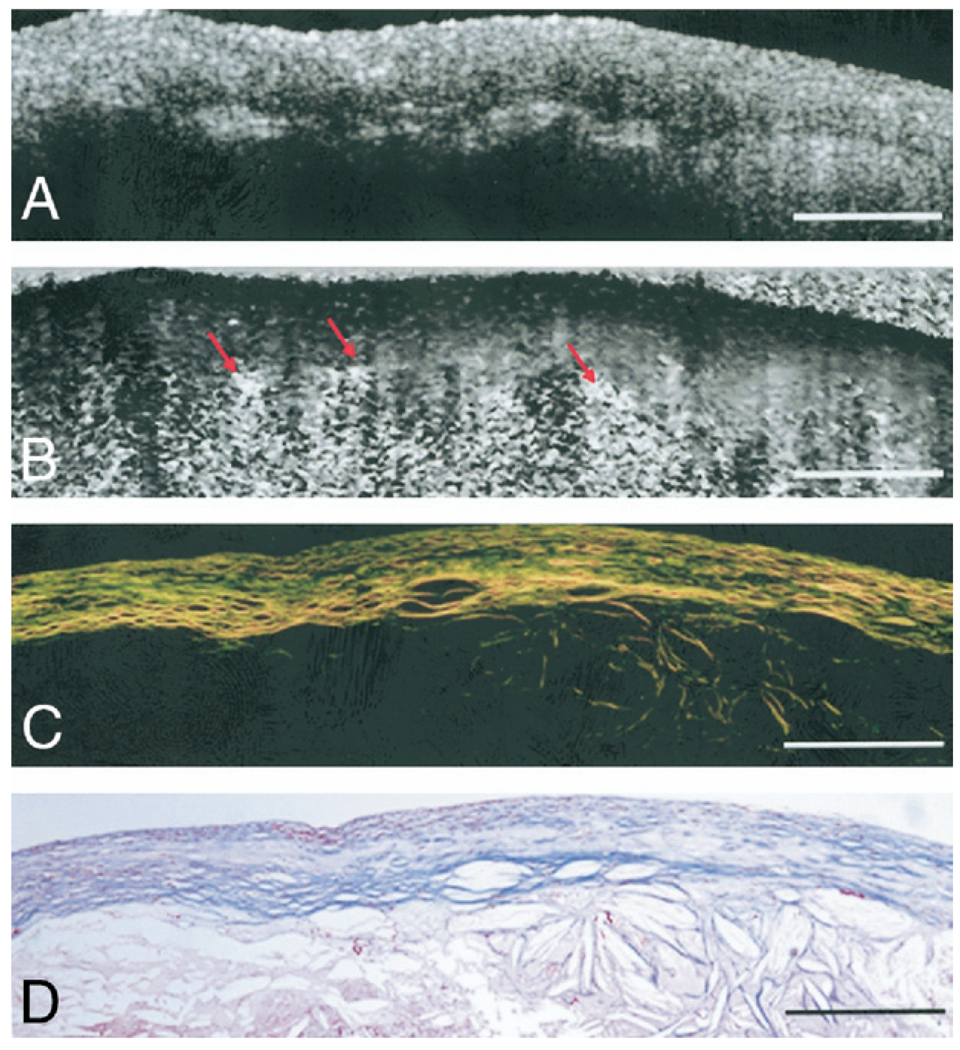
Figure 1. Collagen Birefringence in Atherosclerotic Plaques
(A and E) Optical coherence tomography images of fibrous plaques. (B) Polarization-sensitive optical coherence tomography (PSOCT) image of fibrous plaque showing high birefringence as seen by the rapid transition of the image from black to white corresponding to 0° to 180° phase retardation. (C) Picrosirius red (PSR)-stained histology section showing orange-red fibers (thicker fibers) under polarized light microscopy. (D and H) Trichrome stained histology images. (F) PSOCT image of fibrous plaque showing black region corresponding to low birefringence below the luminal surface. (G) Corresponding PSR-stained histology section showing yellow-green (thinner fibers) under polarized light microscopy. Scale bars = 500 µm.
Figure 2
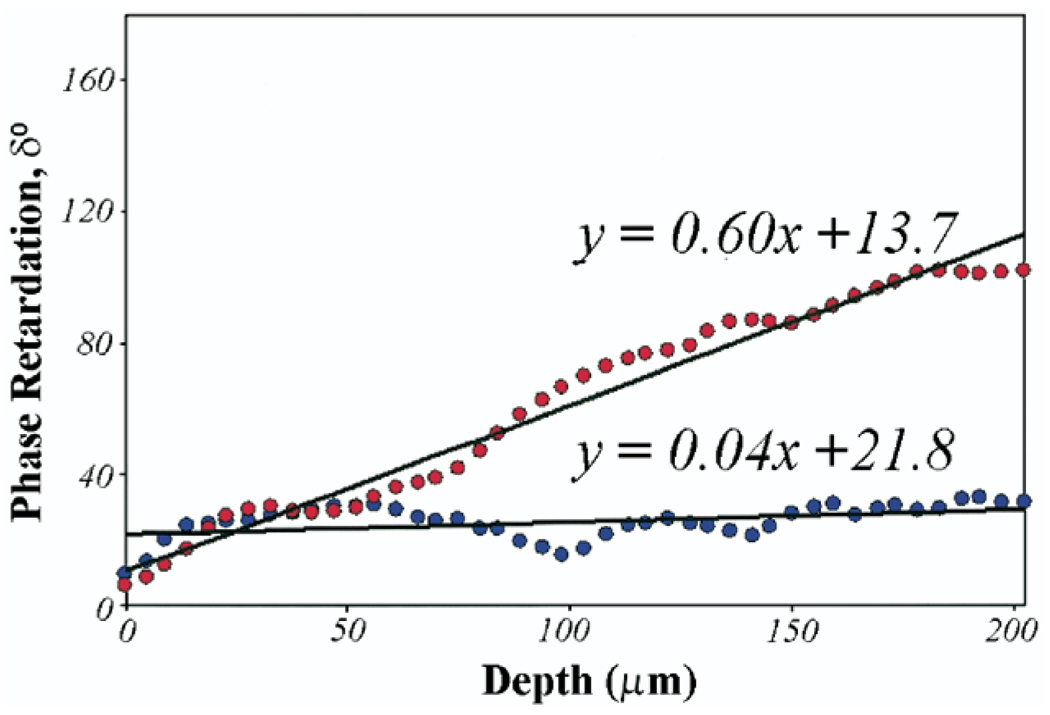
Figure 2. Phase Retardation Plot
Phase retardation, δ, angles averaged over the width of the central region of interest (500 × 200 µm) in the 2 PSOCT images shown in Figures 1B and 1F are plotted as a function of depth. Least-squares fits over a depth of 200 µm for each plot show that PSOCT birefringence measured as the slope as the phase retardation plot is higher (Φ = 0.60°/µm) for the plaque constituting 88% collagen (displayed in Figs. 1A to 1D) compared with a lower birefringence (θ = 0.04°/µm) for the plaque with depleted collagen (displayed in Figs. 1E to 1H). Abbreviations as in Figure 1.
Figure 3
Figure 3. Birefringence in an NCFA
(A) Optical coherence tomography image of a necrotic core fibroatheroma (NCFA). (B) Corresponding PSOCT image showing birefringence within the fibrous cap overlying a region of the lipid pool. Cholesterol crystals shown by arrows appear birefringent below the fibrous cap. (C) Corresponding PSR-stained image of the NCFA showing collagen birefringence within the fibrous cap. (D) Trichrome-stained histology. Scale bars = 500 µm. Abbreviations as in Figure 1.
Figure 4
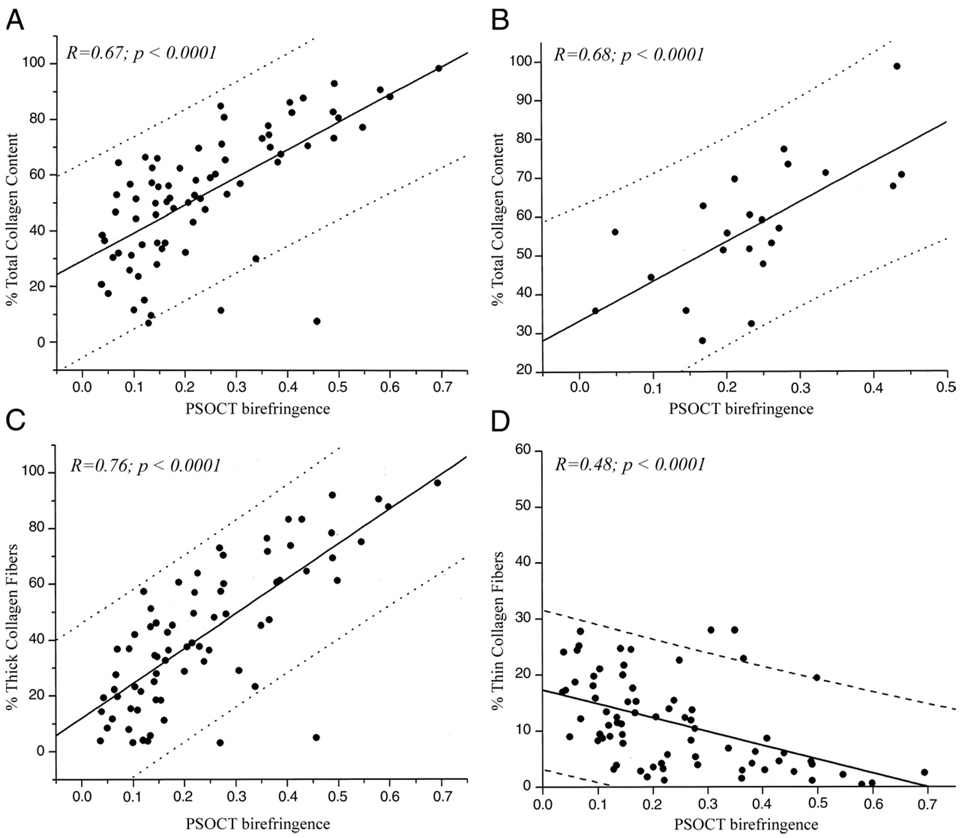
Figure 4. Relation Between Collagen Content and PSOCT Birefringence, Φ
(A) High positive correlation is demonstrated between Φ and total collagen content in all plaques (r = 0.67, p < 0.0001). (B) High positive correlation is demonstrated between Φ and total collagen content in fibrous caps of NCFAs (r = 0.68, p < 0.001). (C) Strong positive correlation is demonstrated between Φ and thick collagen fiber content (r = 0.76, p < 0.0001). (D) An inverse relationship is demonstrated between Φ and thin collagen fiber content (r = −0.48, p < 0.0001). The dotted lines show 95% prediction intervals. Abbreviations as in Figure 1 and Figure 3.
Figure 5
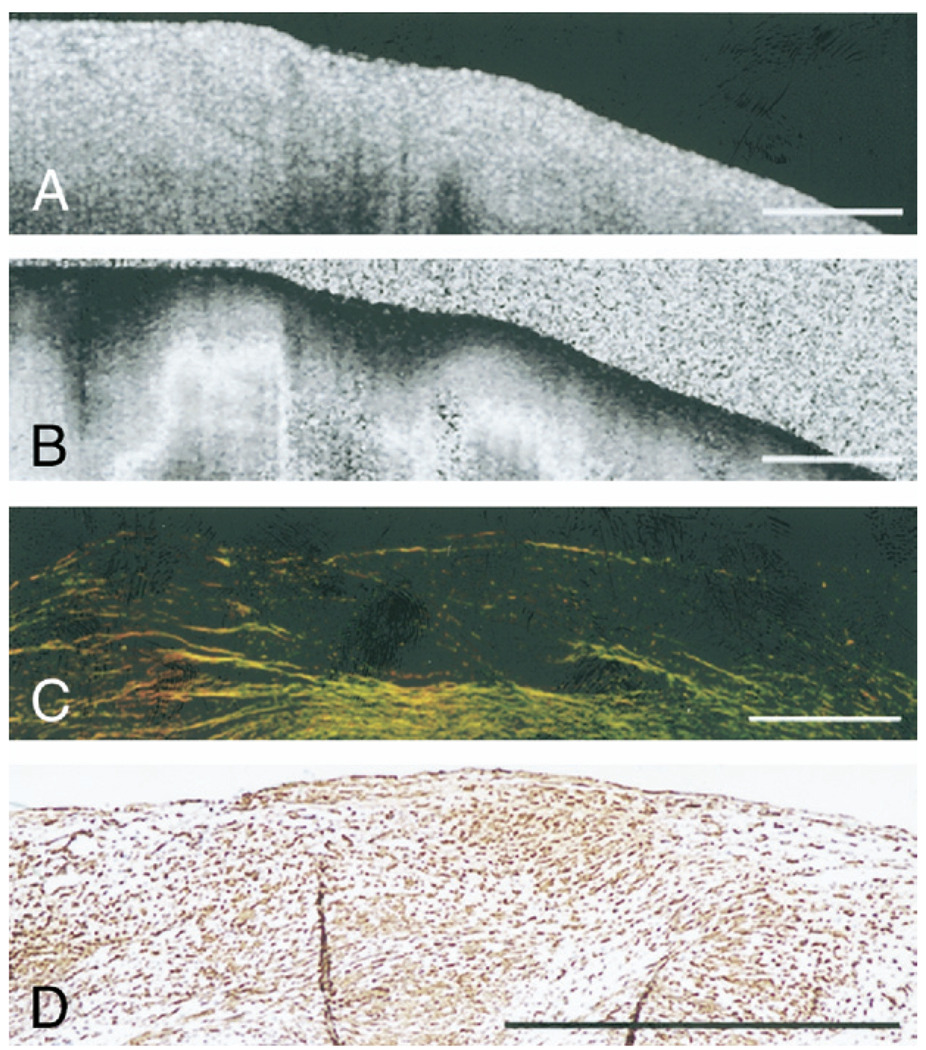
Figure 5. SMC Birefringence in Atherosclerotic Plaques
(A) Optical coherence tomography image of a fibrous plaque. (B) Corresponding PSOCT image showing high birefringence. (C) Corresponding PSR-stained section shows low collagen content in the plaque under polarized light microscopy. (D) Corresponding histology section stained for alpha-smooth muscle actin shows numerous smooth muscle cells (SMCs) within the fibrous plaque. Scale bars = 500 µm. Abbreviations as in Figure 1.
Figure 6
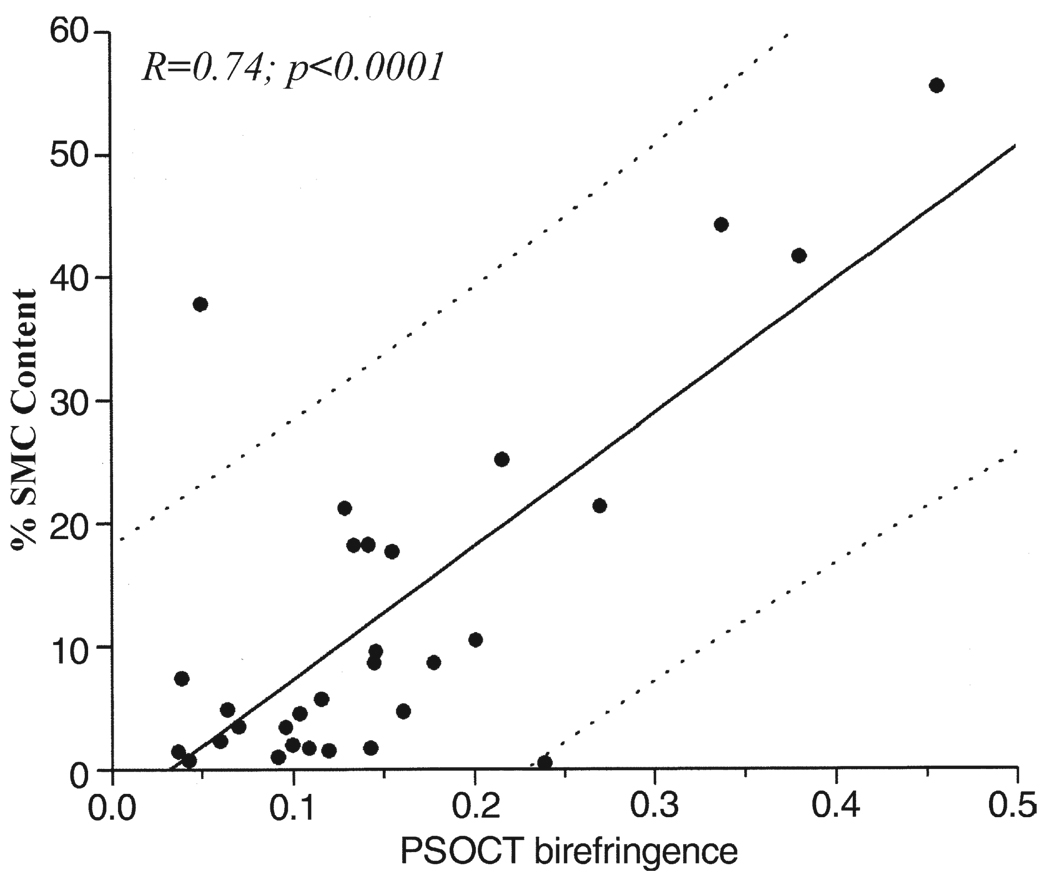
Figure 6. Relation Between SMC Content and PSOCT Birefringence
High positive correlation between Φ and intimal smooth muscle cell (SMC) content is demonstrated in plaques with low (<50%) collagen content (r = 0.74, p < 0.001). The dotted lines show 95% prediction intervals. Abbreviations as in Figure 1.

References

    1. Arroyo LH, Lee RT. Mechanisms of plaque rupture: mechanical and biologic interactions. Cardiovasc Res. 1999;41:369–375. - PubMed
    1. Falk E, Shah PK, Fuster V. Coronary plaque disruption. Circulation. 1995;92:657–671. - PubMed
    1. Virmani R, Kolodgie FD, Burke AP, Farb A, Schwartz SM. Lessons from sudden coronary death: a comprehensive morphological classification scheme for atherosclerotic lesions. Arterioscler Thromb Vasc Biol. 2000;20:1262–1275. - PubMed
    1. Bauriedel G, Hutter R, Welsch U, Bach R, Sievert H, Luderitz B. Role of smooth muscle cell death in advanced coronary primary lesions: implications for plaque instability. Cardiovasc Res. 1999;41:480–488. - PubMed
    1. Newby AC, Zaltsman AB. Fibrous cap formation or destruction—the critical importance of vascular smooth muscle cell proliferation, migration and matrix formation. Cardiovasc Res. 1999;41:345–360. - PubMed

Publication types