. 2007 Apr;5(4):305-12.
doi: 10.1016/j.cmet.2007.03.002.

Regulation of gluconeogenesis by Krüppel-like factor 15

Affiliations

Regulation of gluconeogenesis by Krüppel-like factor 15

Susan Gray et al. Cell Metab. 2007 Apr.

Abstract

In the postabsorptive state, certain tissues, including the brain, require glucose as the sole source of energy. After an overnight fast, hepatic glycogen stores are depleted, and gluconeogenesis becomes essential for preventing life-threatening hypoglycemia. Mice with a targeted deletion of KLF15, a member of the Krüppel-like family of transcription factors, display severe hypoglycemia after an overnight (18 hr) fast. We provide evidence that defective amino acid catabolism promotes the development of fasting hypoglycemia in KLF15-/- mice by limiting gluconeogenic substrate availability. KLF15-/- liver and skeletal muscle show markedly reduced mRNA expression of amino acid-degrading enzymes. Furthermore, the enzymatic activity of alanine aminotransferase (ALT), which converts the critical gluconeogenic amino acid alanine into pyruvate, is decreased (approximately 50%) in KLF15-/- hepatocytes. Consistent with this observation, intraperitoneal injection of pyruvate, but not alanine, rescues fasting hypoglycemia in KLF15-/- mice. We conclude that KLF15 plays an important role in the regulation of gluconeogenesis.


Figures
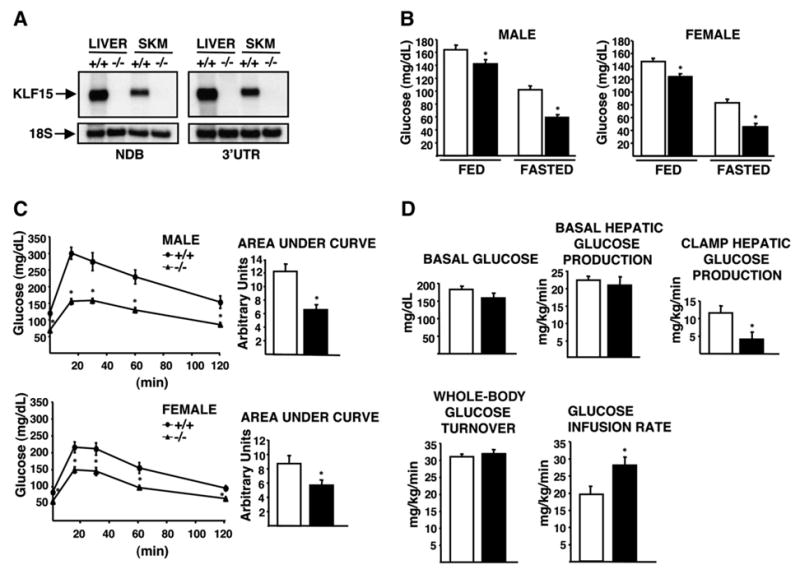
Figure 1
Figure 1. Glycemic Responses in Wild-Type versus KLF15-Deficient Mice
White bars = wild-type; black bars = KLF15−/−. Mice are 2.5–3.5 months old unless otherwise stated. (A) Representative northern analysis of KLF15 expression in WT (+/+) and KLF15 null (−/−) tissues using probes against the non-DNA-binding domain (NDB) and 3′ untranslated region (3′UTR) of KLF15. Ten micrograms of total RNA was loaded per lane. (B) Blood glucose levels of WT and KLF15−/− mice in the ad libitum-fed or 18 hr-fasted states; n = 15–20 mice per group. In this and all other figures, error bars represent ± SEM. (C) Blood glucose concentrations during a glucose tolerance test. Mice were fasted for 16 hr and received an intraperitoneal (i.p.) injection of 1 g glucose/kg body weight. Tail-vein blood samples were assessed for glucose concentration immediately before injection (time 0) and at 15, 30, 60, and 120 min postinjection; n = 7–11 mice per group. (D) Hyperinsulinemic-euglycemic clamp study in WT and KLF15−/− 4-month-old male mice. Top left: basal plasma glucose levels after a 5 hr fast. Top middle: basal hepatic glucose production after a 5 hr fast. Top right: hepatic glucose production during insulin clamp. Bottom left: insulin-stimulated whole-body glucose turnover. Bottom right: glucose infusion rate during insulin clamp. n = 7 mice per group. Statistical comparisons were made by repeated-measures ANOVA (C) and Student’s t test for unpaired samples (B–D). *p ≤ 0.05 compared to WT control.
Figure 2
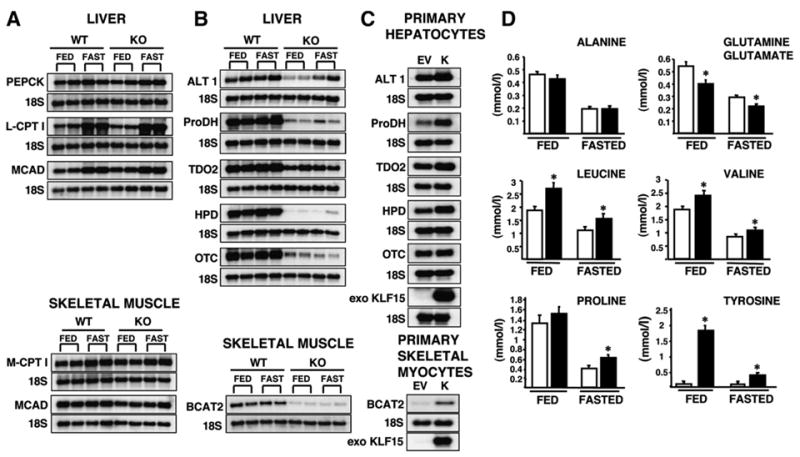
Figure 2. Effect of KLF15 Level on Metabolic Enzyme Expression and Serum Amino Acid Concentrations
(A and B) Northern analysis of enzymes of gluconeogenesis and fatty acid oxidation (A) and amino acid catabolism (B) in liver and skeletal muscle (quadriceps) isolated from 3- to 4-month-old female WT and KLF15−/− (KO) ad libitum-fed or 18 hr-fasted mice. Ten micrograms of total RNA was loaded per lane. Each column represents an individual mouse; two representative mice (out of six total) are shown for each condition. PEPCK, phosphoenolpyruvate carboxykinase; L-CPT I, liver carnitine palmitoyltransferase 1; M-CPT I, muscle carnitine palmitoyltransferase 1; MCAD, medium-chain acyl-CoA dehydrogenase; ALT 1, alanine aminotransferase 1; ProDH, proline dehydrogenase; TDO2, tryptophan 2,3-dioxygenase; HPD, 4-hydroxyphenylpyruvate dioxygenase; OTC, ornithine transcarbamylase; BCAT2, branched-chain aminotransferase 2. (C) Northern analysis of enzymes of amino acid catabolism in wild-type primary hepatocytes and skeletal myocytes infected with either empty vector (EV) or KLF15 (K) adenovirus at 30 moi (~10-fold overexpression of KLF15). (D) Serum amino acid levels in ad libitum-fed or 18 hr-fasted WT and KLF15−/− mice. Blood was collected from the orbital sinus of 2.5- to 3.5-month-old female mice, and serum was analyzed for amino acid content using gas chromatography/mass spectrometry (see Experimental Procedures). White bars = wild-type; black bars = KLF15−/−. n = 16–20 per group; *p ≤ 0.05 compared to WT control (Student’s t test for unpaired samples).
Figure 3
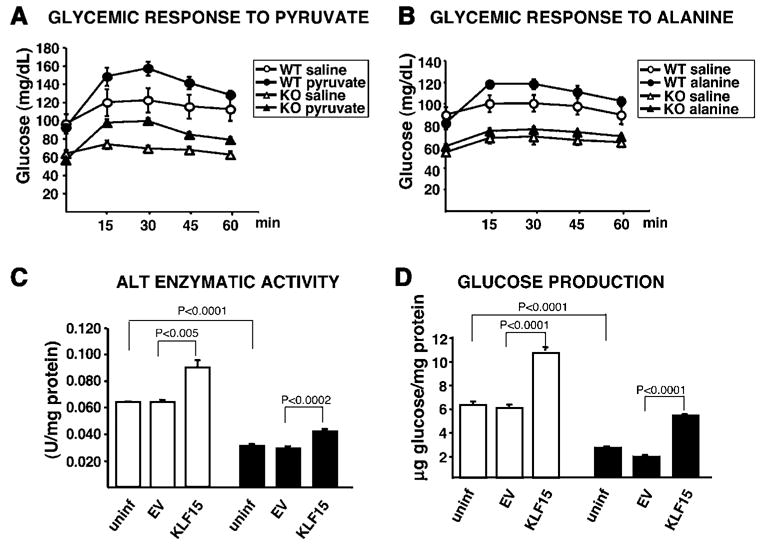
Figure 3. Pyruvate and Alanine Utilization In Vivo and ALT Activity and Glucose Production in Primary Hepatocytes
(A and B) 18 hr-fasted WT and KLF15−/− (KO) mice each received an i.p. injection of 500 mg/kg sodium pyruvate dissolved in water or osmolarity-matched 104.5 mg/kg NaCl control solution (A) or 200 mg/kg L-alanine dissolved in 104.5 mg/kg NaCl or 104.5 mg/kg NaCl control solution (B). Tail-vein blood samples were assessed for glucose concentration immediately before injection (time 0) and at the indicated time points postinjection. n = 7 mice per condition. Statistical comparisons were made using MANOVA (p ≤ 0.05 was considered significant). p = 0.0318 WT saline versus WT pyruvate; p = 0.0034 KO saline versus KO pyruvate; p = 0.02647 WT saline versus WT alanine; p = 0.7843 KO saline versus KO alanine. (C and D) WT (white bars) and KLF15−/− primary hepatocytes (black bars) were either uninfected or adenovirally infected at 30 moi with EV or KLF15 constructs (~10-fold overexpression of KLF15) and incubated at 37°C in glucose production buffer (see Experimental Procedures). The buffer was removed after 3 hr and assayed for glucose content, and the cell lysate was assayed for ALT activity. n = 4 replicates per group for each assay. Statistical comparisons were made using Student’s t test for unpaired samples.

References

    1. Bieker JJ. Kruppel-like factors: three fingers in many pies. J Biol Chem. 2001;276:34355–34358. - PubMed
    1. Burelle Y, Fillipi C, Peronnet F, Leverve X. Mechanisms of increased gluconeogenesis from alanine in rat isolated hepatocytes after endurance training. Am J Physiol Endocrinol Metab. 2000;278:E35–E42. - PubMed
    1. Chochinov R, Perlman K, Moorhouse J. Circulating alanine production and disposal in healthy subjects. Diabetes. 1978;27:287–295. - PubMed
    1. Connett RJ, Honig CR, Gayeski TE, Brooks GA. Defining hypoxia: a systems view of VO2, glycolysis, energetics, and intracellular PO2. J Appl Physiol. 1990;68:833–842. - PubMed
    1. Consoli A, Nurjhan N, Reilly JJ, Jr, Bier DM, Gerich JE. Contribution of liver and skeletal muscle to alanine and lactate metabolism in humans. Am J Physiol Endocrinol Metab. 1990;259:E677–E684. - PubMed

Publication types

MeSH terms

Associated data